 Join on WhatsApp
 Join on Telegram
In the saga of our globalized world, tourism is both the villain and the hero. It has caused environmental damage, cultural commodification, and declined living standards for local communities across the globe. But tourism is also a source of joy, a key driver of socio-economic development in many countries, and has increased our collective environmental awareness. Bab Zouina is taking small steps to ethically integrate tourism into its local community.
The booming tourist destination of Morocco aims for a heroic creation when forging their personal version of this double-edged sword: Sustainable tourism is on a nationwide rise. The former top-level, now grassroots-actor Karim Zein left the corporate world six years ago to set up an eco-lodge near Marrakech. And in keeping with the national spirit, his small-scale sword-forging leans towards benevolence.
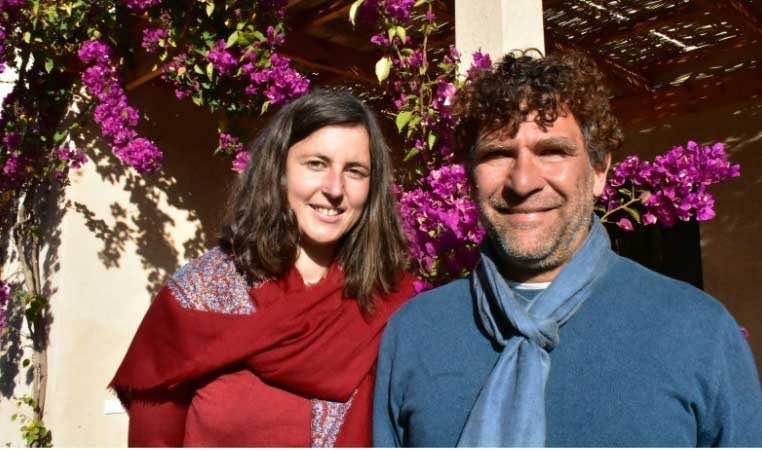
Helene and Karim Zein, owners of sustainably run eco-lodge/retreat center: Bab Zouina.
The journey from suits to a sanctuary
The German-Lebanese yogi and tennis-devotee grew up in Switzerland, having fled his war-torn hometown of Beirut at the age of 10. A long-time environmentalist and a keen traveler, Karim has a simple answer to the pursuit of sustainable tourism: “It all comes down to common sense.”
Karim dedicated the first half of his adult life to pushing for sustainable development across the Arab world. He helped found the non-government organization Sustainable Business Associates in the 90s, bringing the concept of sustainability into the world of business.
“We approached it from a business point of view, we spoke their language – the opposite of what Greenpeace was doing – much more: ‘If you save water, you save dollars’. And it worked!” says Karim.
Alongside Sustainable Business Associates and his colleagues there, Karim transformed whole industries – the tourism sector being one of them. They brought environmental awareness into spaces previously perceived as unchangeable using conferences and case studies. They pioneered the field.
Having served much of his time and energy within this sphere, he is now switching gears. His new focal points being nature, the community, wellbeing, and his love, Helene.
“I grew frustrated with the greenwashing and hypocrisy among big actors of the field – so five years ago I made a conscious decision to leave that world behind and focus on my local village,” says Karim.
Through Bab Zouina, a sustainably run tourism project in his adopted home of Morocco, he is now paving the way for social change and fair-trade farming.
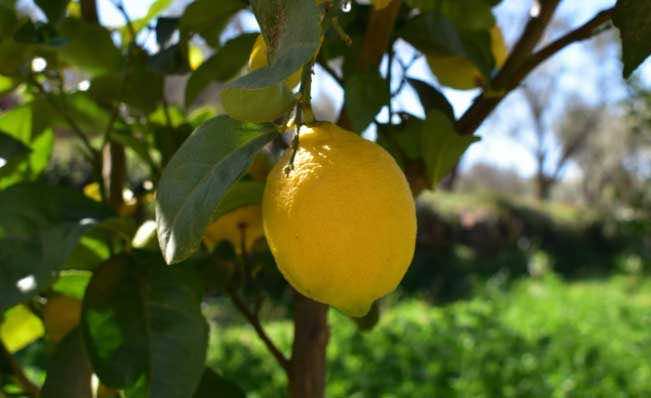
All the food served at Bab Zouina is 100 percent organic and if not home-grown, locally sourced.
As a naturally sociable person, keen on sharing life’s treasures with anyone ready to appreciate them, Karim today runs a retreat center with a focus on holistic living. The center, located near Ourika Valley at the foot of the High Atlas Mountains, is also the place Karim and Helene call home.
From their Moroccan-style houses, built with mud-bricks and clay by local hands and local materials, guests can enjoy the many pleasures this unique part of the world has to offer: Breathtaking views of snow-capped mountains, fresh air, sun, and slow-paced days.
“We named it Bab Zouina, which is Moroccan for ‘door of beauty,’ because that’s what we want this place to be: a gateway into nature; a space of stillness, silence and calm,” says Karim.
A secret garden at the foot of the atlas mountains
On entering the gates, a rustic stone-paved pathway leads through a myriad of colorful plants, offering shelter from the pressing sun. In the ornamented garden, lemon trees, lavender, and lantana bushes scent the air while chirping birds and the sounds from a soft breeze brush through the trees.
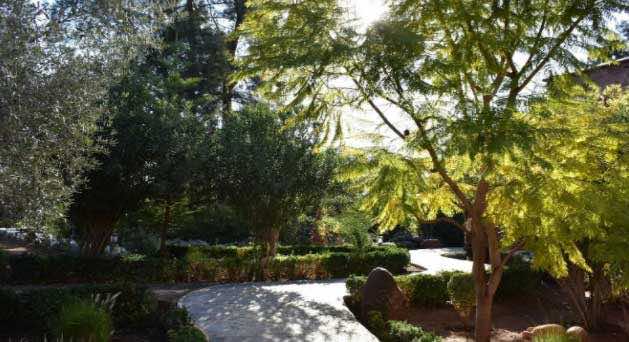
Due to the forgiving climate of the area, Bab Zouina’s garden provides scenes as lush as these in the dead of winter.
There is a tangible sense of calm here, owed to Karim and his team’s pursuit of treating both nature and those around them, with dignity and respect. It runs through the core of everything at Bab Zouina. From the minimalistic interior design to the homemade meals cooked with care and served with love.
Behind the scenes, there are around-the-clock duties to ensure this peaceful paradise is just that for their guests. After a full day of working, Karim usually eats a late dinner, followed by some administrative work. Running a viable business entails dedication and long hours – especially if you live on the premises: “But for me, work is not boring or something I dread – I really enjoy it,” says Karim.
This passion is something he shares with the solid team of 17 full-time, local staff. They’re proud of welcoming guests to what they consider their second home.
“I basically grew up here at Bab Zouina – Karim and Hélène are like our extra parents,” says Ayoub Boutgayout, who today works here as a service-staff, on the side of his physics studies at Cadi Ayyad University in Marrakech. His mother, Aisha Ait Hammou who’s the establishment’s talented head-chef,
says that she managed to build her house and pay for her children’s education, thanks to Bab Zouina.
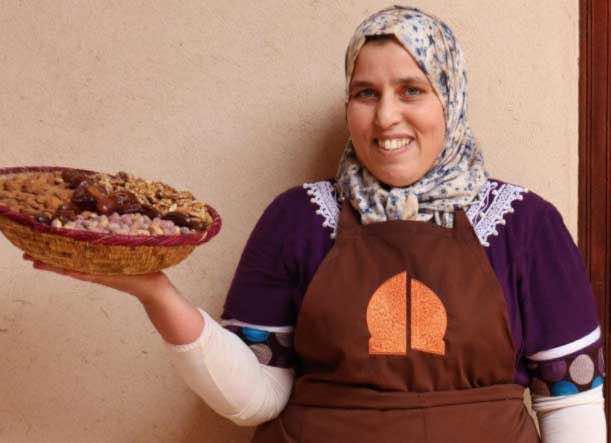
Aisha Ait Hammou has had a huge passion for food since an early age. Credit: Bab Zouina
To land a well-paid job near home is rare in rural parts of Morocco. Living conditions in the village of Douar Sbiti, the home of Bab Zouina, are tough and there is minimal tourism. There is a lack of access to education, clean drinking water, no state-run waste system, nor upkeep of the local infrastructure.
Read also: Djebli Club: Moroccan Eco-Hostel Challenging Restrictive Social Structures
To mitigate some of these struggles, Karim has teamed up with the local village association. On a monthly basis, the board joins him in his office over tea, where they evaluate what has been achieved and plan for what is to come.
“I owe a lot to this community,” says Karim, who arrived with nothing but a rucksack on his back, and locals welcomed him with open arms.
The association receives no funding from the government and performs most duties that normally would
be expected of a municipality: Providing clean drinking water, food for those without, road maintenance, a nursing home – and now education.
Combating COVID-19 adversities of rural life
Since the beginning of COVID-19 restrictions and the end of normally functioning schools, the association, together with Karim, has been providing additional schooling for local children.
The association sourced tutors locally and Karim matched what his contacts donated with money from his own pocket, to fund the educational initiative. Why? “I’m happy here, and wish to give back to this community,” says Karim.
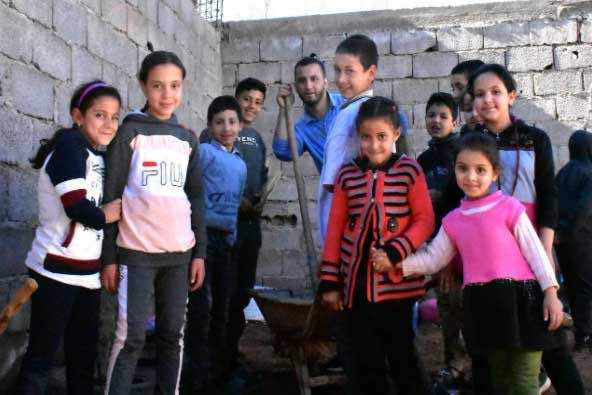
Sunday equals fun day – this week the kids are planting trees on the school grounds.
“Our dream is for children of this community to go on to become merchants, engineers, doctors, ministers – or at least to have such options,” says Ismail Boutgayout, president of the Sbiti Development Association. This goal is looking more achievable by the day.
The children attending the alternative schooling are already achieving considerably higher grades than their absent peers. Motivated by these results, the aim is now to keep running the project as additional tutoring outside of school hours once COVID-19 restrictions ease.
Read also: Pikala Bikes: Moroccan NGO Using Supply and Demand to Spark Social Change
“The only problem is funding,” says Karim, “but it’s not really a problem – I’ve taken on the responsibility, so I will ask around amongst friends and collect the required amount.”
Having worked across the world, with people from all kinds of backgrounds, Karim is well-connected. Raising money for a charitable cause is not a difficult task – just an added one – to the ever-growing list of duties on which he steadily works, day-in-day-out.
“I will chase up my friend at the neighbouring Anima Gardens, André Heller – he kindly promised to donate money for the cause and if he does, I’ll double that so we can run this semester out.”
The relationship between Karim and the association committee members has over the years grown to become one similar to that of extended family – something which all involved are grateful for.
“Karim is a good man; big, big heart,” says Ismail Boutgayout in broken English. “Sorry, my words can’t express how much he means,” he says – the look of admiration and love in his eyes speaks for him.
International outreach expanding minds
Before Bab Zouina, the association had been running for about seven years, but things properly kicked-off when Karim and his team partnered with Rustic Pathway – an international non-government organization providing student-travel programs with a focus on community service.
In Morocco, Rustic Pathways has its participants stay at Bab Zouina and take part in community work in Douar Sbiti.
The influx of young people from across the world participating in community work and teaching brought social and cultural change to the area. When done in this manner, the benefits of tourism are monumental.
Guests at Bab Zouina reap the rewards of this close-knit community, during their stays away from mainstream tourism. Eva Baumgartner happily testifies to this: “It is truly a home away from home for me, the connection to nature – and to the local community there – is heartwarming.” Eva has enjoyed many stays at the eco-center.
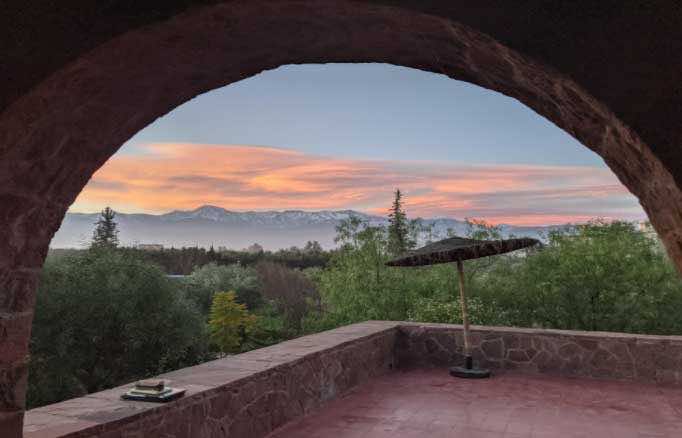
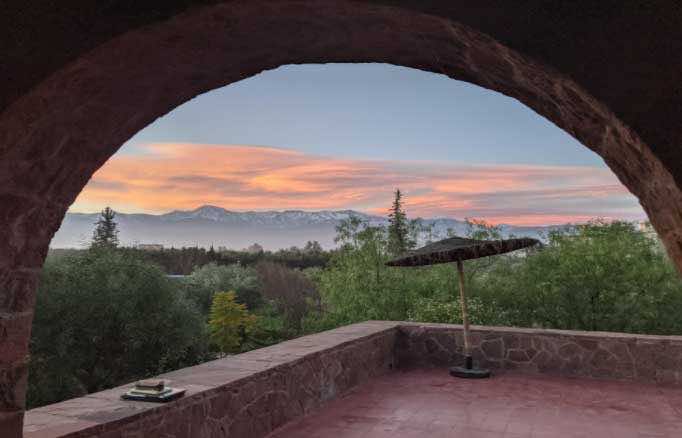
The view from one of the terraces Bab Zouina, where guests enjoy food and relaxation.
“I was once invited for dinner at Habib’s house (the manager at Bab Zouina), not as part of any programme, but because we’ve built a genuine relationship,” Eva says.
This type of authentic cultural exchange, built on curiosity and care, is one of the winning aspects of Bab Zouina’s approach to tourism. Another is the stillness that rural life provides according to Siri Tuseth, a Satya Yoga Teacher who visits the center on a yearly basis.
“The first few days after arrival, you can tell that many people struggle with the lack of external stimulus this place provides. In the silence and the stillness they are forced to look inwards,” says Siri.
Witnessing the transformations of multiple students, who after a week at Bab Zouina find themselves closer to their inner rhythm. Siri emphasizes the potency of breathing as the catalyst of this shift:
“Our breath is literally what gives us life, it is everything – but we need to step out of our everyday settings to appreciate all to do with breathing – we need Bab Zouina to remind us of its power.”
When the center was but a vision in Karim’s mind, this was one of his main aims. Bab Zouina was to act as a break from “metro, boulot, dodo” – or the “daily grind” as the expression goes in English.
“The speed at which a modern day lifestyle has us operate is unnatural,” he says, “and I aim for Bab Zouina to be as natural as possible.”
Transparency: An essential for sustainable operations
The running of the center is not explicitly eco-friendly as Karim says: “We use some chemical cleaning products, plastic products and once the solar-power runs out for heating of our showers, the municipality-provided electricity will kick-in as a backup.”
In Karim’s eyes, this does not undermine the concept of sustainability, however. He believes that for a business like this to be truly sustainable, there needs to be a balance between comfort and cost for all those involved: The guests, the staff, the local community, the environment, the partners – everyone.
Working within the field of sustainability on a macro-level, Karim often found the approaches used frustratingly slow and insincere.
“Eighty percent of philanthropy is done with selfish motives: yes, it benefits the receiver, but ultimately it benefits the provider more,” he says. This realization eventually drove him to pursue sustainability through grassroots action instead, which led to the formation of Bab Zouina.
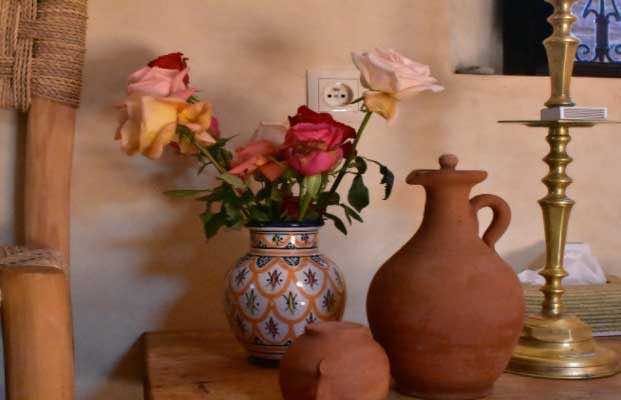
The style at Bab Zouina is stylish yet simple; a marriage between comfort and utility.
Running a sustainable tourism project entails adopting an approach whereby the set-up and running of it has a neutral or positive impact on the natural environment. It also means that the local community reaps social and economic benefits from it: Directly or indirectly, through avenues such as education.
It entails a respectful attitude toward those local cultures and traditions which the communities in
question aim to uphold. A mutual understanding that caring for one another’s health and wellbeing, along with that of the natural surroundings, will determine the longevity and success of the project.
Within the management of the project itself, there needs to be a sustainable approach to the company culture: Fair treatment of staff, slow pace of growth, good communication with guests, an approach that aims to benefit the many, not the few.
From the way Karim and his crew operate, their initiative is a prime example of such a project.
As the familiar sound of an inboxed email fills his office, Karim’s face shines up with a celebratory smile: Andre Heller agreed to donate the promised money, meaning there are enough funds to run the year out.
“Diqa, diqa,” he says with a smile: Moroccan for “step by step”, “that’s the key to a sustainable life.”