Rabat – Each year, the holy month of Ramadan in Morocco concludes with the break of the fast, also known as Eid al-Fitr. For many Moroccans, the celebration includes wearing traditional clothing, enjoying copious amounts of food with family, and communal prayer in the morning.
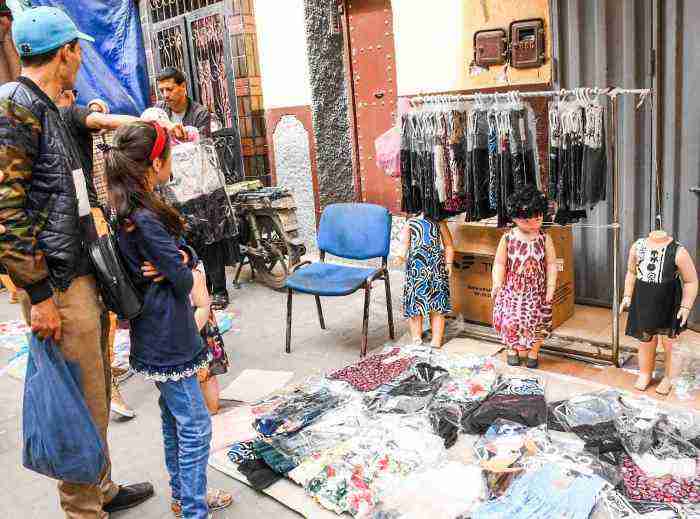
Pictured below are scenes from the souk (market) as Moroccans gear up ahead of the holiday, expected to begin on Wednesday evening.

A merchant specializing in traditional linens looks over his finest of material while boasting a wide variety of traditional men’s attire. The white and gold two-part outfit (pictured left) is referred to as a jabador while the full-body hooded robe is called a qachaba.

More traditional men’s clothing hangs in a store front. Quality and pricing vary but one can often purchase a standard qachaba for approximately MAD 120 ($14). Higher quality materials and designs drive up the price as high as MAD 600 ($68).

A young boy prepares to be fitted in his jabador. The velvet outfit is usually completed with a pair of traditional shoes called belgha.

Another traditional clothing merchant specializes in belgha and other worn accessories. Eid al-Fitr in Morocco is not complete without some flashy footwear and one can see a collage of various belgha slippers on display.

The shopkeepers radiate joy as they work to meet the demand of Morocco’s families preparing for Eid al-Fitr. Traditional belts called mjdoul, are made of precious metals and hang in the background, filling the shop with a golden sheen.

Traditional attire is not the only necessity for Eid al-Fitr in Morocco. Many families exchange gifts keeping in line with the festive nature of the holiday. Pallets of toys and trinkets line the streets of the souk ahead of the celebration.
Muslims around the world await the start of Eid al-Fitr and Saudi Arabia announced it will celebrate the holiday beginning Thursday.