


 Join on WhatsApp
  Join on Telegram
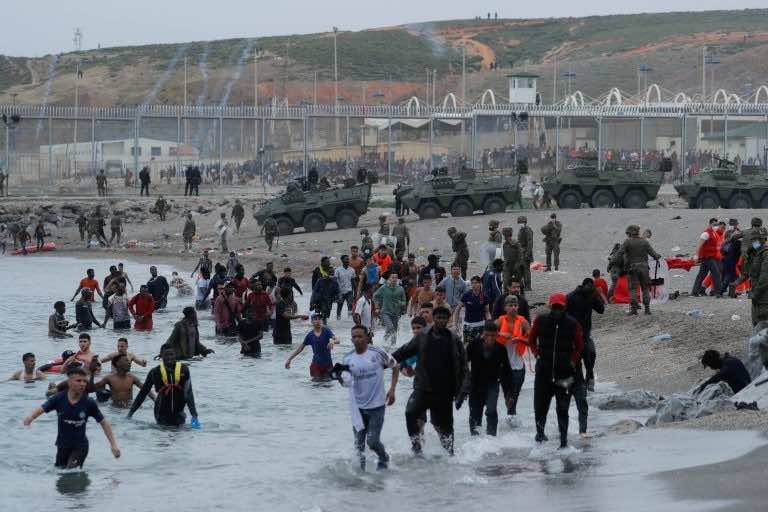
 Rabat – Political analyst Samir Bennis penned an in-depth analysis of the Ceuta crisis for the Washington Institute’s FIkra Forum on June 25. Bennis, a political advisor in Washington DC and co-founder of Morocco World News, presented Morocco’s perspective in the international media, which has been oversaturated by exclusively European and Spanish views on the crisis.
In the article, Bennis presented the fundamental issues at play in the continuing diplomatic stand-off between Morocco and Spain, in particular around the Ceuta migration crisis. He described Morocco’s role in ensuring EU migration priorities are met, the continued cancerous effects that Spanish enclaves on the African continent have had on Morocco’s economy, while presenting steps to resolve the crisis once and for all.
Morocco and migration
In his analysis, Bennis took particular issue with Spanish and EU accusations that Morocco misused its role as the EU’s gatekeeper on African migration to Europe. He highlighted Spanish media’s bias against Morocco as well as Spain’s role in the lingering Western Sahara dossier which continues to hamper Moroccan development and diplomacy.
While questions about the cause of the Ceuta crisis “may never be answered,” Bennis emphasized that Spanish media reporting on the issue has been biased, sensationalist and purposefully disingenuous. Accusing Morocco of “blackmail” after decades of productive cooperation on migration issues ignores Moroccan efforts to support Europe while still itself dealing with the consequences of European colonialism.
“Many of the continent’s economic woes arguably stem from centuries of European plundering of African wealth and resources,” Bennis highlighted. He went on to describe the dire economic state of Morocco’s north which has suffered from the effects of measures against COVID-19 as well as the contraband economy that the two Spanish enclaves continue to support.
Post-colonial cancers
“If Europe is serious about tackling the migration crisis, it must also focus on its root causes: the lopsided global economic system in which Western countries impose their own set of rules on African countries,” wrote Bennis. Morocco suffers under the structural disadvantages created by centuries of Western imperialism, with Ceuta and Melilla as constant reminders of the era.
The presence of the two Spanish enclaves, the last remaining european “possessions” on the African continent, has had a cancerous impact on the economy of Morocco’s northern region, according to Bennis. The two cities have created a contraband economy based on smuggling that “had a deleterious impact on the surrounding region of northern Morocco.”
Recent efforts by Morocco to crack down on this illegal economic activity, combined with the COVID-19 crisis, have resulted in many families in the north seeing immigration to Europe as “the only alternative for many in this region.”
The vast inequality between the living standards of people in Spain and Morocco are perpetuated by EU agricultural subsidies that undermine Moroccan exports while foreign investment remains negligible in the face of harsh economic competition that is a far cry from the “free trade” that the EU and US promote in their rhetoric.
A solution to the bilateral crisis
While Samir Bennis’ analysis delivered a scathing rebuttal to the narrative that Spanish officials and media have put forth as relations soured with Morocco, the political analyst proposed several measures that could help resolve the diplomatic spat.
Northbound migration has its roots in the vast economic inequality between the two continents of Africa and Europe. Coming to terms with this broader context is key to finding a sustainable solution to these issues, Bennis argued.
“Were Morocco’s economic situation better, Moroccans desperate to find decent job opportunities would think twice before emigrating to Europe,” he wrote. “Morocco would have greater capacity to integrate part of the growing number of sub-Saharan Africans who pursue their legitimate dreams to lead a decent life and provide for themselves and their loved ones.”
For him, limiting undocumented immigration into Europe requires Morocco’s northern neighbors to consider the “broader political, economic, and historical context” that underpin current inequalities. More favorable trade agreements with Africa, and greater investment in continental development would create a permanent solution to the issue.
Quotas for legal immigration into Europe would create a legitimate path for Africans in search of a better fortune, while addressing the need for young workers in Europe. For Spain itself, addressing the status of its African enclaves similarly would reduce avenues for contraband and human trafficking in the region.
Bennis’s analysis provides a simple lesson that Morocco’s European partners should take to heart: Resolving current issues requires countries to come to terms with their historic role in creating the lopsided economic system that continues to fuel current tensions.


