


 Join on WhatsApp
  Join on Telegram
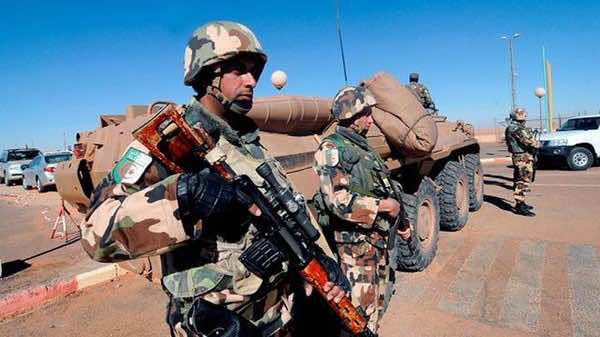
 Denver – After President Macron announced he was withdrawing French troops from its mission in the Sahel, Algeria has been expected by many to be the new security leader against radical islamist groups that inhabit the remote Sahel regions.
Local news reports that the outgoing troops have been “preparing a military base for the Algerian soldiers,” and the Algerians will be conducting their security operations from Hombori, a small commune in Mali that sits on the border between the government controlled southern region, and the islamist rebellion in the north.
Mali and the rest of the Sahel have suffered from radical Islamist groups for nearly a decade, and political instability within the Malian government has allowed these groups to continue to thrive in the country’s remote north for years.
The UK-based risk consultancy firm Menas Associates, which has been closely monitoring the situation in the region, reports many issues lie in wait for the Algerian army’s deployment into the region.
First, it points out that Algeria’s intelligence services helped to create the Movement for Oneness and Jihad in West Africa (MOJWA) radical group. The Al-Qaeda linked group has been one of the most prolific groups in the region, and it was at the forefront of the capture of the regional capital Gao in 2012.
Algeria also shares close ties with Iyad ag Ghali the leader of another terrorist group, Jama’at Nasr al-Islam wal Muslimin (JNIM). Ghali is suspected of being a longtime asset for Algerian intelligence forces in the region. Coincidentally, Algerian intelligence has reportedly been unhappy with Algeria’s planned deployment to the region. It is likely that Algeria will be forced to deal with many conflicting interests once they begin security operations in Mali.
These contentious situations have forced the Algerian military to prepare their operations in secrecy.
This is the first planned military intervention from Algerian forces since a constitutional reform last year allowed the military to be deployed on international missions. Menas experts speculate that France “pressured Algeria to amend the Constitution” as it looks to draw down its own forces in the region in time for its 2022 election period.
Now, Algeria will be forced to contend with one of the most unstable political regions on the globe, in the first test of its army’s international peacekeeping abilities.


