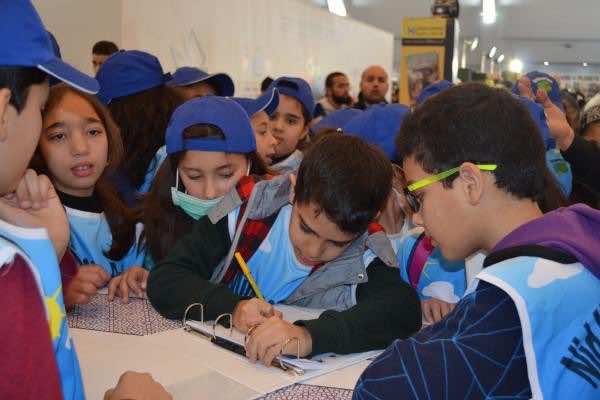
Rabat – UNICEF Morocco held its first meeting dedicated to ensuring that children’s rights are met in the face of looming water scarcity.
The meeting, organized amidst the international UNICEF “Reinventing the Future for Every Child” campaign, was held on June 17, in parallel to the World Day to Combat Desertification and Drought.
The discussions are also a part of the Moroccan branch’s “UNICEF 2.0 Rendezvous” initiative. It will consist of “a series of high value-added meetings that will focus on knowledge sharing and advocacy with our partners on emerging and critical issues for children’s rights in Morocco,” said Giovanna Barberis, Morocco’s UNICEF Representative.
The initiative will give a platform for experts from UNICEF and other organizations, as well celebrities, influencers, and children, to act as “positive agents of change,” explained Barberis.
Morocco is considered an at-risk country when it comes to water scarcity. According to the World Resource Institute (WRI), Morocco ranks as the 23rd most at-risk country in terms of water shortages, out of a total of 165 countries.
Read also: UNICEF Morocco Appoints Achraf Hakimi Champion for Children
The WRI also warned that at this rate, Morocco’s water demand will exceed the country’s available resources by 2040.
“For children, water is life,” stressed UNICEF Morocco in a press release, adding that “the lack of safe water, sanitation and hygiene affects more than children’s health.” The organization explained that the aforementioned factors affect children’s physical development, aggravating malnutrition, while also affecting their education.
UNICEF additionally highlighted the fact that water scarcity disproportionately impacts young girls, affecting their enrollment, attendance, and performance in school in rural areas. It also negatively affects the livelihoods of both families and their communities, which can lead to “migration, conflict and even child labor.” Within this context, water scarcity has an effect on the development of the whole of society.
The June 17 discussion was attended by Tarik Hassan, a Climate Change Specialist at the MENA regional office of UNICEF, Siham Laraichi of the General Directorate of Water, Mathilde Houdart from the Moroccan Coalition for Water, Youssra Skali, member of the Environment Club at Rahali Farouq High School, Haddou Bakkni, Director of the Ait Oualal Community Primary School and President of the Al Amal Association for Development, and Rachid Mandili, President of the Tizi N’Oucheg Association for Development.