






















































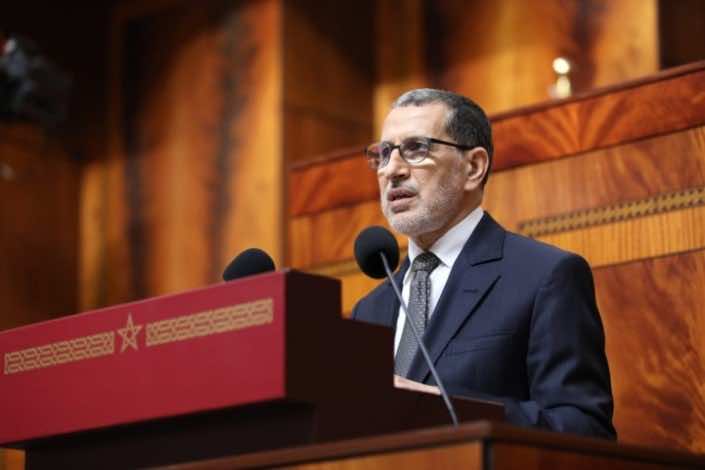
Rabat – The Head of the Moroccan Government, Saad Eddine El Othmani, delivered his assessment of the performance of his government before the two chambers of Parliament on Tuesday, July 6.
El Othmani’s mandate was marked by massive legislative production, as his government submitted over 1,030 law proposals, 330 of which have passed through parliament. “An unprecedented record,” according to him. He described the review’s results as “positive” and “unprecedented”, adding that the assessment makes him ”proud.”
The head of government detailed the enacted programs by sector ranging from education, healthcare, and employment out of many more.
The Educational Sector
Starting with the educational sector, El Othmani described a “revolutionary” period, mentioning the legislative reform and the appointment of a commission to monitor its progress.
He highlighted the 33% budget increase allocated to the sector, increasing from MAD 54 billion in 2016 to MAD 72 billion in 2020.
The budget increase resulted in the recruitment of 20,000 people into the sector, which was described as a record-breaking rate. In comparison with 2014, the number increased.
The budget increase also provided funds to develop a variety of programs promoting education. Citing Tayssir as an example, the organization grew from 700,000 children in 2014 to 2.4 million children this year.
Other segments of the sector experienced an improvement in the last five years, according to El Othmani. There was an increase in school enrollment in all educational levels, better access to higher education and professional training, and the beginnings of the institutionalization of preschools.
Since the PJD’s ascension to power, a new recruitment process has been implemented exclusively for teachers in the educational sector. The reform introduced contractual engagements, rather than allowing direct employment.
Teachers across Morocco have been protesting this change, demanding better pay, permanent contracts and the reversal of the contractual model.
Despite the improvement of employment rates to the educational sector reported by El Othmani, unions and teachers alike continue to challenge the published data.
The Healthcare Sector
The head of the Moroccan government acknowledged that the health sector was also experiencing a budget increase, which resulted in higher recruitment rates.
The government has taken measures to improve the quality of services and infrastructure of the sector, making medical equipment and tools more easily accessible, and reducing the price of over 1,500 prescription drugs and the cost of medical bills.
In addition to lowering the price of prescription drugs, some of these medications are free from the added value tax (VAT).
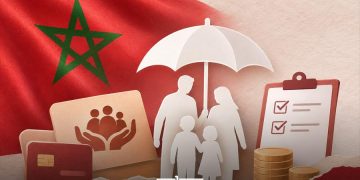
El Othmani also mentioned the government’s social security project, and the introduction of a framework law intended to establish universal health coverage of all citizens (AMO).
Following the pandemic, King Mohammed VI established a universal social safety net that included health insurance and a retirement plan for every Moroccan national.
In addition to the framework law, these guidelines were reinforced by both the New Development Model and the fiscal reform currently being discussed in parliament.
Integration and Development of Rural Morocco
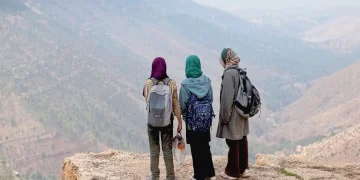
“Rural areas were first to benefit from these actions,” said El Othmani. As part of its efforts for rural development, the Moroccan government has allocated an “unprecedented” budget of MAD 27 billion towards urbanizing Morocco’s rural areas.
The policies pertaining to rural area development involve education, health, infrastructure, housing, and employment.
“We have built 9,000 km of rural roads. And 3,000 km are underway. We have built or upgraded more than 3,500 schools and 390 health centers. We have also introduced a policy of positive discrimination in favor of rural areas in all government programs,” explains El Othmani.
The government’s rural development strategies have had a substantial impact on the nation as a whole. The Moroccan government, however, does not apply these policies in every region. Having moved on from the challenge of rural and urban investments, Morocco now faces the challenge of interregional disparities.
Most fiscal resources are allocated based on a strong and dependable investment strategy, so some areas receive more government funding than others.
Due to their high ROI potential, certain rural areas in Morocco are an obvious choice for public investments in infrastructure and public services.
The incentive for these policies t is financial, and not social. This creates a large level of inequality in terms of approving public infrastructure investments in rural Morocco.
Economic Climate and Employment
The Head of Government also expressed his pride in his government’s ability to enhance the country’s economic model, through the improvement of the business environment, and the progress made by Morocco in the Doing Business ranking.
“We have moved from 60th rank globally in 2016 to the 53rd rank in 2019. The Doing Business report is not out in 2020, but we are sure that we would be at least 47th in 2020 if the World Bank had published its report. This puts us among the top 50 economies in the world in terms of business climate,” said El Othmani.
He attributes this achievement to deep reforms in several areas, starting with the Regional Investment Center (CRI) reform that resulted in a 24% increase of admitted investment totaling 1,499 projects.
These reforms intended to facilitate access to the financial market, as well as the creation of new companies. Simplifying the administrative process enabled Morocco to attract more Foreign Direct Investment (FDI), and remain a popular destination for foreign investors.
The average amount of FDI received in Morocco from 2016 to 2019 reached MAD 38 billion, compared to MAD 33 billion between 2007 and 2016. “Even during the pandemic, Morocco attracted MAD 15 billion in FDI. This shows the investors’ confidence in our economy, and in its resilience,” said El Othmani
The head of government described a substantial decline in bankruptcies, adding that “bankruptcies in 2020 were limited to 6,600 cases, compared to 8,400 in 2019 and 7,900 in 2018, a decrease of 22%. This is due to the resilience of our economy but also to the battery of measures decided by the government to manage this crisis.”
On employment, El Othmani explained that his government has created an average of 42,000 jobs per year in civil service, “which is double what has been created by all previous governments,” said El Othmani.
He also mentioned the advantages granted to the private sector to facilitate hiring, such as the IR exemption measures for the recruitment of 10 people at a salary of less than MAD 10,000, or the IR exemption for the recruitment of doctoral students.
El Othmani noted that the unemployment rate had fallen by one point prior to the Covid crisis, from 10.2 to 9.2%. The level of unemployment in urban areas has reached a historic low in 2019. In the aftermath of the Covid crisis, unemployment rose to 11%. Comparatively, an acceptable level among the Mediterranean countries.
El Othmani’s government estimated that the unemployment rate would reach 14% during the pandemic. But as a result of the policies and measures taken to counter the crisis, it settled at 11%, with 71 % of threatened jobs having been saved, he mentions.
The COVID-19 pandemic has collectively impacted employment rates in the Maghreb countries. Algeria is expected to record a 15% unemployment rate, according to a UN report published in January this year. While Tunisia’s National Institute of Statistics reported an unemployment rate of 17.4% in Q4 of 2020.