Moroccans are launching a campaign on social media calling on Morocco’s government to open an investigation into the heinous murder of two Moroccans in Mali on Saturday.
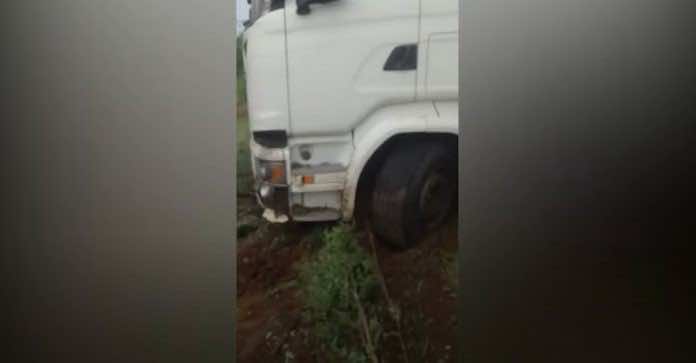
An armed suspect in Mali shot the Moroccan drivers dead in Didieni, an area 300 kilometers from Bamako, Mali’s capital. Footage of the crime scene instantly went viral on social media platforms in Morocco, sparking outrage and head scratch among Moroccans.
In a statement, Morocco’s National Observatory of Transport and the Rights of the Professional Driver confirmed the attack and the death of the two Moroccan drivers.
The statement took issue with the network of international transport in sub-Saharan countries, particularly Mali, accusing it of laxity, of not providing their members with enough security in fragile spots across the continent.
Many other sustained injuries in the attack, and the observatory said the victims “were subjected to intense shooting, the causes of which are still unknown until now.”
Among other difficult conditions facing economic operators in fragile areas across sub-Saharan Africa, the statement mainly denounced the lack of security often encountered by drivers operating in the transport of goods towards the south of the Sahara.
The observatory also expressed its condolences to the families of the victims, announcing its unconditional solidarity with any initiative aimed at ensuring the rights of drivers in the cross-border transport sector.
In its statement, the observatory further called for an urgent intervention and the establishment of a special commission to investigate the killing of the two Moroccan drivers.
Lack of security in the Sahel region has long been a concern for Morocco and other regional partners seeking to end the threat that ISIS- and Al-Qaeda-linked terrorist cells and other armed groups pose in the region.
Many in Morocco’s security establihsment have been calling for a strong regional coalition to adress the multiple security threats in the Sahel, saying that the lack of an effective regional counter-terrorism cooperation leaves the security of the whole region in a constant climate of uncertainty and deep fragility.
The Sahel, a 5,400-kilometer belt (3,360 miles) that spans the transition zone between the Sahara desert and the Sudanian Savanna, includes parts of Senegal, Mauritania, Mali, Burkina Faso, Algeria, Niger, Nigeria, Cameroon, Central African Republic, Chad, Sudan, South Sudan, Eritrea, and Ethiopia.
The route is usually used by drivers from Morocco and other countries transporting goods back and forth between different countries of the region.
Last year, UN Secretary General Antonio Guterres highlighted the increase in security risks in Mali and its surrounding regions.
Mots recently, the UN chief stressed the worrying increase of terrorism in the Sahel, especially in Mali.
“Building a politically stable and more secure Mali requires our collective and sustained commitment and MINUSMA’s continued support. We owe this to the people of Mali and the Sahel region, who deserve a better future,” Guterres said.
Morocco has yet to comment on the crime that claimed the lives of the two Moroccan drivers, and it remains to be seen whether the heinous crime will be declared as a terror attack.