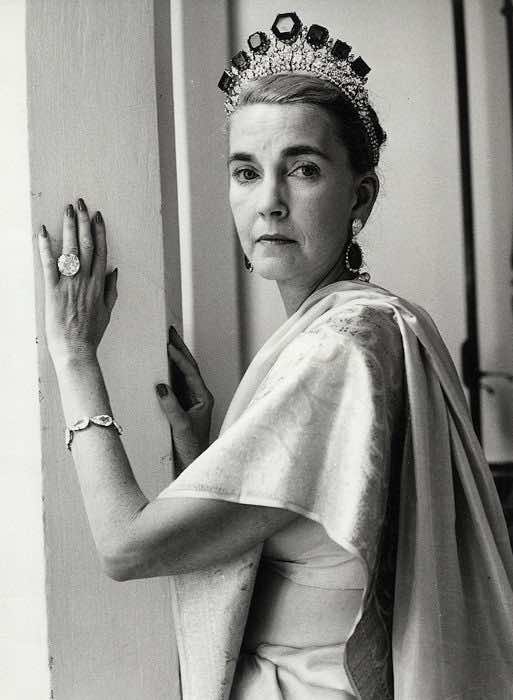
Rabat- During the 40s, Morocco’s Tangier was home to the American debutante and socialite Barbara Hutton. To forget about her desperate life, she hosted the most extravagant parties in the city.
Then known as the “poor little rich girl,” Hutton was one of the wealthiest women in the world in her time, but also apparently one of the saddest.
Hutton led a traumatic life right from her childhood till her death. She lost her mother when she was four, after which her father abandoned her. Married and divorced seven times, she gained grand foreign titles but was often treated badly by most of her husbands.
“My money has never brought me happiness.”
“All the unhappiness in my life has been caused by men,” she once revealed to the New York Times in 1979.
Hutton entered each marriage with a new reservoir of hope, repeatedly saying, “I am very happy.” The happiness clouded over in periods that ranged from just 73 days up to four years.
After the breakup of her marriage to Cary Grant, she said, “My money has never brought me happiness. In fact, after three unsuccessful marriages, I guess I’m considered a very poor risk. You can’t buy love with money.”
“Loneliness” was Hutton’s explanation of her multiple marriages. “But I’m not complaining,” she said. “I’ve had happiness and I’ll have it again.”
Then Came Tangier..
After her last divorce, Hutton’s untiring search for happiness led her to Tangier, where she put her money into a 15-room house.

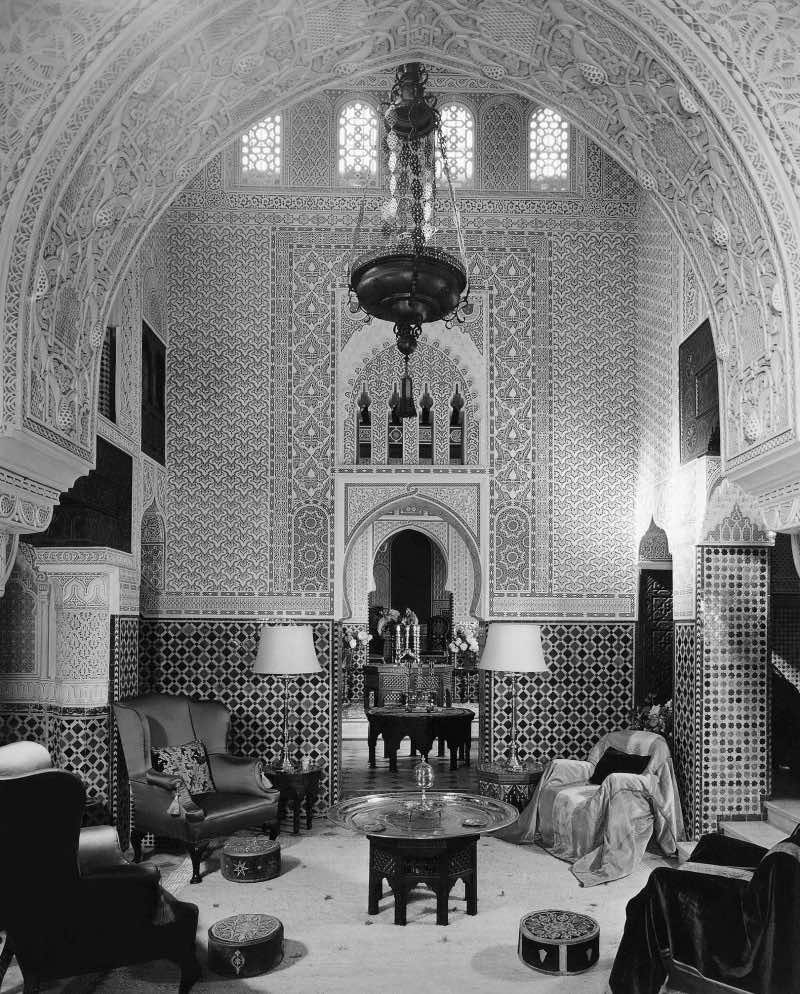
To forget about her divorce from her third husband, Cary Grant, the New Yorker bought herself a magnificent palace right in the middle of the Tangier Casbah. The estate matched her extravagant lifestyle, living the Moroccan dream to the fullest.
In 1946, “Hutton purchased a stone palace inside the Casbah, the fortress that stands within the walls of the old Arab quarter known as the Medina,” wrote Canadian author Victoria Brooks in her book Literary Trips: Following in the Footsteps of Fame, Volume 1.
The house follows no conventional plan for North Africa. It was constructed as a series of seven small native houses, which were then linked together by a former owner.
Hutton’s unlimited expenses hid her multiple misfortunes. Her sicknesses, bad luck in love and mother’s suicide tore her life apart. She was wrecked from the inside. “Barbara was so weak from reducing pills she had to be carried throughout the streets of the Medina when she left her palace,” Brooks explained.
Charm and smells
The city represents everything travelers and artists are looking for in Morocco. Tangier has long been the best destination for all souls who want to take advantage of the city’s status as an international zone.
A true meeting point between different ethnicities, cultures, religions, traditions, civilizations, languages, and ways of life, Tangier inspired many poets, writers and foreign musicians.
The American author and chef Anthony Bourdain once said: “But the good stuff, the real good stuff, the sounds and smells and the look of Tangier — what you see and hear when you lean out the window and take it all in — that’s here to stay.”
An American writer and a central figure of the Beat Generation, William S. Burroughs settled for several years in Tangier where he wrote his novel Naked Lunch.
Burroughs said: “Tangier is one of the few places left in the world where, so long as you don’t proceed to robbery, violence, or some form of crude, antisocial behavior, you can do exactly what you want.”
Tangier, nestled in the Strait of Gibraltar, is nicknamed the “Gateway to Africa” for its proximity to Europe. The city is a popular destination for cruise ships and is foremost a port city. It is connected to 174 ports from 74 countries on 5 different continents.
Barbara Hutton’s escape to Tangier is just one of dozens of souls seeking something significantly different from their dissatisfying national roots.