 Join on WhatsApp
 Join on Telegram
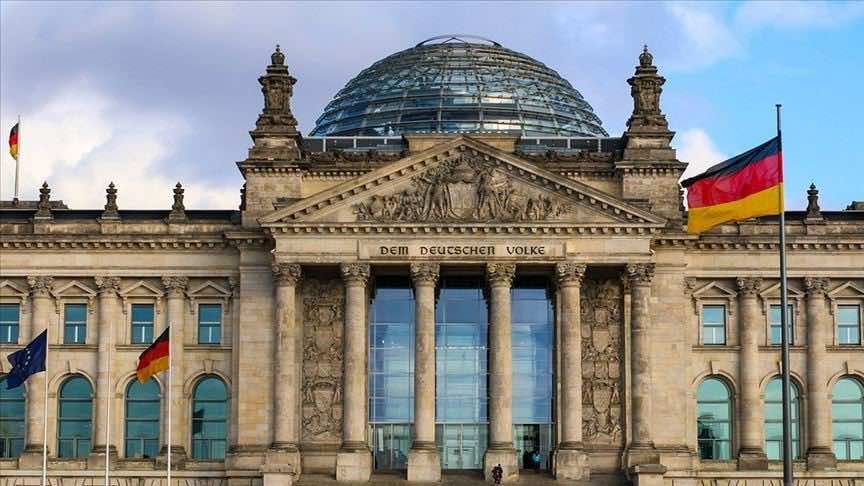
Rabat – The German Foreign Ministry released a communique Monday, December 13, 2021, in which it affirmed that the Moroccan Autonomy Plan is an “important contribution” to an end to the Sahara conflict.
The ministry said, “Germany supports the UN personal envoy for Western Sahara, Staffan de Mistura, in working towards a just, lasting and mutually acceptable political solution, on the basis of Security Council resolution 2602,” adding that “Morocco made an important contribution to such an agreement in 2007 with an autonomy plan.”
Titled: “Germany and Morocco: bilateral relations,” the communique reaffirmed that Germany’s position in this regard has remained “unchanged” for decades.
In what appears to be a German attempt to wipe the slate clean and and overcome the prolonged period of tensions between the two countries, the German government praises the mediation and stabilization role that Morocco has played over the years in regional conflicts, chief of which is the Libyan conflict.
“The country plays an important role in the sustainable development of the region; this is evident in particular in his diplomatic engagement with the Libyan peace process,” the statement explained.
Excluding Morocco from the January 2020 Berlin Conference was among the most salient factors that increased tensions between the two countries. Back then, Morocco’s Foreign Minister, Nasser Bourita, issued a strongly-worded statement in which lambasted Germany and questioned the motives behind its sidelining of Rabat and the merit of its involvement in the Libyan conflict.
The communique also pointed out the German-Moroccan development cooperation focuses on several areas such as; sustainable economic development, employment, renewable energies as well as water resources management. “In 2020, Germany provided support to Morocco in managing the COVID-19 crisis,” it said.
“Germany supports Morocco’s modernization process and given the volume of its commitments, namely nearly 1.2 billion euros in 2020, it is one of the main bilateral donors,” it added.
Additionally, Germany’s foreign ministry described the Economic and trade relations between the two countries as remarkable. In 2019, Germany was Morocco’s seventh trade partner.
The tone of the communique gives clear signals about the German government’s willingness to rebuild trust between the two countries, making it clear that it has gotten Morocco’s message and seeks to usher in a new era in bilateral relations.
The German’s move comes on the heels of a series of statements made by Moroccan officials in recent months in which they showed unheard of assertiveness and expressed their determination to downgrade the country’s trade and economic relations any country that shows ambiguity or a double-speak with regards to Morocco’s territorial integrity.
In his address to the nation on the 46th anniversary of the Green March in November, King Mohammed VI said that: “I wish to tell those with ambiguous or ambivalent attitudes, that Morocco will not have any economic or commercial transaction with them in which the Moroccan Sahara is not included.”
Observers and Morocco watchers interpreted this passage of the speech was clear message to countries such as Germany and Spain, which appeared to be displeased by the US decision to recognize Morocco’s sovereignty over Western Sahara.
Eleven days following the US decision to recognize Morocco’s sovereignty, Germany, then a non-permanent member of the Security Council, convened a consultations meeting to discuss the implications of the US decision.
The convening of the meeting itself raised eyebrows in Morocco. The German ambassador to the United Nations, Ambassador Christoph Heusgen, made a statement full of shortcuts, half-truths and approximations, that reflected Algeria’s narrative of the conflict and his sheer ignorance of the history and intricacies of the conflit.
To make things worse, he accused Morocco of “occupying” the territory, a terminology that is not used in the UN jargon. Since 1980, not a single UN official document refers to Morocco as an occupier of the territory.
Earlier this month, Morocco’s Foreign Affairs Minister Nasser Bourita said “clarity and reciprocity” on questions of vital importance for Morocco should be the focus of any genuine diplomatic relations with Rabat.
Appearing to mention the state of Morocco-Germany relations in a closed meeting at the Moroccan parliament, Bourita insisted that Rabat expects countries that want to remain allies or partners of Morocco to be clearly supportive of Moroccan interests.
He added that ties between Berlin and Rabat require action and efforts “in line with a logic that takes into account clarity and reciprocity.”
Read Also: Germany Clarifies Position on Tension with Morocco
Morocco and Germany have been experiencing a diplomatic rift due to Berlin’s position over Western Sahara.
The first signs of the bilateral rift appeared in March, when Morocco’s Foreign Ministry announced the suspension of all contact with Germany’s embassy in Rabat.
Without giving details, the foreign ministry noted that the decision was made in response to “deep misunderstandings” with Germany on questions Morocco deems essential for its sovereignty and territorial integrity.