
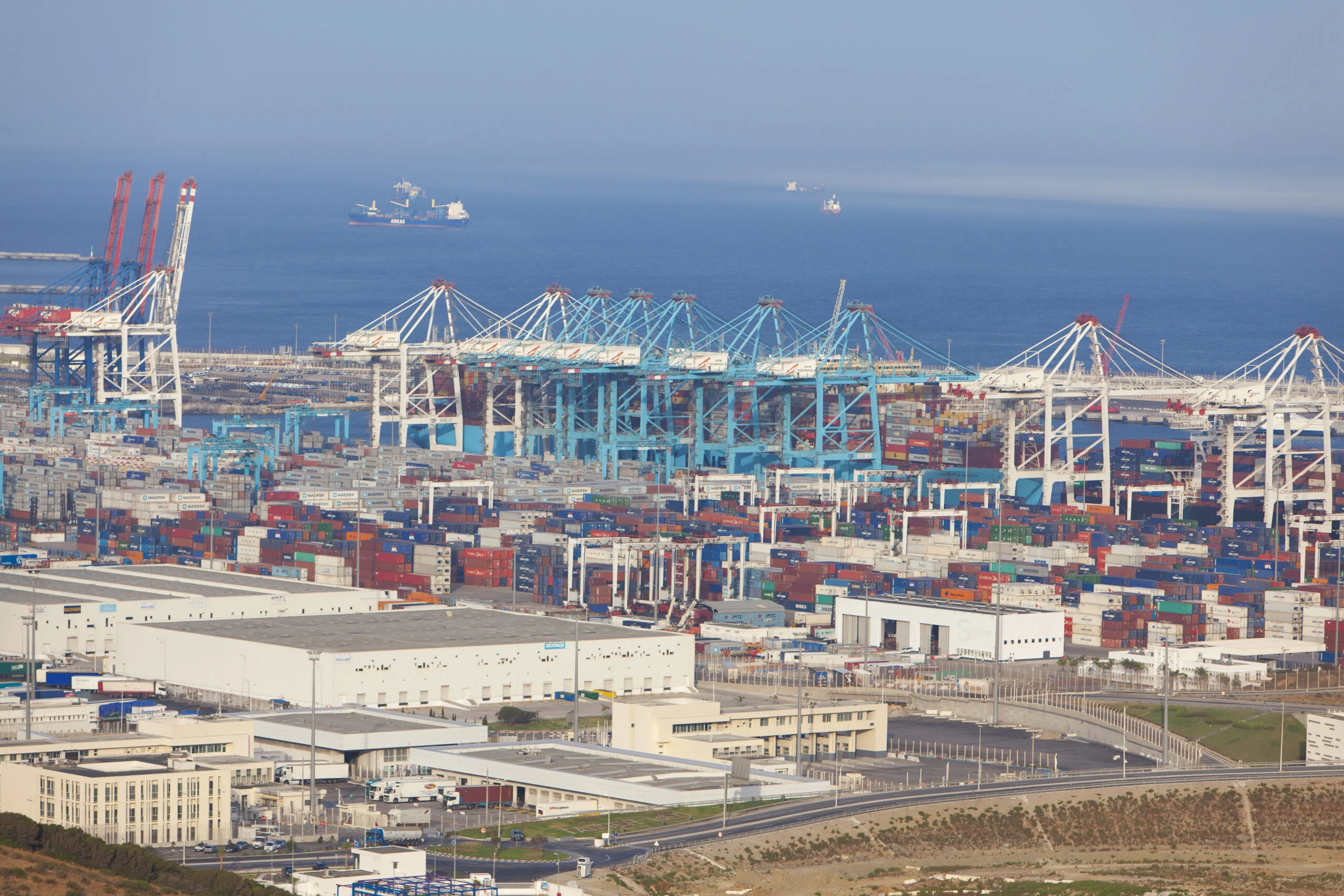
Rabat– Marsa Maroc has announced a MAD 3 billion ($300 million) investment plan to expand container handling capacity at the Port of Casablanca after securing a 20-year extension of its concession to operate Container Terminal 3 (TC3).
The concession extension, granted to the company’s subsidiary TC3PC, will support a long-term expansion project aimed at meeting growing container traffic at Morocco’s largest port.
Under the investment plan, Marsa Maroc aims to increase the capacity of Terminal 3 from 600,000 to 900,000 twenty-foot equivalent units (TEUs) by 2030. The broader expansion is expected to raise the Port of Casablanca’s total container handling capacity to more than 2 million TEUs.
The project includes extending quay infrastructure, upgrading cargo-handling equipment, and redesigning storage areas across the two container terminals operated by Marsa Maroc at the port. The company said the improvements are intended to increase both operational efficiency and cargo processing capacity.
Marsa Maroc said the investment reflects its long-term strategy to strengthen the Port of Casablanca’s role as Morocco’s primary maritime gateway, supporting the country’s growing trade flows and enhancing the competitiveness of its national logistics network.
The extended concession provides the operator with the long-term certainty needed to undertake major infrastructure investments while preparing the port to accommodate rising container volumes in the years ahead.
Morocco’s National Ports Agency (ANP) announced a significant improvement in operations at Casablanca Port, reporting that congestion has been reduced by nearly half following the implementation of reinforced management measures aimed at maintaining the smooth flow of maritime traffic.
The agency said the port, Morocco’s largest commercial gateway, has faced mounting pressure since December 2025 due to a combination of adverse weather conditions, rising cargo volumes, and operational disruption.
In response, the ANP, in coordination with port operators and local authorities, introduced a strengthened management system designed to optimize vessel traffic and cargo handling operations.
The measures include closer monitoring of ships waiting offshore and at berth, more efficient allocation of docking spaces, stricter oversight of cargo clearance rates, and enhanced coordination with freight recipients to accelerate the evacuation of goods