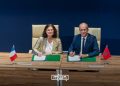
Rabat – Morocco Economy and Finance Minister, Nadia Fettah Alaoui, highlighted this week Morocco’s continuous effort to support citizens’ purchasing power.
While answering MPs’ questions during a session at the House of Representatives, the minister revealed that Morocco has allocated MAD 16 billion ($1.7 billion) to support purchasing power within the 2022 state budget.
She reiterated that the recent rise in commodity prices is driven by external factors linked to COVID-induced disruptions in the global supply chain.
Despite such external constraints, Morocco’s efforts to keep markets well supplied and prices stable have been largely successful, the minister argued.
Prices of subsidized products remained stable despite external market pressure thanks to Morocco’s special fund, she continued.
As underscored in King Mohammed VI’s October 8, 2021 speech during the opening of the current parliamentary session, Alaoui pointed out, subsidizing products that are central to the national household shopping basket is a high priority to the government.
In line with the King’s instructions, the government has introduced several measures to mitigate the external pressure on prices, she added.
One of the measures, announced in November last year, was the suspension of tariffs on imported wheat. As part of that decision, the government allocated emergency funds to subsidize wheat and thus keep bread within the purchasing power of Moroccan citizens, explained the minister.
Presenting the wide range of measures the government has enacted to maintain the stability of local markets, Alaoui pointed to the establishment of a governmental commission tasked with monitoring local markets and prices.
In recent months, Morocco has been experiencing an unprecedented rise in vegetable oil prices, among other products. However, the country’s Consumer Price Index (CPI), which tracks purchasing power, has remained largely stable.
Amid the COVID crisis, the shortage of labor in key producing regions globally has exacerbated the trend of rising prices globally. The uneven post-pandemic recovery has done little or nothing to help rising prices as demand rose in economies that had opened while producing regions were still grappling to curb the spread of COVID-19.
Global estimates indicate that the global supply crush should ease throughout 2022 and 2023 as vaccination campaigns gain more momentum worldwide.
Read Also: 2022 Finance Bill: Morocco Increases Government Spending for Ambitious Social Programs