 Join on WhatsApp
 Join on Telegram
Rabat – India is facing a major diplomatic backlash from Muslim-majority countries after top officials from the country’s ruling Hindu nationalist party, Bharatiya Janata Party (BJP), made derogatory remarks about Islam and the Prophet Muhammad.
The senior officials’ blasphemous comments drew the ire of many Arab countries, leaving New Delhi scrambling to limit the harmful impact of the country’s latest anti-Islam scandal.
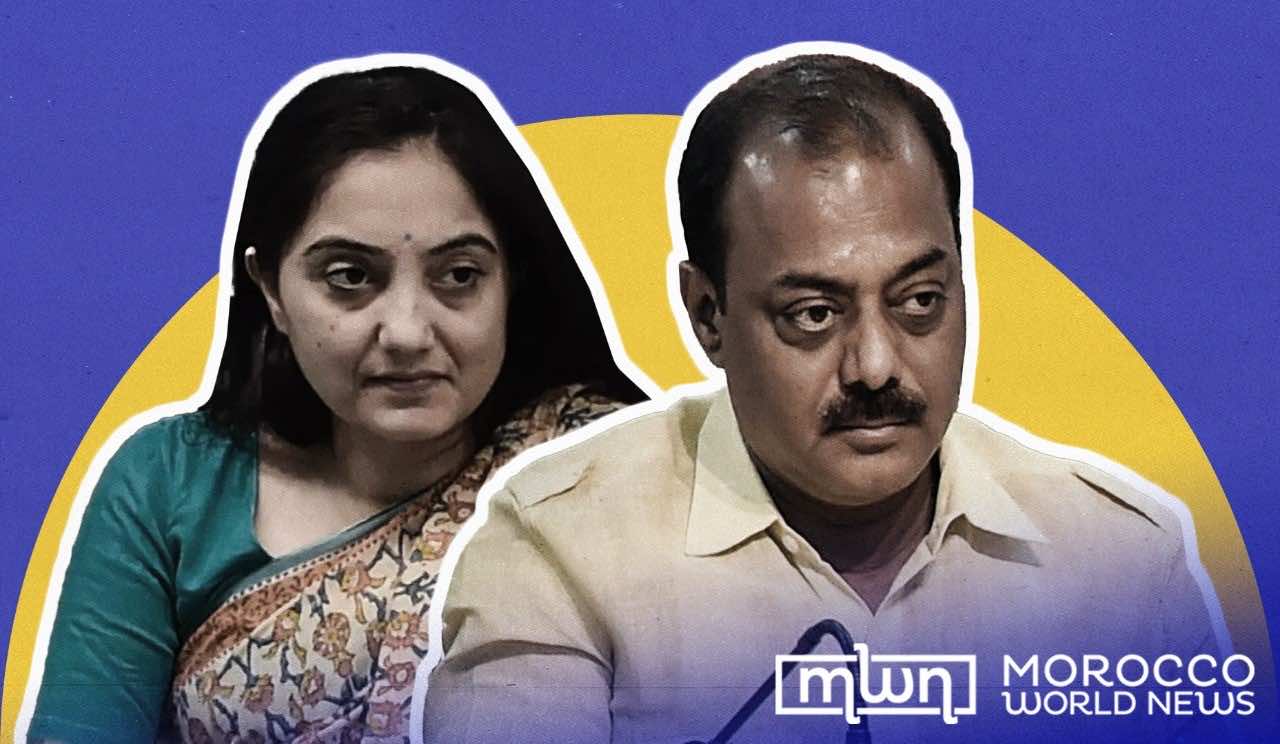
In response to the offensive, Islamophobic comments by senior BJP officials Nupur Sharma and Naveen Kumar Jindal, a number of Arab countries have submitted official objections against India.
The outpouring of outrage began last week when the two BJP members made remarks that were seen as insulting to Prophet Muhammad and his wife Aisha.
During a televised debate on the vexed Gyanvapi mosque controversy, Sharma made derogatory comments about Prophet Muhammad and his wife Aisha’s age.
Her remarks sparked controversy, prompting multiple protests from Muslim groups in India, with reports later indicating that around 40 individuals, including police officers, were hurt during the protests in the city of Kanpur.
Several First Information Reports (FIR) were filed against Sharma for infringing on religious emotions during her now-notorious television debate. The first FIR was registered by the Mumbai Police at the behest of the Islamist group Raza Academy, while the second was filed on June 1 by the Mumbra police in Thane based on a complaint by Mohammad Gufran Khan, a school teacher.
Read also: Students Protest Hijab Ban in Indian College’s Classrooms
After being expelled from BJP, Sharma issued an apology on Sunday, stressing that her intention was not to hurt anyone. “If my words have caused discomfort or hurt religious feelings of anyone whatsoever, I hereby unconditionally withdraw my statement,” she said in a tweet.
Jindal, for his part, made provocative statements about Prophet Muhammad on Twitter on June 1. In response, social media users launched a campaign on Twitter under the hashtag “Arrest Naveen Jindal.” Faced with a torrent of backlash, the BJP official later deleted his tweet.
After he was suspended from the BJP, Jindal posted another tweet yesterday urging everyone to not make his address public as he was getting death threats on social media. “I have a special request to all, please do not make my address public, threats to kill me and my family are being given continuously on social media too,” he said.
Amid the social media melee, Qatar, Saudi Arabia, Oman, the United Arab Emirates, Afghanistan, Pakistan, and Iran have all requested an apology from India’s government for tolerating insulting, anti-Islam statements from senior officials of the country’s ruling political party.
The BJP did not take any action against Jindal and Sharma until Sunday, after the governments of Qatar, Kuwait, Pakistan, and Iran summoned Indian ambassadors in their respective countries for clarification.
In a bid to assuage the backlash it has been experiencing on the diplomatic front, India’s ruling, Hindu nationalist party banned Sharma and expelled Jindal. The party notably issued an unusual statement in which it “strongly denounces disrespect to any religious personalities,” a decision that Qatar and Kuwait applauded.
In addition to the strong condemnation by governments of Muslim-majority countries, many on social media have launched campaigns calling to boycott Indian products as a way of expressing their anger toward the Indian government for accommodating anti-Islam sentiments.
According to Al Jazeera, Indian products were removed from shelves in certain Kuwaiti shops on Monday.
Aggressive reactions to aggressive statements
Because offending Prophet Muhammad is a red line for Muslims, Muslim-majority countries were outraged by India’s offensive Islamophobic statements.
Qatari Minister of State for Foreign Affairs Soltan bin Saad Al-Muraikhi warned in a statement that “these insulting remarks would lead to incitement of religious hatred, and offend more than two billion Muslims around the world.”
Meanwhile, Kuwait cautioned that if the statements were not punished, India would experience “an increase of extremism and hatred.”
Doha, on the other hand, is expecting “a public apology and immediate condemnation of these remarks” from the Indian government.
Saudi Arabia and Iran also submitted complaints with India, while the Jeddha-based Organization of Islamic Cooperation stated the statements came in a “context of intensifying hatred and abuse toward Islam in India and systematic practices against Muslims.”
Pakistan, for its part, summoned an Indian envoy on Monday to express Islamabad’s “strong condemnation.” This came a day after Prime Minister Shehbaz Sharif claimed the BJP officials’ remarks were “hurtful” and that “India under [Prime Minister Narendra] Modi is trampling religious liberties and harassing Muslims.”
The Organization of Islamic Cooperation (OIC) said in a statement: “These insults come in the context of the increasing intensity in hatred of and insults to Islam in India and the systematic harassment of Muslims.”
So far, New Delhi has made no comment on the Arab states’ objections, but the Indian Foreign Ministry on Monday dismissed the OIC’s views as “unwarranted” and “narrow-minded.”
The Indian embassies in Qatar and Doha issued a statement on Sunday, saying that harsh measures had already been taken against individuals who made the disparaging remarks against Islam. Both declarations notably insisted that the sentiments voiced against the Prophet Muhammad and Islam were not those of the Indian government and were expressed by “fringe elements.”