 Join on WhatsApp
 Join on Telegram
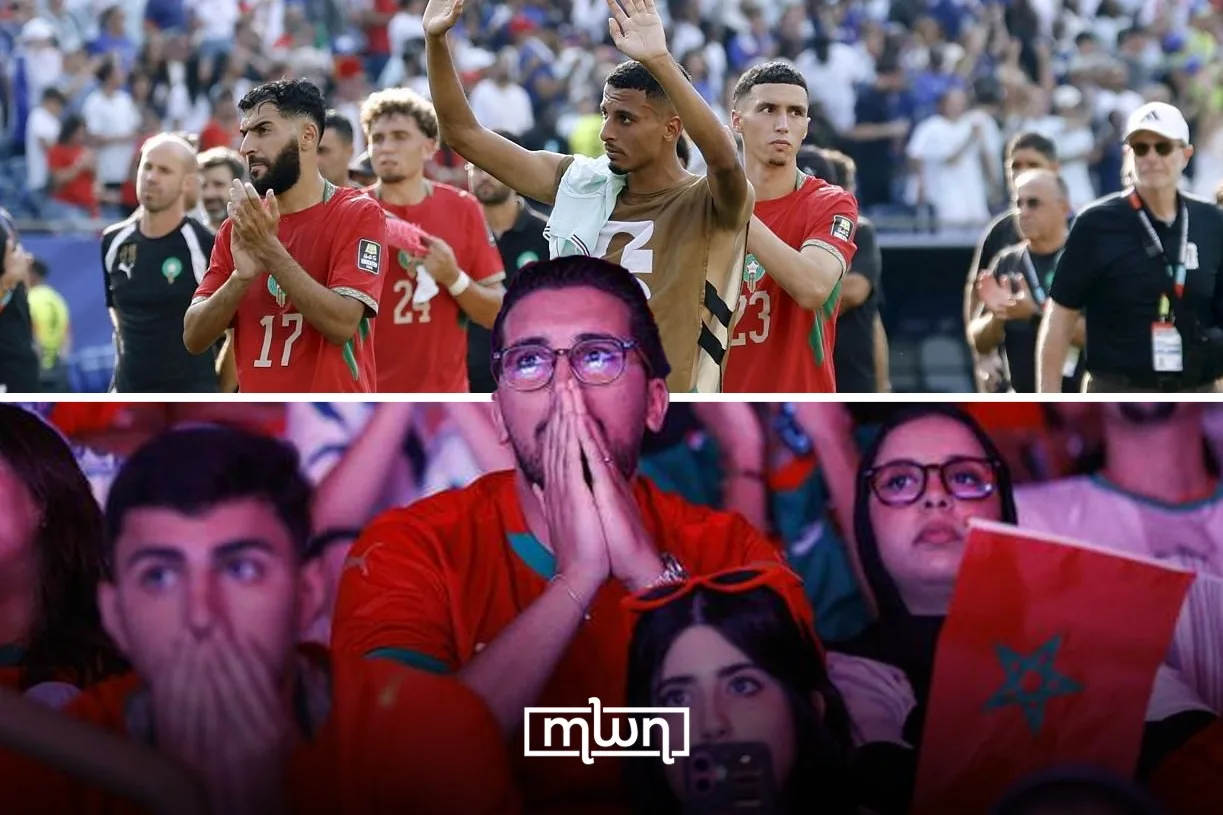
Football in Morocco is not a game; it is a mirror of national pride, collective identity, and historical grit. Yet last evening, as the Atlas Lions crumbled 2-0 against France in the World Cup Quarter-Finals, millions of Moroccans did not just watch a defeat, they felt a knives-in-the-back betrayal. The grief today is not about losing; it is the haunting, infuriating realization that the team did not fight.
For many in a nation that demands blood on the pitch, Thursday’s display against France looked less like an athletic failure and more like a quiet resignation.
The ghost of real warriors
The anger paralyzing Casablanca, the small towns of the Atlas Mountains, and the global diaspora stem from a stark contrast. Moroccans know what their heroes look like when they are hungry. They saw the fearless, unyielding warriors who neutralized Brazil. They saw the ferocious, tactical masterclasses that tore through Scotland, the Netherlands, and Canada. In those matches, even if victory wasn’t guaranteed, the struggle was absolute.
Yet on Thursday night, that sacred fire was entirely extinguished. The Atlas Lions looked uncharacteristically heavy, hollow, and reserved. The typical aggressive press was replaced by a bizarre hesitation, and the fluid transitions felt mechanical and lifeless. To a fanbase that has fiercely defended this squad like family, watching them walk through the biggest match of their lives felt like a profound, unforgivable letdown. They proved to the world they could fly, only to deliberately ground themselves when it mattered most.
The digital post-mortem: social media and the whispers of conspiracy
When a defeat feels this uncharacteristic to fans, speculation naturally fills the void online. Across X, TikTok, and Facebook, the word (conspiracy) quickly began trending, serving as a viral talking point for a fanbase trying to rationalize an otherwise inexplicable collapse.
Fueling the viral momentum of these social media theories was a highly discussed diplomatic coincidence: news that a high-level French government delegation of around 12 ministers is expected to visit Morocco on July 15-16, led by Sébastien Lecornu, emerged just as anticipation surrounding the match reached its peak.
To a heartbroken online public struggling to understand why their fiercely competitive team looked so unusually subdued, this timing became an instant focal point for viral commentary. Speculation regarding behind-the-scenes political agreements and diplomatic compromises quickly spread across comment sections and viral videos, often overshadowing standard tactical analysis. While these claims exist strictly as social media chatter and the collective coping mechanisms of a devastated fanbase, their widespread circulation exposes a raw truth: many fans found it easier to process the loss as a complex external narrative rather than accept that their sports idols simply had an off night.
The sacred trust, broken
Whether these theories are the product of genuine corruption or simply a coping mechanism for a devastated nation, they reveal the immense and sometimes overwhelming weight of the Moroccan jersey. When a team carries the hopes, pride, and dignity of an entire people, a disappointing performance can be perceived by some fans not merely as a loss, but as a profound sense of betrayal.
The true tragedy of last night is not simply that Morocco is out of the World Cup. The tragedy is that a beautiful, historic journey ended under a cloud of suspicion and unfulfilled potential. Moving forward, the Atlas Lions face a challenge far greater than recovering their physical form. They must figure out how to rebuild a sacred, broken trust with a populace that will never forget, and may never forgive, the night the fire went out.