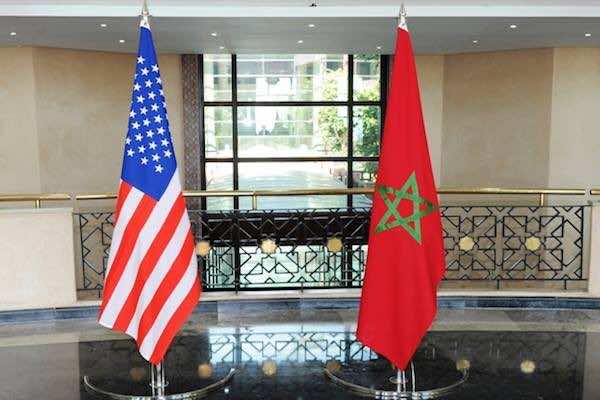
Casablanca – The US Department of State issued its 2022 Investment Climate Statements on Thursday, July 28, with one chapter detailing Morocco’s favorable and safe investment climate despite existing trade barriers.
The reports are intended to assist US business leaders in making appropriate business decisions by providing accurate information on the economy of more than 160 nations throughout the world. They also serve as a reference tool for partner governments looking to mobilize high-quality and long-term investments to help their economy recover from the epidemic.
The 2022 Investment Climate Statement on Morocco focuses mainly on its fertile ground for foreign investment.
“Morocco actively encourages and facilitates foreign investment, particularly in export sectors like manufacturing, through positive macro-economic policies, trade liberalization, investment incentives, and structural reforms,” the report highlights.
The North African country was awarded the eighth most foreign direct investment (FDI) in Africa, as stated by the United Nations Conference on Trade and Development’s (UNCTAD) World Investment Report 2020, the report mentions.
Read also: Morocco, US Pledge to Boost Investment Opportunities
According to the statement, Morocco’s comprehensive economic growth strategy aspires to turn the country into a regional commercial powerhouse by capitalizing on “its unique status as a multilingual and cosmopolitan nation.” This is possible because the country is positioned at the crossroads of sub-Saharan African, Middle Eastern, and European regions.
The Moroccan government, the report continues, pursues measures targeted at increasing employment, attracting foreign investment, and improving performance and production in major revenue-generating industries.
However, despite substantial advances in its business environment and infrastructure, the report highlights Morocco’s trade barriers that need to be taken into consideration.
According to the report, among the most significant impediments to conducting business in Morocco are “the lack of efficient and transparent processes for government permits, land approvals, and procurements create further barriers when dealing with the public sector.”
Other “barriers to market entry” in Morocco, the report adds, include “legal and banking systems that differ in many respects from U.S. systems.” It specifies that Morocco’s “legal system is based on a combination of French, Spanish, and Islamic laws, and can be complex for U.S. companies to navigate.”
However, the report also emphasizes that Morocco’s banking sector has undergone substantial reforms in recent years, including “structures and programs for foreign direct investment (FDI), project finance, and trade finance.”
Read also: U.S.-Africa Business Summit: Morocco Now Leverages Morocco’s Strengths
Morocco’s 2022 Investment Climate Statement further details the country’s specific interest in maintaining national security and political stability.
“Morocco enjoys political stability, a geographically strategic location, and robust infrastructure, which have contributed to its emergence as a regional manufacturing and export base for international companies,” the report says in Morocco’s Commercial Guide chapter.
Despite the various threats the country is facing, “national security is one of Morocco’s top priorities,” the statement highlights.
Given its strategic location, Morocco is highly susceptible to transnational challenges such as illegal immigration and human and drugs trafficking, which prompts the country to seek tighter border control according to the report.
Through bilateral and multilateral agreements with Europe, the United States, and other nations, Morocco remains dedicated to imposing strict security and customs controls at its airports, seaports, and border crossings, the report notes.