Rabat -Morocco’s Interior Ministry has strongly denied accusations questioning the credibility and neutrality of the authorities during the country’s partial elections held on July 21.
The ministry issued a communique on Monday, pointing out that the “leadership of a political party that participated in the partial legislative election” made “malicious” remarks with a view to “undermining the credibility of the electoral operation.”
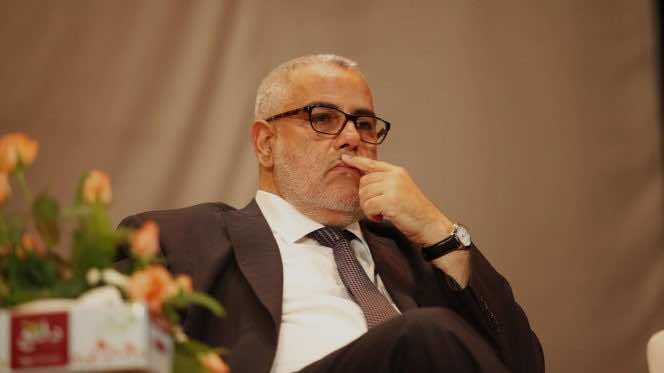
The communique was referencing remarks by Abdelilah Benkirane, Secretary General of the Islamist Justice and Development Party (PJD), which was Morocco’s ruling from 2011 to 2021.
Unsatisfied with the results of the partial elections, Benkirane recently claimed that the vote “might have been directed by certain agents of authority.”
The Rally of Independents Party (RNI), which currently leads the government coalition, won a landslide victory in the partial elections, securing over 10,259 of the votes.
The Authenticity and Modernity Party (PAM) came second with 9,416 votes and the Al Istiqlal (Independence) Party with 7,955 votes; the two parties form the coalition along the RNI.
The Justice and Development Party secured fewer votes than in previous years, only winning 762 votes.
In response to Benkirane’s accusations, the Interior Ministry said the leadership of a “political party” had been engaging in propaganda and spreading “erroneous information.”
“The defamatory remarks are not up to the level of the serious political speech which the secretary general of a political party must demonstrate,” the ministry added, condemning Benkirane’s “malicious and unacceptable” allegations.
Read Also: Akhannouch to PJD: ‘You Expect Others To Achieve What You Could Not Do Ten Years’
The ministry’s statement concluded by emphasizing Morocco’s legal, judicial, and political guarantees ensuring a “transparent conduct of the electoral deadlines.”
Benkirane is one of Morocco’s most outspoken political figures. Over the past year, the PJD leader has also been one of the most vociferous critics of the current government led by Aziz Akhannouch.
Meanwhile, the exchange of strident remarks and accusations between the former and current Heads of Government is also common in the Moroccan political scene.
Recently, Benkirane called on Akhannouch’s government to resign for what he characterized as the government’s failure to shield Moroccan households against a severe cost of living crisis.
Akhannouch hit back by suggesting that the unsound policies espoused by Benkirane’s party, which ruled Morocco for the past decade, are the main reason for the country’s ongoing social and economic crises. “You are asking others to do what you could not do in ten years,” Akhannouch said.