


 Join on WhatsApp
  Join on Telegram
 Casablanca – A decade after the apparent collapse of the Independent Agency for Urban Transport in Fez in August 2012, urban transport in the city has largely failed to meet residents’ expectations, putting their social security at risk.
According to many locals, the agency, long drenched in efficiency and unkept promises of quality delivery, has been unable to deliver adequate quantitative and qualitative services, provide a clear management strategy, or keep up with the rapid pace of urbanization in Fez’s metropolitan surroundings.
Meanwhile, the transportation firm “City Bus” has been permitted to administer Fez’s urban transportation facility since 2012, in a contract that drew a lot of attention during the tenure of the city council led by former Mayor Hamid Chabat.
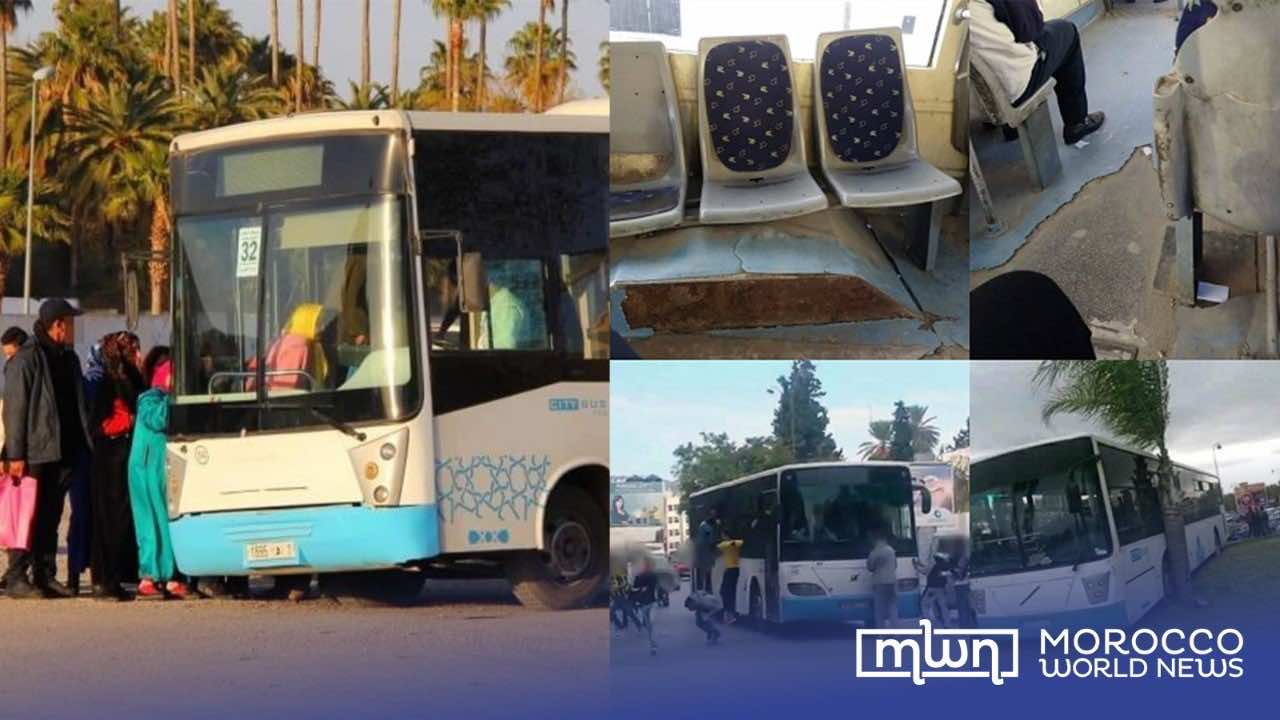
However, “City Bus” has similarly experienced a decline in its services, which includes a small fleet, bus delays, congestion, numerous breakdowns, and noncompliance with the requirements of the bill of exchange, thus adding to the transportation difficulties of Fez’s inhabitants.
The firm was relying on some newly incorporated mini-buses to remedy the problem, but they did not perform as expected.
Further issues emerged as a result, such as long transit times and waiting at stations, since the mini-buses load up rapidly and cannot accommodate the necessary number of people.
How it all started
After the French conquered Morocco in 1913, they established a modern metropolis called Ville Nouvelle around Fez’s medina or ancient city.
With the creation of the modern city, the French military implemented a public system of urban transportation within the new city, starting with nine lines and gradually expanding over time, eventually incorporating the use of taxis.
The city of Fez became known for its urban development and experienced massive demographic growth in the new millennium, although it continued to possess an outdated urban bus transport system that provided only one bus for more than 7,000 citizens.
Despite the establishment of the Autonomous Agency for Urban Transport of the Wilayat of Fez on January 1, 1971 — an initiative of the Fez Municipal Council to rehabilitate urban transportation by buses within the city — the size of the bus fleet and its ability to connect the city’s newly created areas lagged behind the city’s demographic and urban growth.
Government interventions
Recently, urban transportation in Fez, the scientific capital, has been in significant decline, as evidenced by inadequate management, poor services, a lack of bus maintenance, and the suspension of construction on several lines.
The citizens of Fez face significant challenges on a daily basis as a result of the urban transportation buses “City Bus,” ranging from hours-long delays to breakdowns in the midst of public streets, both of which disrupt the daily rhythm of people’s lives.
Will Fez’s current mayor, Abdeslam Bekkali, follow in the footsteps of Kenitra’s former mayor, Aziz Rabbah, and take active efforts to solve the problem by ending Fez’s partnership with this corporation?
The “City Bus” company recently clashed with Bekkali, after he held it responsible for the deterioration of urban transportation services in what is usually referred to as Morocco’s cultural and spiritual — even scientific — capital.
“City Bus” refuted Bekkali’s accusations by blaming its suboptimal services on the Fez city council’s — and especially Bekkali’s — breach of contractual obligations with the company.
The Ministry of the Interior eventually stepped in, offering to supervise an arbitration procedure to find peaceful solutions to the existing problems between the Fez community and “City Bus.”
In response to the Ministry of Interior’s proposal, “City Bus” proposed to preserve the contract’s term, place 205 buses into service, add 22 spare buses, and invest a total of MAD 178 million ($18 million). This was in exchange for the firm receiving investment assistance from the trustee authority equivalent to 50% of the entire amount mentioned in the investment budget.
The firm also promised to acquire new buses within 10 months of signing and ratifying the annex, and opted to handle the transitional period by obtaining 50 used buses to supplement the present fleet within two months of the signing.
In July, the Ministry of the Interior requested that the Fez Collective Council provide a response to the “City Bus” company’s proposal.
However, the ability of the Fez Collective Council and the “City Bus” corporation to find a solution to this significant transportation dilemma remains uncertain.
The city of Fez’s urban transport issues continue to stir controversy among the city’s residents and officials, owing to the ongoing deterioration of City Bus’ services and the company’s strained relationship with some parties within the Collective Council of Fez, who are demanding its departure from the city.
“Over the years, the urban transport sector in Fez still suffers from major problems, similar to what it was in the late era of the Independent Urban Transport Agency. The company has not renewed its fleet inherited from the agency for years,” the new Fez mayor said in November last year.


