Casablanca – Amid Morocco’s severe water scarcity crisis, causing the worst drought in the country in 40 years, Morocco World News (MWN) reached out to Dr. Abdelghani Chehbouni, a professor at Mohammed VI Polytechnic University (UM6P) and the head of the university’s International Water Research Institute, to discuss the measures Morocco can adopt to address this increasingly alarming issue.
Chehbouni holds a PhD in hydrology and remote sensing. During his 40 years of research and experience abroad, his main research focus was on climate change and remote sensing.
He started his academic career in France where he received his Master’s and doctorate degrees in climate change and remote sensing studies.
In parallel with teaching, he worked with big agencies such as NASA, the European Space Agency, the French National Center for Scientific Research (CNRS), as well as the Research Institute for Development (IRD).
His most recent position was as director of the IRD center in Morocco, which he founded and oversaw for several years.
After 40 years abroad, Chehbouni decided to return to Morocco with the main ambition of putting at the service of his homeland all the expertise and broad professional network he had nurtured over the past three decades.
From Speaker to Professor
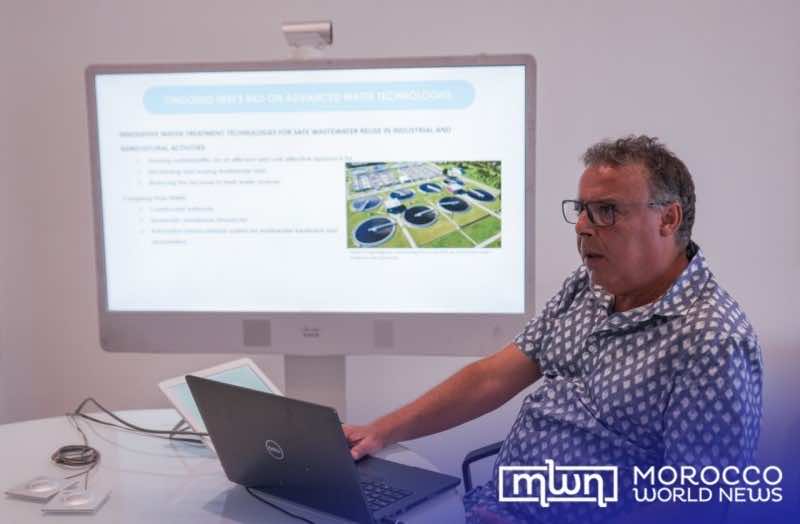
Though his choice to return to Morocco stemmed from a fundamental, deeply-rooted desire to contribute to change or development in a field as crucial as the understanding and management of climate change, Chehbouni describes his decision to start teaching at UM6P as a result of “pure chance.”
Two years ago, he attended an event at the university in which he was invited to give a talk. It was during this visit that he was first introduced to the university’s mission and vision of developing knowledge, science, and technology aimed at addressing real-world challenges.
After the event, Chehbouni got a job offer from UM6P, and he grabbed the chance to do something that he had been preparing for during all the long years abroad: start a new career in his home country, which he had left several years ago.
“UM6P is not meant to make money. UM6P is meant to face the challenges of Morocco and Africa today and tomorrow,” Chehbouni said. “The objective of the university is not to be one of the best universities in Africa or in the world alone. But the objective is to take up all research and innovation ecosystems of Morocco and of Africa.”
At UM6P, he stressed, “we are not doing research for the sake of research. We are doing research that serves the population and public policy. The idea is to make sure that our leaders can make informed decisions based on science and facts.”
Water Scarcity Crisis in Morocco
Morocco’s current water shortage is an urgent issue that could impose significant constraints on the country’s economic development and food security for decades to come.
The agricultural sector will be the first victim of the lack of water since it is the largest consumer of water in Morocco, consuming more than 85% of available water.
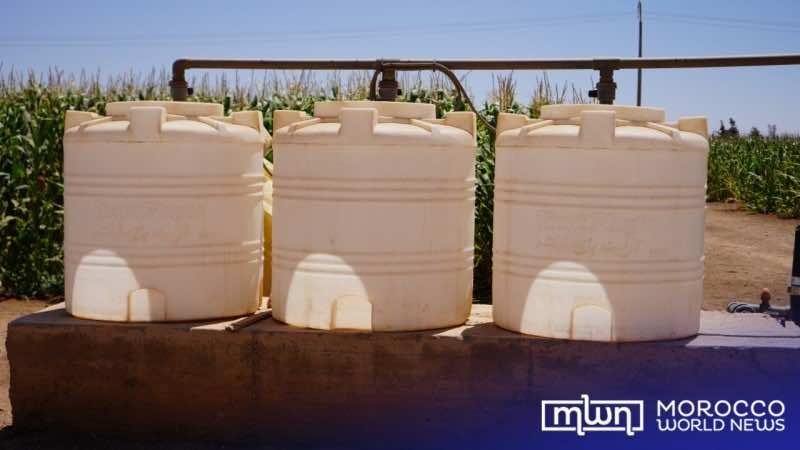
As climate change has a substantial influence on the availability of water supplies, Chehbouni explained, it can potentially exacerbate the country’s condition in terms of long-term water supply to satisfy the expanding demands of people, agriculture, and other urban activities.
According to the Moroccan climate expert, Morocco has indeed suffered significantly from water scarcity during the last two years due to “natural changes, in terms of climate change and precipitation regimes, and poor policy choices.”
With the Atlas being “the water towel” of Morocco, the professor pointed out, the sharp decrease in snow, especially in the region of Tensift, has worsened the water shortage crisis in the country.
As he sees it, further aggravating the issue in Morocco is “the increase in water demand,” which he attributed to “the population growth, and the development of economic activities in this region.” Another, equally important, factor is the “increased agricultural demand,” he argued.
What’s the Solution?
Although the UM6P professor believes that “there is no magical solution” for the water shortage crisis in Morocco, he thinks that adaptation is the only solution left.
“We have to adapt to this climate change even though Morocco is not responsible for climate change,” he said, noting that the country’s “contribution to CO2 emission in the world is negligible.”
But because “adaptation is not easy [and]… requires a change of mind and innovative technology,” the UM6P professor believes that the North African country “needs to change our ways of producing and living.”
“Morocco is facing strong consequences of climate change,” Chehbouni stressed. “The agricultural sector alone consumes 85% of available water for irrigation,” forcing the country to “rethink its agricultural system.”
For him, Morocco can change its irrigation system “from flood irrigation to drip irrigation,” which can save the country about “40% to 50% of water.”
As Morocco grapples with its most severe drought in four decades, “every drop of water is important,” Chehbouni said. “We are jeopardizing the water security of this generation before the future generations that will suffer if nothing is done.”
The Way Forward
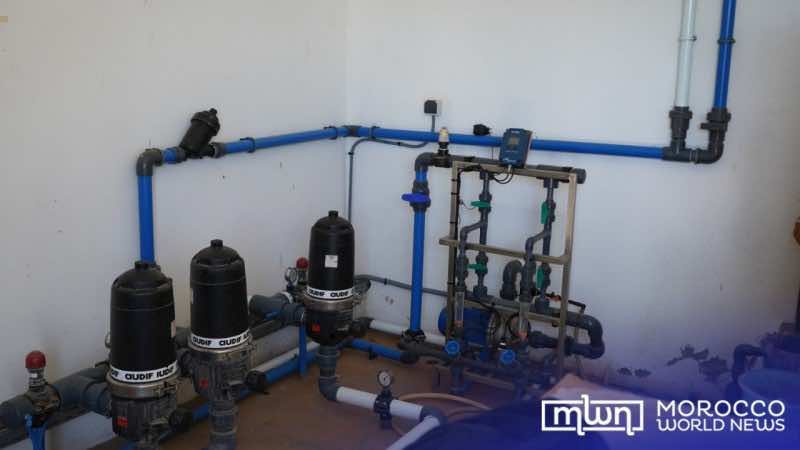
To tackle water scarcity, Chehbouni argued, Morocco needs “to treat municipal and industrial water and recycle it,” which can only be possible by developing advanced water technologies.
The UM6P professor also suggested that the country can “rationalize water for irrigation.”
What this means in practice is that “the government needs to take actions in terms of water treatment and water desalination,” he explained. “At UM6P, we are working to develop a system that uses renewable energy for the desalination process.”
The desalination process is the removal of dissolved mineral salts in water. It is a procedure widely employed to get fresh water for human consumption or agricultural use.
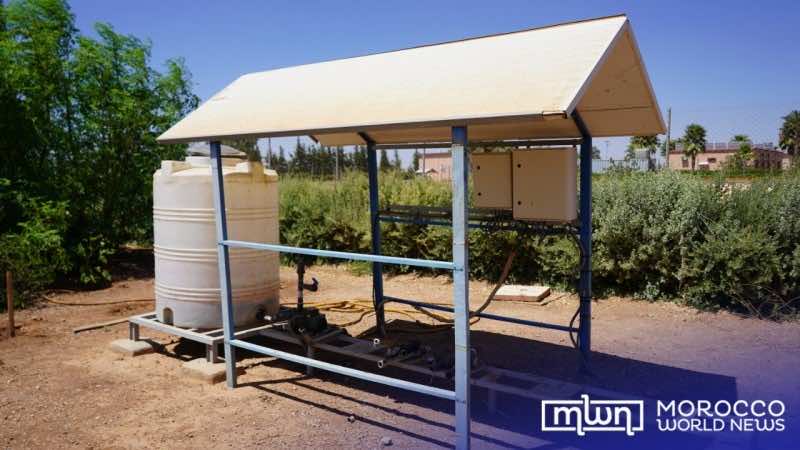
Chehbouni also suggests rainwater harvesting technology, also known as the rainwater collection system or rainwater catchment system, which is a technique that collects and stores rainwater for human consumption.
Although this technology is “low-tech,” he added, “it is cost-effective and helps a large majority of the population.”
The UM6P professor went on to spell out what this technique entails: “Consider dams, for instance. The big dams can also serve small areas around them, while we have an opportunity of having an aggressive policy with regard to rainwater harvesting technology in order to collect water from the rain and save it for the summer.”
In addition to these measures, the professor believes that Morocco needs a “water police” to deal with people “who are drilling wells and do not have any authorization.” The state, he emphasized, “has the responsibility of ensuring access to water for this generation and future generations.”
While the country is experiencing its worst drought in 40 years, the current agricultural practices do not seem to make sense to Chehbouni.
“I don’t think that growing watermelon in Zagora is a good thing,” he said, noting that watermelons require 2 inches (5 cm) of water every week.
“As a population, we do not need to consume food outside its normal season,” he further explained. “When I was young avocado was not part of our menu. I can live without avocado, but I cannot live without water. One kilogram of avocado needs 1000 liters of water.”
For the professor, it “is not realistic to continue growing products that consume a lot of water and are not of prime necessity to the population — the entire population, not the elite.”
The Role of Universities, Experts
In an interview last year with Morocco World News, UM6P President Hicham El Habti suggested that universities’ role today should be to become laboratories for ideas, proposals, and experiments aimed at meeting the most pressing challenges of our era.
“We especially want to respond to the emerging needs of African populations, especially with the youth who today are very invested in issues such as climate change and sustainable development,” he said of his university’s vision of training a new generation of thinkers, experts, and leaders driven by a shared sense driving Morocco — and the continent of Africa — towards prosperity and sustainable development.
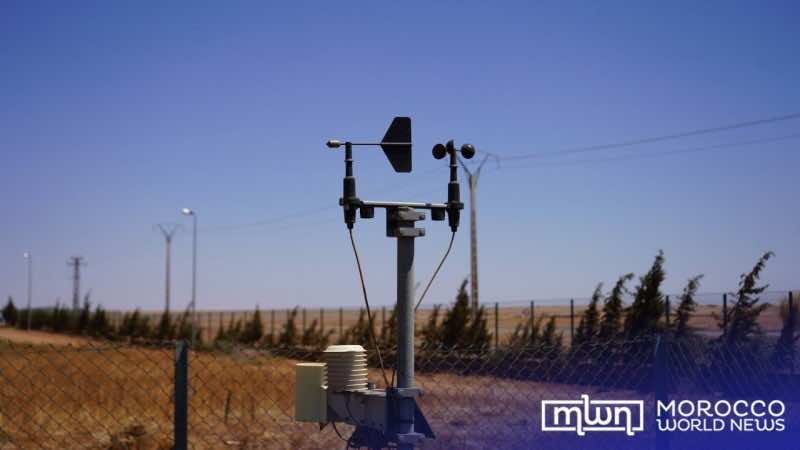
Chehbouni made similar points as he spoke of UM6P’s International Water Research Institute (IWRI), which is developing new technologies and strategies to address water shortages in Morocco and across the continent.
“At the UM6P’s IWRI, we are developing a technology based on some models, remote sensing, satellite data, and artificial intelligence in order to provide the farmers with easy access information telling them how much water should be used for irrigation and when they should irrigate,” he noted.
The institute is helping the farmers to “save water as well as money,” he explained, stressing: “Water is money. We need energy to pump water. So, if we save water, we save money.”
IWRI is “also developing small-scale technology because the government cannot have a treatment station in every village in Morocco,” Chehbouni said. “We are trying to adopt a participatory approach and developing low-cost technology and getting the population involved in putting together small-scale water treatment in rural areas.”
As for tackling climate change, the UM6P institute is “adopting a climate model in order to make sure that our future previsions are realistic,” he said. Over the past months, many reports have pointed to a pointed drop in Morocco’s rainfall level as the determining factor in the country’s unprecedented drought season.
To address that issue, the IWRI is “developing a map of potential areas using several criteria to identify spots in Morocco where there is a potential for small dams to collect water,” the professor said.
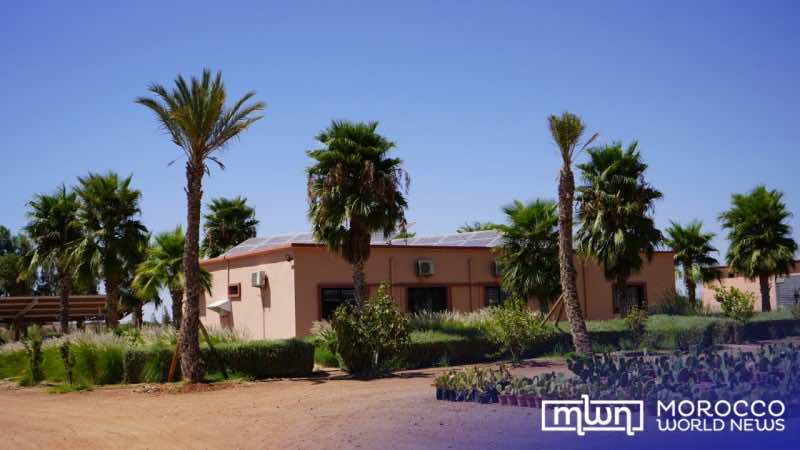
The IWRI is “the only research institute in Morocco that develops system dynamics, which is another way of doing water management” and “brings together all the components of the water cycle,” Chehbouni explained
“We bring together the water inputs which are rain, surface water, and groundwater, and the outputs, which are industrial water, irrigation water, touristic water, and municipal water. “The problem we have in managing water in Morocco is that we have several sectors that all have the responsibility of managing water, including the ministry of agriculture, the ministry of water, and the water and forest agency, which all lack communication.”
Of chief relevance here is the suggestion that effective management of some of the country’s most pressing concerns, including the challenge of water scarcity, requires experts who know what is at stake and how to go about tackling it.
“Managing water is like managing your bank account. If you do not know how much your income is and how much your expenses are, if there is a disequilibrium, you will run out of business,” Chehbouni concluded, adding: “At the International Water Research Institute, our approach in that regard is oriented towards stimulating academic cooperation with global players in research. But all based on a well-crafted strategy that takes national and continental concerns into consideration. If you don’t have a strategy, it is opportunistic, and being opportunistic does not ensure sustainability.”