Rabat – The Tiznit-Dakhla highway infrastructure mega project is steadily progressing, with 70% of the work already accomplished.
As part of Morocco’s emphasis on economic development through infrastructure in the southern provinces, the country pledged MAD 8.5 billion to bring the project to life.
Stretching over 1055 kilometers, the road is one of the longest in Morocco and features plans to build 12 other major structures that would bypass major cities including Tiznit, Guelmim, Tantan, El Ouatia, and Laayoune. The structures aim to reduce travel time between Morocco’s southern provinces and northern ones, the logistics ministry says in a statement.
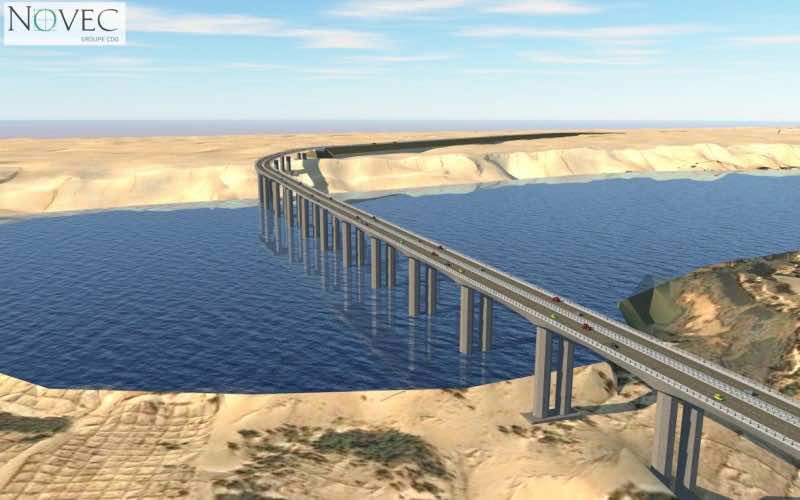
One of the landmarks of the Tiznit-Dakhal highway is the viaduct over Oued Sakia El Hamra that would bypass Laayoune. According to Novec, the Moroccan engineering consultancy responsible for preliminary design studies, the 1,725-meter structure will be the longest of its kind in Morocco once completed.
In addition to reducing travel time between Moroccan cities, the world-class highway is set to mitigate the effect of flooding-induced road blockades on commercial and business activities.
The project was launched in 2015 after King Mohammed VI emphasized in his speech on the 40th anniversary of the Green March that infrastructure projects in the southern provinces are central to Morocco’s New Development Model
The bulk of the project’s construction work would be renovating and widening the National Road N1, the main road connecting northern and southern provinces, data from the logistics ministry indicate.
In line with the instructions from the Moroccan monarch, three ministries and four provinces signed a partnership agreement shortly after the Green March speech to bring the project to life.
The ministries in question are the Interior Ministry, Economy, and Finance Ministry, and the Equipment, Transport, Logistics, and Water Ministry. The targeted provinces are Souss-Massa, Guelmim-Oued Noun, Laayoune-Sakia El Hamra, and Dakhla-Oued Eddahab.
The original timeframe for the project was between 2016 and 2021. The project is behind schedule, likely due to the late 2019 COVID-19 outbreak.
Official sources say the first phase of launching tenders for the projects was between 2017 and 2018, while the construction phase started in 2017.
The mega project also includes plans for the creation of peripheral facilities such as parking spaces for trucks and resting areas.
Morocco hopes the project will be a catalyst for attracting investment and contributing to the socio-economic development within the four provinces.
Read Also: Tiznit-Dakhla Highway in Southern Morocco Risks Running Behind Schedule