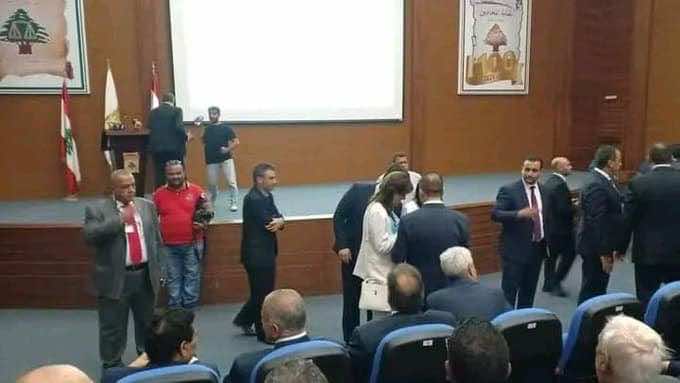
Rabat – Amid rising tensions between Rabat and Algiers, a delegation of Algeria’s National Union of Lawyers’ Orders on Tuesday left the regional gathering of the Arab Lawyers Union over comments supporting Morocco’s sovereignty over Western Sahara.
Speaking at the opening session of the regional gathering in Tripoli, Lebanon, the head of the Arab Lawyers Union, also the head of the Egyptian General Syndicate of Lawyers, mentioned the Western Sahara dispute. He described the disputed territory as Moroccan Sahara, triggering fierce condemnation from the Algerian delegation which ended up immediately leaving the event in protest.
In a press statement, Ibrahim Tairi, head of Algeria’s National Union of Lawyer’s Orders, argued that the discussion of the Moroccanness of the Western Sahara region was not part of the meeting agenda and does not align with the objectives of the Arab Lawyers Union.
Tairi added that the “dangerous statement” issued by the head of the Arab organization contradicts the objectives of the union that calls for supporting “the struggle to liberate the Arab land from all forms of colonialism, dependency and usurpation.”

The Algerian lawyer went on to argue that the Western Sahara dispute was “originally listed before the United Nations as an issue of decolonization.”
Read Also: Western Sahara: Algerian Delegation Withdraws from Event Featuring Morocco’s Undivided Map
This incident follows months of rising tensions between Rabat and Algiers, with the Western Sahara dispute being at the heart of the decades-old strategic divergences between the two neighbors.
Over the past five years in particular, the Algerian regime has ignored or rejected repeated de-escalation gestures from Morocco.
As well as driving the decades-long rivalry between Morocco and Algeria, the long-standing dispute between Rabat and the Algiers-sponsored proxy, the self-proclaimed Sahrawi Arab Democratic Republic (SADR), has been key in both shaping relations between the neighboring countries and shifting power dynamics in North Africa and the African Union.
The recent diplomatic crisis between Rabat and Tunis over the hosting of Polisario leader Brahim Ghali by President Kais Saied best reflects the overreaching effects of the Morocco-Algeria rivalry over regional unity.
Read Also: Signs of an Emerging France-Algeria-Tunisia Axis to Restrain Morocco
While Algeria has consistently labeled itself as a defender of self-determination and not a party in the Sahara dispute, the country still trains, finances, and provides a safe haven for the Polisario separatists that remain in control of the Tindouf camps on Algerian soil.
In April 2007, Morocco submitted to the UN its proposal for Western Sahara Autonomy Plan, which is widely considered today as the most “serious and credible” legal basis to end the lingering dispute.
In fact, not only has the Moroccan plan secured the support of the majority of the international community, including over 27 countries that have opened consulates in the southern provinces, it appears to be the basis of the UN Security Council’s resolutions in the past decade.
Just last year, after the UNSC officialized its latest resolution on the Sahara dispute, a dismayed Algerian regime rejected the UN document and lashed out at what it desperately described as an UN-Morocco collusion.
Read Also: Western Sahara: Massive International Support for Morocco’s Position Angers Algeria