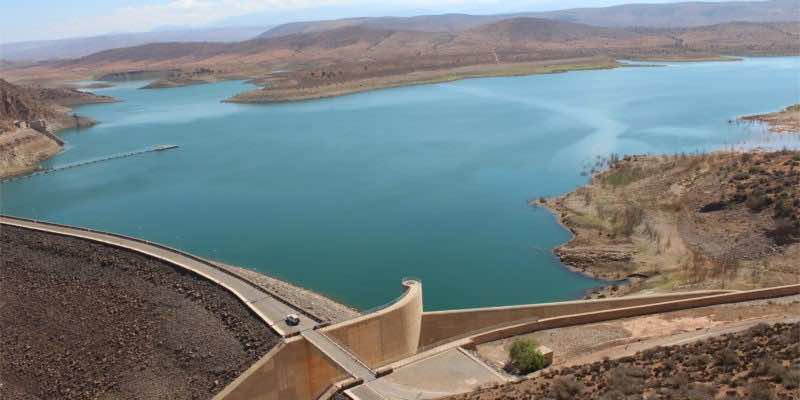
Rabat – Dam water levels across Morocco have decreased to 25% so far this year, compared to nearly 40% at the same time in 2021, according to the latest figures from the country’s Ministry of Water and Logistics.
Out of a total capacity of 16 billion cubic meters, water levels across the kingdom this year reached a little over 4 billion, compared to 6.3 billion cubic meters last year.
The Alwahda dam in the northern Ouezzane province, the largest in Morocco, led the chart by far, with its water levels reaching 1.5 billion cubic meters, or 44% of its total capacity.
This was still a noticeable decrease from last year, when the dam was 64.5% full, at more than 2 billion cubic meters.
Meanwhile, the Tangier-Mediterranean and Allal el Fassi dams saw an increase in their water levels, both reaching over 90% of their total capacity. The Injil and Lalla Takerkoust dams also saw a noticeable increase in their water levels compared to last year.
The Ministry’s latest report included detailed numbers on Morocco’s 62 dams, including the dams’ normal capacities and 2021 numbers.
As Morocco suffers from its worst drought in 30 years, this decrease in Moroccan dams’ water levels can be attributed to the historically low rainfalls the country has witnessed in the past year.
This summer, the dry climate stemming from the alarming drought period caused several wildfires in the country’s northern regions.
Morocco’s agricultural output has considerably gone down as a result, prompting the country’s government to focus on implementing measures to regulate water usage.
The Ministry of Water declared a “state of water emergency” on June 30, stressing the need to ration drinking tap water in some regions in the night hours.