


 Join on WhatsApp
 Join on Telegram
Rabat- Diwali, also known as the Festival of Lights, is an ancient Hindu festival celebrated annually in India. Diwali is considered to be the most significant festival in Hinduism, while also being celebrated by Buddhists, Jains and Sikhs.
The Festival of Lights spans five days. Its date varies every year depending on the Indian calendar. According to the ancient calendar, Diwali occurs on Amavasya (new moon) on the 15th day of the 8th month (the month of Kartik) in India’s calendar.
In the English calendar, Diwali typically falls between mid-October and mid-November each year .The festival took place on October 24th this year.
Diwali celebrates the triumph of good over evil and light over darkness. The vibrant Hindu festival is marked by the lighting of clay lamps known as Diyas in the street and in homes, as well as the exchange of gifts, and family gatherings.
The five days of Diwali

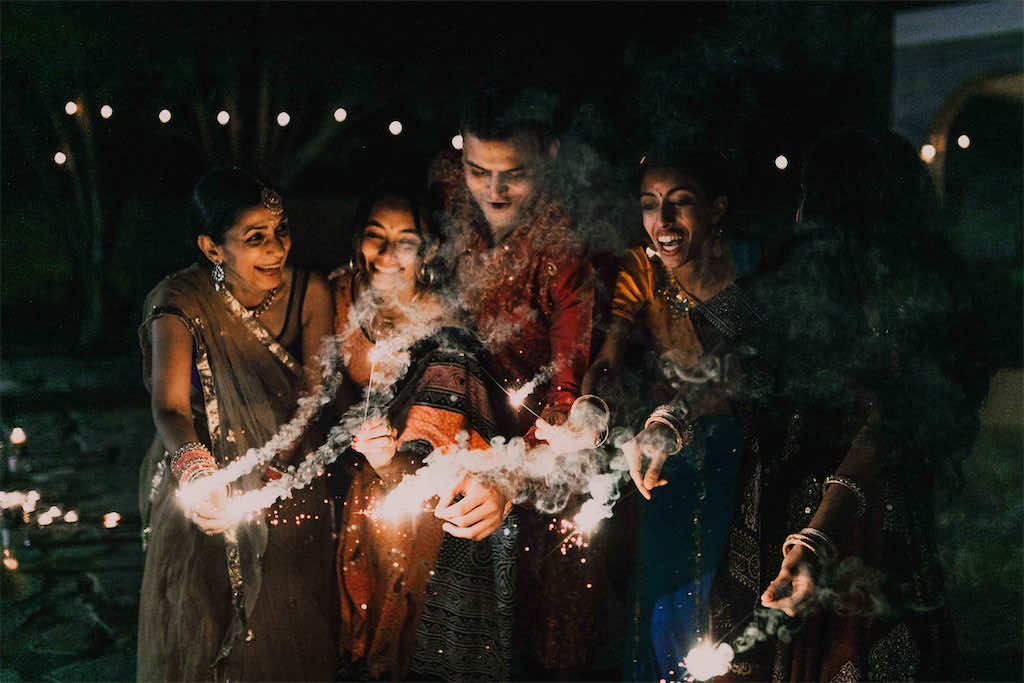
Families set off fireworks during the celebration.
On the first day of the celebration, known as Dhanteras, houses are cleaned and people purchase small items of gold. People of the Hindu faith perform rituals to worship Lakshmi the Hindu Goddess of wealth, good fortune, and beauty to obtain her blessings.
The second day of the festival is known as Naraka Chaturdashi, in which people perform early morning religious rituals and prayers. Additionally, before taking a bath, people rub their bodies with scented oils and dress in new clothes. During the evening, people set off fireworks and illuminate their houses with oil lamps.
Diwali’s third day is known as Lakshmi Puja, and is the most important day of the five-day festival. People light clay oil lamps and perform rituals to honor the goddess Lakshmi. The worshiping takes place at temples or at home “by placing a red cloth on the puja chowki (worship table), putting the idol on it, and then offering flowers, fruits (water chestnuts, pomegranate, quince, and coconut) and sweets (notably semolina pudding with saffron, nuts, and sugar) to Goddess Lakshmi, then prostrating in front of the idol and joining palms for prayers.’’
Additionally, many people gather to have a large meal and exchange gifts on this day.

People share sweets during Diwali
Padwa, the fourth day of the celebration, is a special day for married couples, with husbands typically purchasing diwali gifts for their wives.
The last day of the festival Bhai Dooj is an opportunity to strengthen the bonds of sisterhood and brotherhood. On this day,”Indian women pray for the long life and happiness of their brothers, they apply tilak (mark) on the forehead of their brothers while praying for their well-being. And in return, men give gifts to their sisters and take a vow of protecting them.’’
History behind Diwali celebration

Lakshmi the goddess of wealth, fortune, power, beauty, fertility and prosperity in Hinduism.
The festival’s origin is linked to various religions including Hinduism, Jainism, Sikhism hence every community has its own Diwali story and unique way of commemorating the occasion, but they nearly all celebrate the triumph of good over evil.
For Hindus the celebration marks the return of Lord Rama from a 14 year exile to his kingdom Ayodhya after rescuing his wife Sita and defeating Lord Ravana, the demon-king of Lanka.
The people of Ayodhya rejoiced at the news of their prince’s return. To commemorate Rama’s return to Ayodhya, they lit up their homes with clay lamps.
This is believed to be the origin of the Diwali tradition. Every year on Diwali, people celebrate Lord Rama’s return home with festive lights, fireworks, and family gatherings.
For Sikhs, Diwali is important because it marks Guru Hargobind’s release after 12 years of imprisonment by the 16th century emperor Jahangir. According to BBC, “Sikhs commemorated Guru Hargobind’s return by lighting the Golden Temple and this tradition continues today.’’
The Jains commemorate Diwali to honor their Lord Mahavira’s moksha—a spiritual awakening that symbolizes humanity’s liberation from darkness.
Buddhist communities celebrate the festival to honor Emperor Ashoka’s conversion to Buddhism in antiquity.
Diwali brings millions of Hindus, Jains, and Sikhs together to celebrate an important holiday with ancient roots and diverse traditions. The festival brings families and friends together, strengthens sibling bonds, and allows married couples to show their affection through the exchange of gifts.
The festival illuminates the entire city with fireworks and clay oil lamps while people enjoy their holiday by preparing a feast and delicious sweets.




