Rabat – An integral yet overlooked part of Morocco’s foreign policy is the state-sponsored higher education scholarship programs benefiting students in Africa, South America, and Asia.
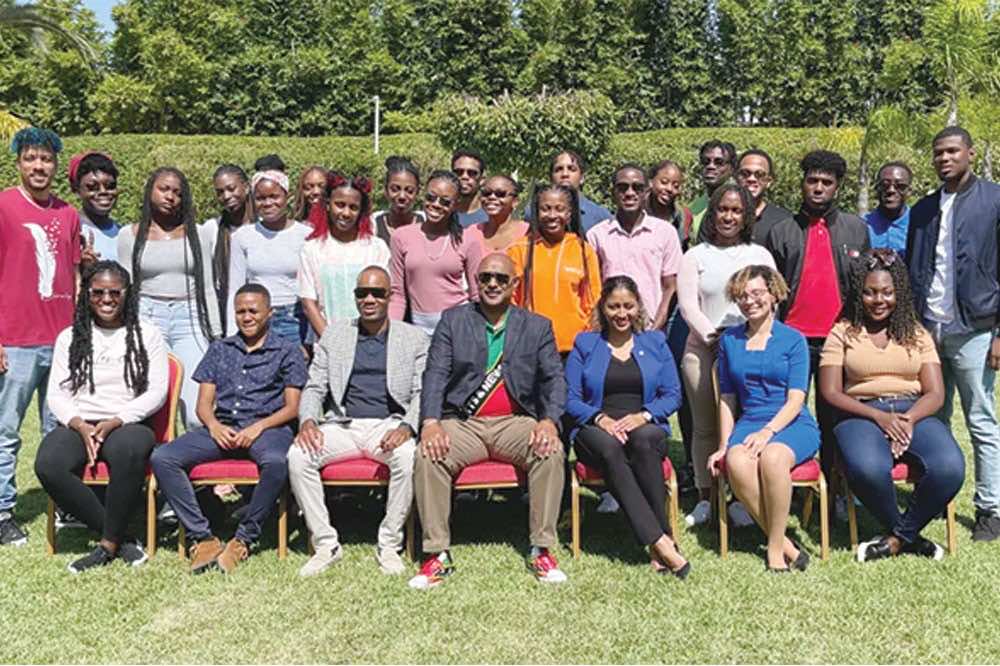
Earlier this month, Morocco’s embassies in Saint Lucia and the Federation of Saint Kitts and Nevis welcomed 23 scholar recipients of the 2021/22 Moroccan scholarship.
The grant issued by the Moroccan Agency of International Cooperation (AMCI) is set to support the training of selected students in the fields of medicine, computer sciences, and architecture in the cities of Rabat, Casablanca, Kenitra, and Tangiers.
According to the Moroccan diplomatic representations, the scholarships support the training of human resources in the Organisation of Eastern Caribbean States (OECS).
The Moroccan assignment of the 23 scholarships comes after Saint Lucia, Saint Kitts and Nevis, as well as Antigua and Barbuda, Dominica, Grenada, Saint-Vincent, and the Grenadines opened a joint consulate general in Dakhla in an effort to reiterate their support of Morocco’s Autonomy Plan for the Western Sahara dispute.
The Eastern Caribbean case clearly reflects the parallels between Morocco’s foreign policy, particularly in relation to the Western Sahara dispute, and the sponsoring of foreign students in Moroccan universities.
Hundreds of scholarships have been awarded to students from friendly countries such as Indonesia, Eswatini, Cameroon, and Saint Lucia in the past decade. As a result, Morocco benefits from expanding its sphere of influence for the benefit of its foreign policy and economies.
Read Also: TV5 Monde: Morocco Attracts Many African Students to Study Medical Studies
By doing so, Morocco has established its own ecosystem that derives its fundamentals from the long-standing educational exchange between developed and developing countries. The classical system strengthens the soft power and influence of the core countries, such as the US, the UK, and France, over the periphery by promoting their ideals of democracy and freedom to influence domestic affairs in other countries.
Coined by the co-founder of neoliberal political theory Joseph Nye in 1990, soft power refers to “the ability to get what you want through attraction rather than coercion or payments.” In the case of states, each country aspires to increase the attractiveness of its culture and political ideals to become a global or regional power.
Emerging global powers such as Russia and China have also used vast exchange programs to serve their national interests.
Being subjected to others’ soft power policies, Morocco is an integral part of the core-periphery system as many of its students migrate to France, its former colonizer, to pursue higher education and job opportunities.
However, the North African country is using the south-south cooperation framework to shape a reformed core-periphery model that continues to maintain an asymmetry of power but has more of an interactive and solidarity approach.
By subscribing to Morocco’s education systems, foreign students and their respective countries are strengthening their political and economic partnership with the North African country. They are also accepting to embody a set of ideas and values derived from the Moroccan socioeconomic and cultural context.
Considering that some exchange students are going to later hold leadership positions once they return to their respective countries, Morocco’s exchange policy relatively ensures the country’s influence over its partners without resorting to military or other coercive methods.