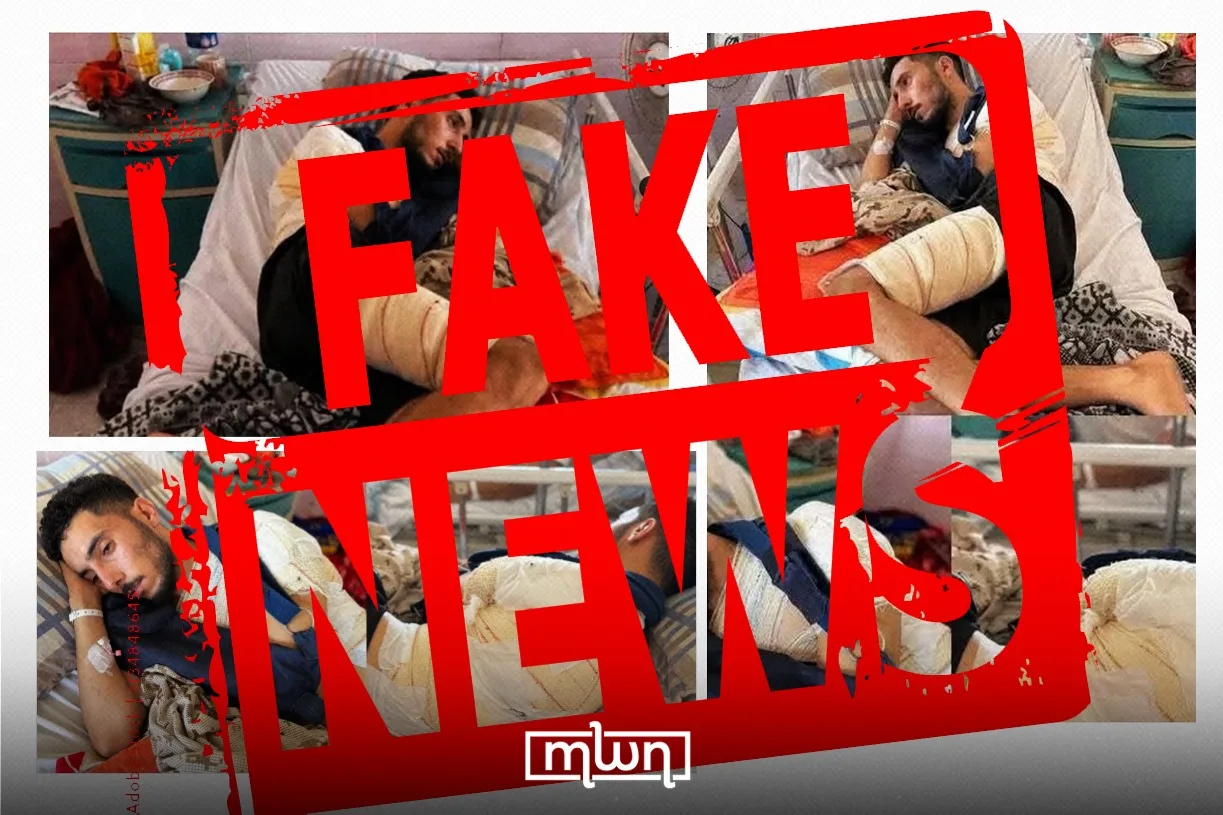
Casablanca – A photograph taken in Gaza has become one of the latest false images circulating during the recent mass crossing into the Spanish-occupied enclave of Ceuta. Shared by anti-Morocco figures Hicham Jerando and Maati Monjib and later used by Spanish outlet El Confidencial to illustrate its coverage of the border crisis, the image in fact shows an injured Palestinian with no connection to Morocco.
The photograph was first shared on Sunday by Gaza-based Palestinian journalist Amr Tabash on his Instagram account. He identified the injured man as Yousef Al-Najjar, who was wounded in an Israeli airstrike in Gaza.
According to Tabash, Al-Najjar suffered a comminuted fracture of the humerus, a fractured shoulder blade, and extensive wounds extending from the shoulder to the back. He was later transferred to Egypt, where reconstructive surgery was performed to save his arm.
Yet the same image has appeared on the social media accounts of Jerando and Monjib, where it has misleadingly been presented as depicting the plight of one of the migrants allegedly injured during the recent events near Ceuta. The photograph, however, has no relation to Morocco or to the recent mass border crossings.
From social media to Spanish press
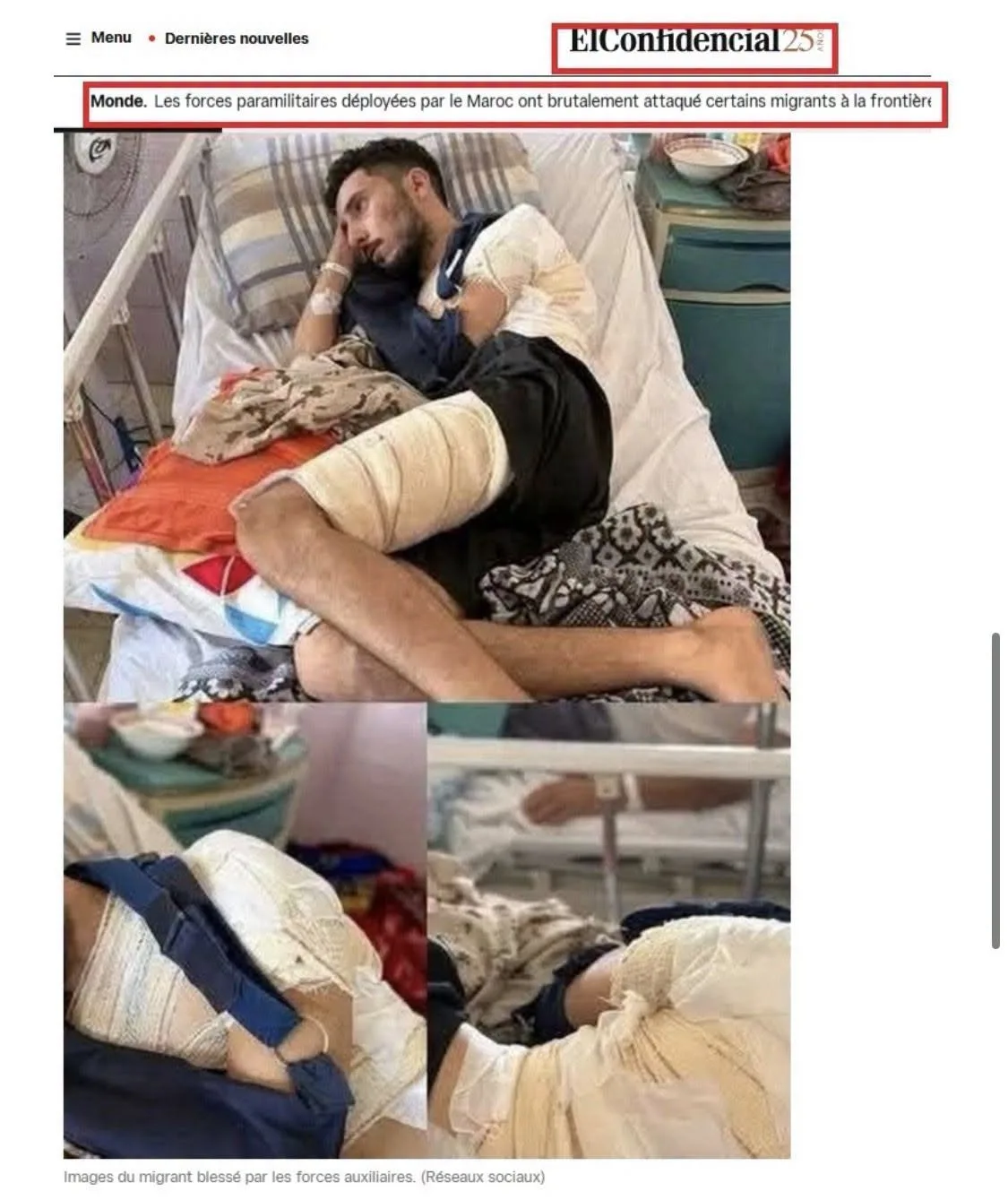
The image was also used by Spanish newspaper El Confidencial in an article published on August 3 under a headline that falsely claimed Moroccan auxiliary forces had brutally attacked migrants at the border. Spanish media outlets, including El Confidencial and El Español, have a long history of pushing forth Morocco-bashing content during periods of diplomatic tension between Rabat and Madrid.
The circulation of the photograph comes as misleading and unverified content has spread online following the attempted mass crossings into Ceuta. Several images and videos have circulated with inaccurate or conflicting descriptions, fueling confusion over what really took place in the occupied enclave.
The latest case adds to a broader wave of misinformation surrounding the border events, where unrelated visuals have been reused and presented as evidence connected to the crossings.
At the same time, an open source intelligence report examined the online mobilization that preceded the attempted crossings. The report identified dozens of public WhatsApp groups encouraging young Moroccans to head toward Ceuta and said many of the groups were administered through Algerian phone numbers.
According to the report, the channels shared meeting points, routes, and messages urging participants to move quickly before authorities intervened. Reuters said it was unable to independently verify the groups before they were deleted, while Moroccan authorities have not publicly linked the report’s findings to their own investigation.