


 Join on WhatsApp
  Join on Telegram
 Rabat – “I know not with what weapons World War III will be fought, but World War IV will be fought with sticks and stones.” Even Albert Einstein found it hard to envision what weapons of mass destruction our modern technology would give us. But sadly, now we know; we know which weapons would be deployed in World War III: nuclear weapons.
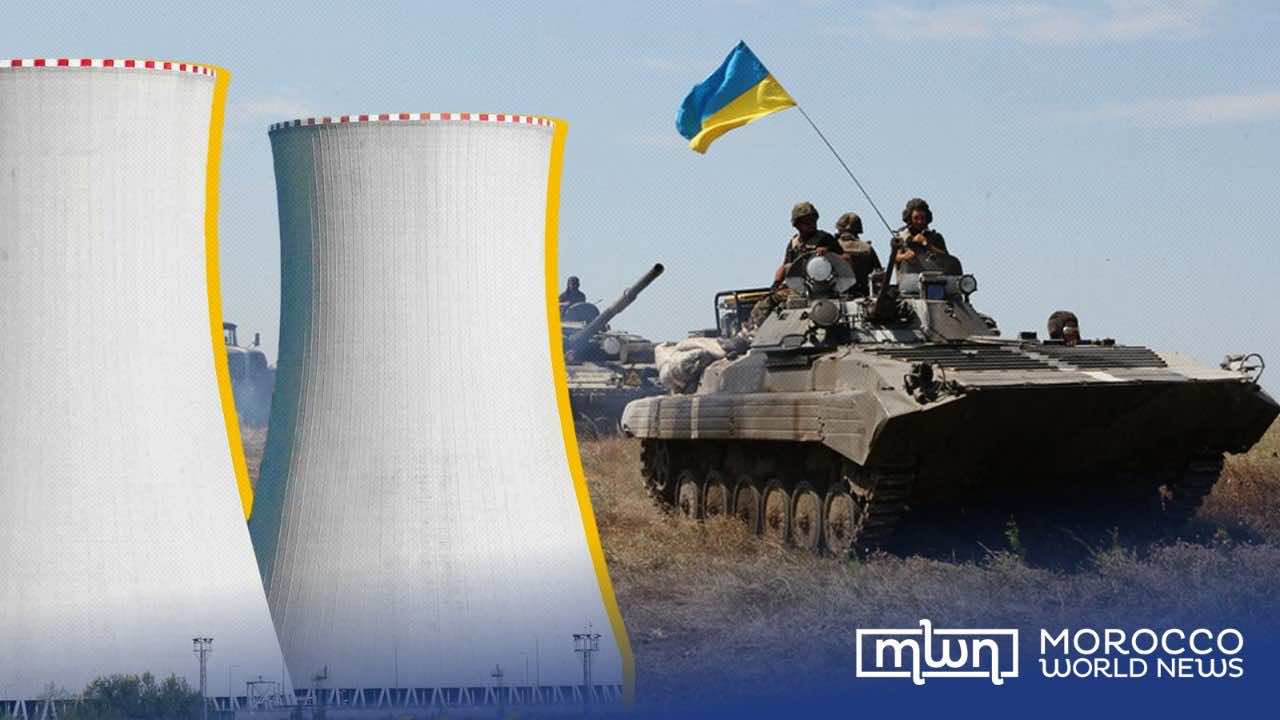
Since the beginning of the Russian invasion of Ukraine on February 24, there has been one agonizing question for every one of us: Can the war in Ukraine go nuclear this time?
A quick answer. Yes, it can. But let’s just hope it won’t.
The shadow of a nuclear World War III is getting closer, day by day. And the possibility of a nuclear escalation, or nuclear “Armageddon,” as President Biden liked to put it, is becoming easier to imagine.
Of course, dropping a nuclear bomb on Ukraine seems unlikely for now. But using tactical nuclear bombs is not that unlikely. Compared to strategic nuclear weapons, which are more destructive, “small nukes” can destroy whole cities and are much easier to deploy.
Some of the tactical weapons are even smaller to fit in artillery rounds, burning a whole town or military base to the ground.
As things get more complicated on the ground for the Russian military, using tactical bombs might seem increasingly appealing to President Vladimir Putin.
The overwhelming setbacks the Russian army has faced on the battlefield are one of the most alarming signs of a catastrophic nuclear turn in Ukraine.
Since the first day of the invasion, the Russian forces’ performance has surprised many military analysts. The Russian army, which was expected to take complete control of Ukrainian territory within days, if not hours, has been struggling to maintain control of merely 20% of Ukraine, especially after significant counter-attacks by Ukrainian forces.
It was just recently when Russian forces experienced a significant reversal in the Kherson region. Facing a massive Ukrainian counteroffensive, Russia had to pull its troops out of Kherson, a city captured in the first weeks of the invasion. Kherson was the first provincial capital in southern Ukraine to be infiltrated by Russian forces.
These setbacks to Russia come at the risk of making Putin more open to the idea of using nuclear weapons in a bid to bring victory at whatever cost, to avoid humiliation at a national and international level, a fact that has been made evident in Putin’s speeches.
“When the territorial integrity of our country is threatened, we will certainly use all the means at our disposal to protect Russia and our people. This is not a bluff,” he said, addressing the Russians last September.
Speaking at a ceremony a week later to formally annex four Ukrainian regions, Putin brought up nuclear weapons again, asserting that the US had set a precedent by dropping nuclear bombs on Hiroshima and Nagasaki in 1945.
Putin tried recently to backtrack from these comments, assuring the world that “there is no need” for Russia to use nuclear weapons in Ukraine, “either politically, nor militarily.”
However, the odds are still the same, and the risks of a nuclear escalation remain the same as the Russian army struggles on the ground.
In other words: Are we really to believe that the “nukes” would be off the table should Putin feel unable to defend his troops with conventional weapons?
Are we really to think that Putin will not go nuclear should he perceive his political grip to be in danger? Of course not.
Indeed, any decision by the Kremlin to deploy nuclear weapons must involve a careful calculation: reversing a 77-year nuclear taboo.
Threatening to use his nuclear weapons can certainly help Putin get some concessions from Ukraine and the West: even without actually going through with those threats.
This could help Putin achieve a double goal: deter the US and its NATO allies from any direct intervention in the war, and force Ukraine into negotiation in a weak position.
But what if the threats are no longer effective? That would put Putin in a difficult position.
For the Kremlin, any decision implying a nuclear attack in Ukraine would be based also on the West’s response.
US officials and their counterparts have rejected any possibility of a nuclear response against Russia, which would lead to a full-scale nuclear world war. A western military response could, at best, be a conventional strike on Russian forces in Ukraine, executed by NATO forces, or by giving the ability to the Ukrainian military.
Yet there are other powerful, very damaging nonmilitary options on the table. This can involve an opportunity for the West to seize a Russian nuclear attack to cut Russia entirely from the world economy, especially by getting India and China on board in sanctioning the Russian economy.
It would also give the Western countries a chance to double down on their efforts to portray Putin as a president who threatens world peace, potentially gaining an intense international response against Russia.
Western countries are now facing a complex dilemma. While they feel obliged to help Ukraine as much as possible, they are trying at the same time to avoid any direct confrontation with Russia, which could ultimately lead to a nuclear escalation.
The West is in a tricky situation: the more help they provide Ukraine, the more setbacks Russia faces, and the more open Putin would be to nuclear options.
In other words: The West wants Putin defeated enough to have his forces out of Ukraine, but not too defeated and humiliated to the extent that he feels compelled to go nuclear.
The sad truth is that: We should not have to worry about fighting a world war with “sticks and stones” if humanity manages to survive a nuclear World War III.
There is always a middle ground to be reached and resolutions to be found in peaceful ways, without wars. And in addition to all of this, we already have a world full of challenges: COVID-19, Climate Change, food crises, and the list goes on. Let’s face these challenges head-on instead of fighting with each other.


