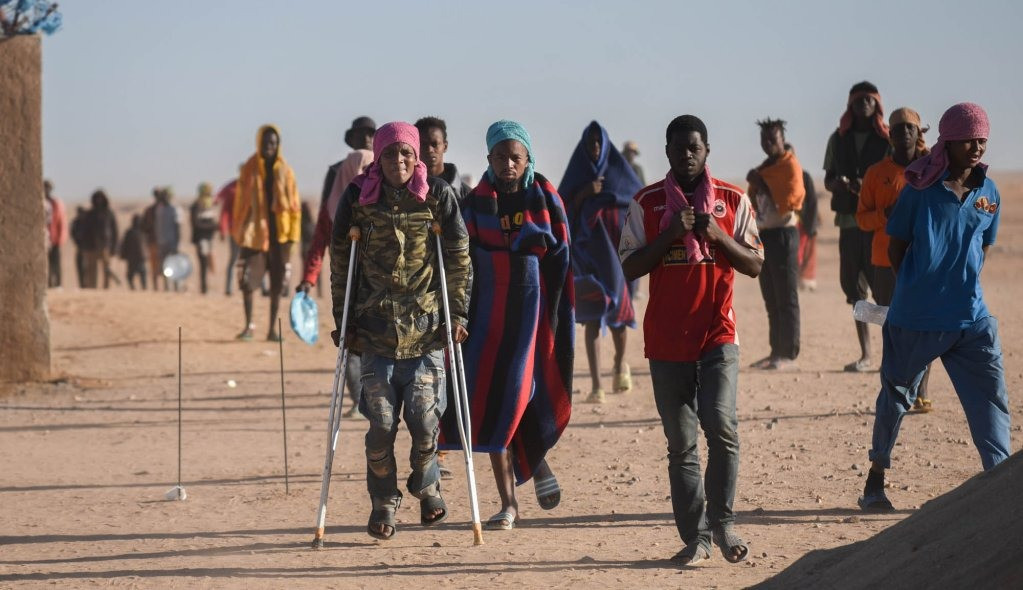
Rabat – Algeria has forcibly pushed more than 9,000 African migrants across the border into Niger, resulting in a “critical humanitarian situation,” said two United Nations bodies, the UN Office for the Coordination of Humanitarian Affairs (OCHA) and the International Organization for Migration (IOM), in a report released on Thursday.
“Since the start of the year, more than 9,000 distressed migrants who were driven across the border by Algeria, found themselves blocked at Assamaka,” a remote desert town in northern Niger, said the report.
Since January 2023, Niger’s regional authorities have registered a total of 8,828 men, 161 women, 152 boys, and 51 girls who have arrived from Algeria.
The migrant flow has overwhelmed the IOM transit center in Assamaka, leaving most of them without the necessary resources to return to their home countries, AFP reported.
In April, an estimated 4,500 migrants were stuck in the town.
Acknowledging the severity of the situation, international organizations have stepped in to provide assistance, including the World Health Organization (WHO), which supplied 2.9 tonnes of medicine kits.
In addition, the World Food Programme has delivered more than 180 tonnes of food, while Doctors Without Borders deployed additional medical staff to the area.
Meanwhile, the UN facilitated the repatriation of over 1,400 migrants back to their countries of origin in May.
Nigerien President Mohamed Bazoum expressed his discontent with the situation, telling Jeune Afrique magazine in May that it is “not acceptable” for Algeria to force migrants into the country, especially since they did not enter Algeria from Niger.
Algeria’s troubling track record
Algeria has emerged as a hotspot for migrants trying to reach Europe. However, the Algerian government has been pushing back tens of thousands of individuals from West and Central Africa since 2014, according to the UN.
The recent events concerning Algeria’s forced expulsion of African migrants into Niger have further shed light on the country’s concerning approach to migrants and refugees.
In 2018, Algeria abandoned a total of 13,000 migrants, including pregnant women and children, with no water or food at “Point Zero,” a remote desert location around 15 kilometers from the Nigerien border.
Later that year, the country forcibly pushed back dozens of Syrian refugees to Niger, leaving them stranded in remote desert areas, according to Syria TV.
In a recent incident, the Third Global Consultation on the Health of Refugees and Migrants held in Rabat last week sparked a heated debate concerning Algeria’s reservations about refugee registration.
While the international community, including Morocco, highlighted the importance of registering refugees to ensure their protection and access to essential services, Algeria expressed reluctance and questioned the principle.
The Rabat Declaration, an important outcome of the consultation, stressed the necessity of refugee registration in safeguarding public health systems and providing dedicated social protection programs.
Algeria’s hesitation to fully embrace refugee registration has raised concerns about the country’s commitment to its international obligations, particularly towards the refugee population residing in the Tindouf camps.