
 Join on WhatsApp
 Join on Telegram
Rabat – The Governor of Morocco’s Central Bank, Bank Al-Maghrib (BAM), Abdellatif Jouahri has underlined the need to deepen the dialogue on Central Bank Digital Currencies (CBDCs) due to the various challenges associated with them.
CBDCs are digital currencies issued and regulated by a country’s central bank, serving as a digital representation of a nation’s official currency.
“The complexity and challenges related to CBDCs highlight the need to continue and deepen the debate,” Jouahri said on Monday during a high-level policy roundtable on CBDCs under the theme “The Role of the Public Sector in Money and Payments – A New Vision.”
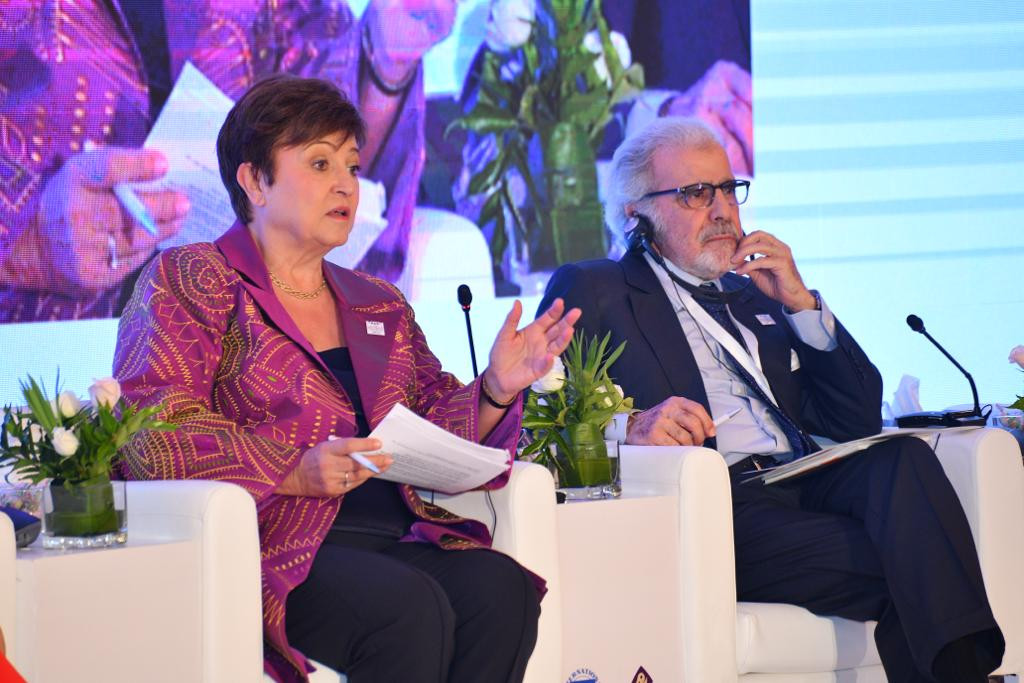
Jouahri, who made the remarks in the presence of the Managing Director for the International Monetary Fund (IMF) Kristalina Georgieva, noted that institutions’ interest in CBDCs reflects their proactivity and adaptability to the changes and developments in their environment.
While many regulators initially adopted a cautious approach following the launch of Bitcoin, central banks quickly realized that maintaining the status quo is no longer an option if they want to preserve their central role as currency issuers, he explained
For Jouahri, a key ambition is to explore the opportunities presented by technological innovations, as well as harness them in service of their missions while understanding the risks they entail.
Read also: Morocco’s Central Bank, IMF Consider Joint Crypto Regulation
He noted that several discussions on CBDC issuance have been initiated with the involvement of international organizations, including the IMF, the Bank for International Settlements (BIS), and the establishment of ad hoc think tanks comprising central banks and other financial institutions.
Despite the progress made, central questions, particularly regarding the contributions of CBDCs and their impact on the key functions of central banks, remain subjects of debate, added the BAM Governor.
“It goes without saying that the motivations and challenges of a CBDC differ from one country to another, especially between advanced economies on one side and emerging and developing economies on the other,” Jouahri stressed.
He noted that many central banks in the region made advancements in exploring CBDCs, giving the example of Morocco where a dedicated group for the field was established in 2021.
For her part, Georgieva said that discussions during the panel were “exceptionally constructive,” noting that the main objective was to bring the important discussion on CBDCs to Africa.
“We agreed on the need to continue dialogue on CBDCs and to gather and share knowledge and information for the benefit of our member countries in Africa, the Middle East, and beyond,” she added.
In her remarks, Georgieva emphasized that CBDCs could help promote inclusion by giving more people access to financial services at a lower cost, as well as to make cross-border payments quicker and cheaper.
“However, if poorly designed, CBDCs could also lead to financial stability risks, data privacy and legal challenges, financial integrity and cyber risks, and central bank operational risks,” she warned.
Co-organized by BAM and the IMF, this roundtable was part of the activities planned in anticipation of the IMF and World Bank Annual Meetings, which will take place in Marrakech between October 9 and 15.