
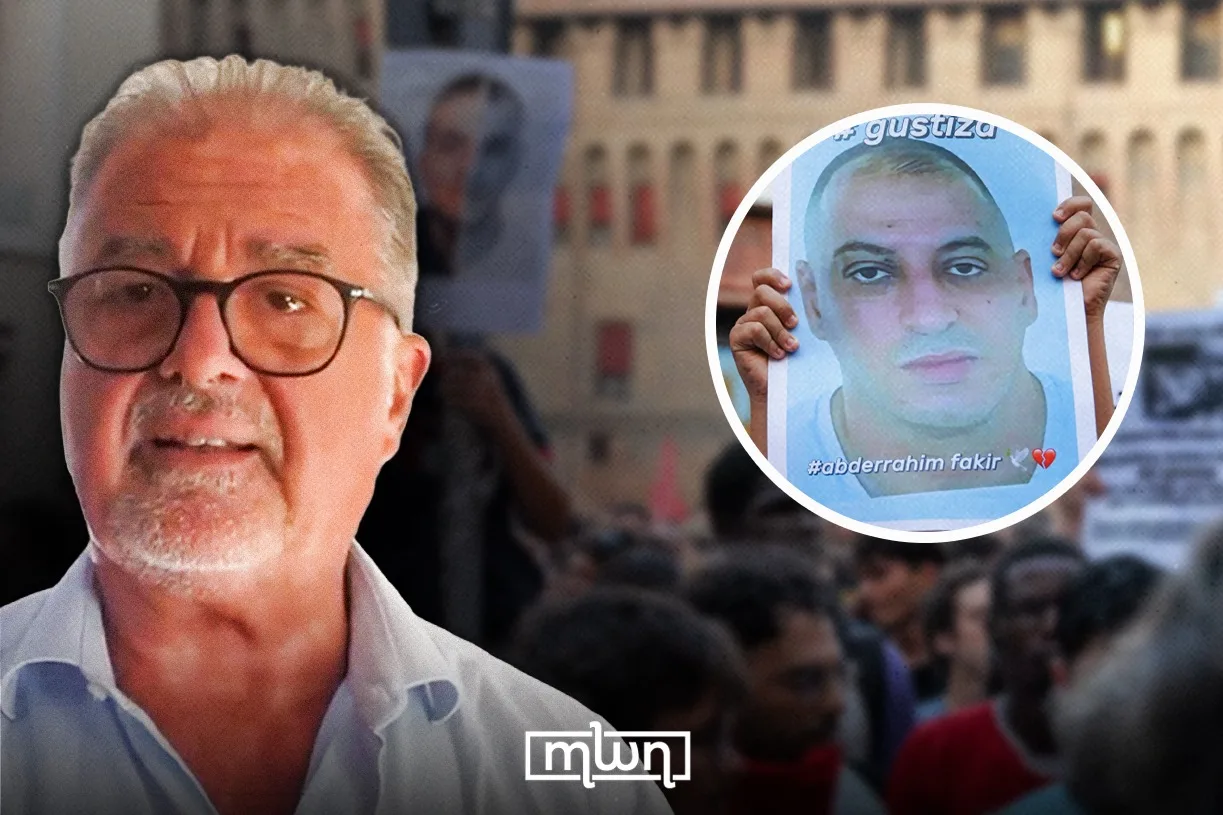
Casablanca – After a six-hour autopsy, the first findings in the death of Moroccan national Abderrahim Fakir have emerged, with experts identifying blood in the lungs and signs of lung compression as investigators continue to examine what caused the 42-year-old’s death.
Fakir died on July 19 after being restrained by police during an intervention in Bologna’s Pilastro neighborhood. The autopsy was carried out at Sant’Orsola Hospital by specialists appointed by the Bologna Public Prosecutor’s Office, with consultants representing the different parties also attending.
According to Italian news agency ANSA, the autopsy found fresh blood in Fakir’s lungs and evidence of lung compression. Investigators must now determine whether the compression was caused by excessive force during the restraint or resulted from resuscitation efforts carried out after he lost consciousness.
The presence of blood in the lungs is also under examination. According to Il Giornale, traces of cocaine were found during the autopsy, though the newspaper said the information still needs to be verified and investigated because it could also be linked to the pulmonary bleeding.
Investigators are expected to rely on toxicological and histological tests to establish whether the bleeding was caused by drug use or excessive compression.
Read also: Moroccan Diaspora Council Closely Monitors Probe into Abderrahim Fakir’s Killing
Fabio Anselmo, the lawyer representing Fakir’s family, said the preliminary findings support his position. The findings raise serious questions, Anselmo argued in a video, adding: “We are faced, as I predicted, with a new Magherini case, a new Aldrovandi case, a new Rasman case, a new Sapir case.” The prosecution’s experts are expected to deliver their report within 90 days.
View this post on Instagram
Gabriele Bordoni, the lawyer representing the two police officers under investigation, disputed that interpretation. He said his medical consultant found no evidence pointing to excessive or violent action by the officers, adding that there were no signs of violence or bone fractures.
Bordoni argued the lung bleeding could have several possible causes consistent with the autopsy findings and said the lung compression was likely linked to attempts by Red Cross paramedics to revive Fakir.
Investigators are also reviewing body camera footage and a newly surfaced video showing Fakir’s body with blood on his face and a large pool of blood beneath his head, as they work to establish when and how the bleeding occurred.
According to ANSA, Fakir had visited Bologna’s Maggiore Hospital on June 20 for a psychiatric issue before being referred to a Mental Health Center, where he received an initial assessment, treatment, and a follow-up appointment scheduled for early August.