 Join on WhatsApp
 Join on Telegram
Rabat – In partnership with the French Agency for Development (AFD), the Abdul Latif Jameel Laboratory for Action against Poverty (J-PAL), the Innovation Fund for Development (FID), and the Morocco Employment Lab (MEL), and the Mohammed VI Polytechnic University (UM6P) organized between July 4-7 a Summer School project event under the theme of “Development Methodologies.”
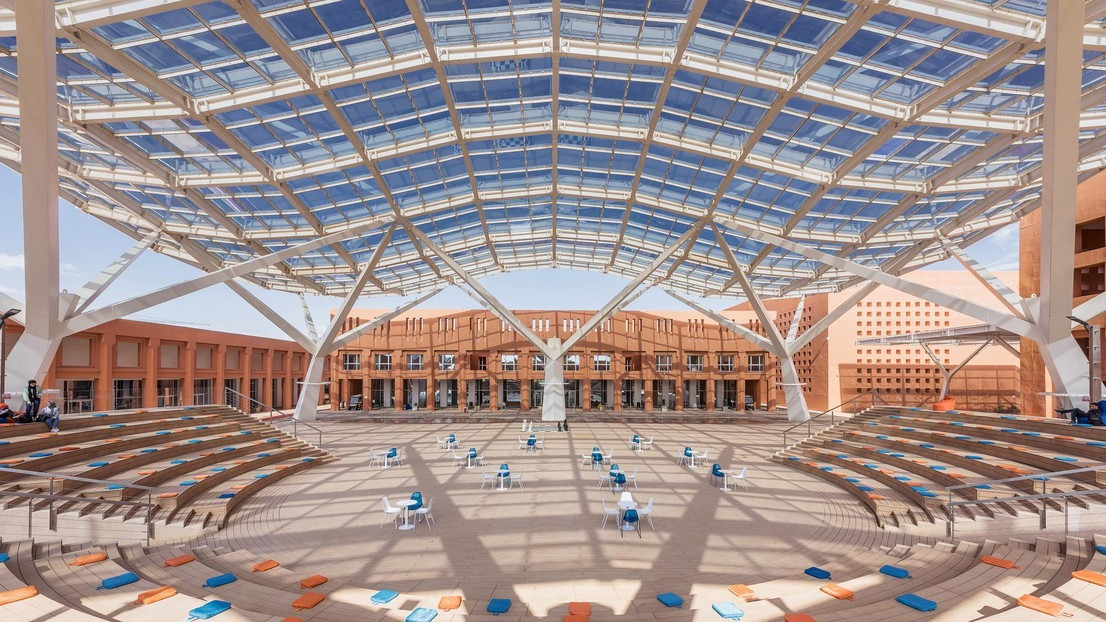
The event, which took place at the UM6P campus in Rabat, aimed to train African researchers and project leaders in the field of public policy evaluation.
The event saw the presence of renowned figures such as Morocco’s Minister of National Education, Preschool, and Sports Chakib Benmoussa who gave a speech about the challenges Morocco faces in the education sector and the ministry’s resolution to enhance education quality.
The project aims to foster an environment of evidence-based public policymaking through thorough impact assessments and capacity building.
Following the example of the previous edition held in Ivory Coast’s capital Abidjan, this year’s event will bring together some 70 African researchers and project leaders, as well as Moroccan and international decision-makers and experts.
UM6P President Hicham El Habti declared, “Education is now a major aspect of public policy. UM6P’s ambition is to set standards in line with the needs, and above all the potential of the African continent.”
Benmoussa’s speech was followed by an inaugural presentation on education by Esther Duflo, Nobel Prize winner in Economics and co-founder of J-PAL, who discussed the significance of the summer school program in Africa and India.
Duflo told Morocco World News (MWN) that “the objective of this Summer School is for scholars from all over Africa to come and measure whether or not public policies are effective.”
The high-level event also highlighted the importance of innovation and research to improve the quality of education in Morocco through public policy.
The panels chaired throughout the event revolved around the themes of “Quality of Education: Learning Enhancement” and “A School Adapted to Students’ Needs.”
The first theme focused on the background of Morocco’s educational reforms and the application of more efficient teaching methods to overcome the challenges facing the Moroccan educational system.
The panel also highlighted the contribution of research in addressing the practical challenges facing Morocco, in order to “strengthen children’s foundational literacy and numeracy skills by using the evidence-based ‘Teaching at the Right Level’ approach.”
The second theme dealt with students’ diversity as well as the Ministry of National Education, Preschool, and Sports’ initiative to cater more for students’ needs.
The final panel’s discussion was centered on using scientific research to improve public policies.
The panels ended with a speech by Abhijit Banerjee, winner of the Nobel Prize for Economics, as well as a closing remark by Younes Sekkouri, Minister of Economic Inclusion, Small Business, Employment and Skills.
Read also: OCP Africa, UM6P Launch Digital Farming School in Ivory Coast