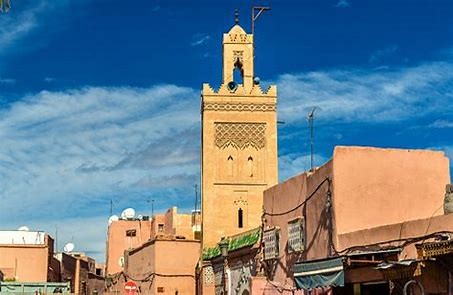
Marrakech – In the wake of a devastating earthquake that recently shook Morocco, causing tragic loss of life, attention is turning to the country’s architectural heritage.
The International Council on Monuments and Sites (ICOMOS)-Spain, the International Scientific Committee for Earthen Architecture (ISCEAH), and the International Committee on Vernacular Architecture (CIAV) recently issued a press statement to refute a series of allegations and speculations about the role that traditional architectural design might have played in amplifying the depth of the tragedy that shook several provinces in Central Morocco after the earthquake struck on September 8.
While the human tragedy is undeniable, the earthquake also inflicted substantial damage on Morocco’s architectural heritage, including both vernacular and monumental structures.
Unfortunately, some media reports have erroneously attributed the collapse of these buildings solely to their age and construction materials, often referring to them as “old houses built of earth and mud bricks.” In response to these misconceptions, experts are stepping in to provide much-needed clarification.
Traditional construction techniques, such as those employing earth and mud bricks, have deep roots in the cultural history of the Maghreb region. These methods have evolved over millennia through a process of empirical refinement, enabling communities to construct resilient and sustainable buildings, even in seismic-prone areas.
Of particular significance in the experts’ clarification is the need to understand that a building’s susceptibility to earthquake-induced collapse is not solely determined by its age or construction materials.
Modern structures can be just as vulnerable if they lack proper maintenance, have pre-existing structural problems, were poorly designed, or lack adequate seismic protection. Although Morocco has implemented seismic regulations for new constructions since 2001, resource limitations often result in inadequately constructed buildings.
In addition, the primary determinant of the collapse of a building during an earthquake is their proximity to the fault line. Regardless of construction materials, height, or age, buildings located directly on or near fault lines face a higher risk of structural failure.
Read also: Hassan Radoine Sheds Light on Architecture, Urbanization in Morocco and Africa
According to the experts’ statement, another significant consideration is the impact of consolidation or reinforcement interventions using rigid materials that may be incompatible with the original construction methods. Such interventions, even if they comply with the seismic regulations for earthen architecture in Morocco, can sometimes prove counterproductive.
Media images and reports often attribute building collapses to materials like earth, rammed earth, and mud bricks. However, these images may depict contemporary and historical structures, often constructed of stone masonry rather than mud bricks or adobe. Collapse can result from inappropriate or incompatible consolidation and restoration methods applied to these structures.
As a result, it is crucial to avoid making hasty, arbitrary, or inaccurate judgments about the causes of building damage or collapse based solely on age or traditional materials. Instead, experts stress the importance of raising awareness among citizens about the significance of vernacular architecture.
This type of architecture not only promotes sustainable development but also represents a valuable cultural heritage that demands proper care and maintenance. Preserving these architectural treasures for future generations is a collective responsibility, underscoring the importance of heritage education and accurate architectural knowledge dissemination.