 Join on WhatsApp
 Join on Telegram
Marrakech – On the sidelines of the annual meetings of the World Bank and International Monetary Fund (IMF) currently being held in Marrakech, Foreign Policy and the Environmental Defense Fund held a panel on how to enable a “just energy transition.”
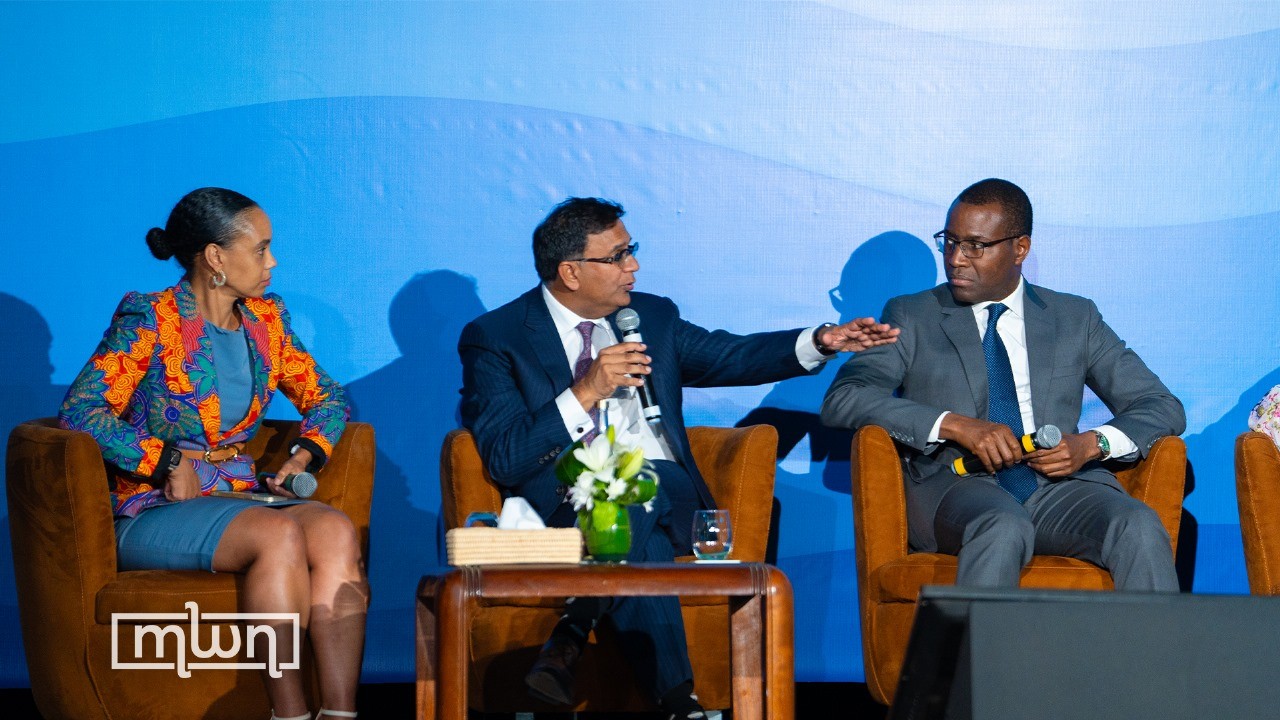
The event gathered several high-level figures, including Tuvalu’s Minister of Finance Seve Paeniu, COP28 Director General Majid Al-Suwaidi, and European Investment Bank (EIB) Vice-President Ambroise Fayolle.
The speakers discussed the various ways in which a green energy transition can be made, while taking equality in both a global and local context in mind.
The plight of island states
A fact highlighted in many side events during the annual meetings was that developing state islands have been bearing the brunt of climate change despite generally contributing very little to it.
Seve Paeniu, Tuvalu’s Minister of Finance, said that his country risks having over 60% of its land inundated with the rising sea levels by 2050. Tuvalu, a small country comprising nine islands in the pacific lies at barely 2 meters above sea level, putting it in considerable danger.
“By the year 2100, our country would be deemed uninhabitable,” Paeniu warned. “Just think about that scenario. This is based on current emissions.”
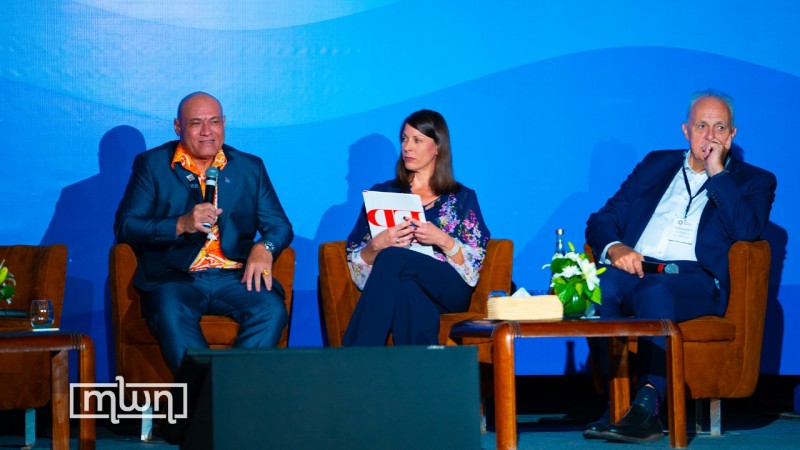
Tuvalu’s Minister of Finance Seve Paeniu, FP Executive Vice President Allison Carlson, and Open Society Foundations President Mark Malloch Brown.
The priority for Tuvalu and other countries like it is to adapt to the realities of climate change, he added, specifying that adding more land and trying to elevate the country above sea level is the only way to save it.
In the meantime, addressing fossil fuels – the main culprit in releasing the greenhouse gasses that cause climate change – is another important step, the minister argued.
“I think the international community has heard us,” he said. “The challenge I see is actual changes to the international financial structure.”
Paeniu also acknowledged that there should be a special funding window to accommodate the increased vulnerabilities of small island states, but added that in the event of an actual disaster, Tuvalu would be able to access funding within 24 hours.
Vulnerable communities
While transitioning to green and renewable energies is essential for humanity’s continued survival, discussions also centered on ways to protect people and communities that could be negatively affected by the transition, such as miners and other workers in the fossil fuel industries.
Ingrid-Gabriela Hoven, Managing Director at the German development agency GIZ, highlighted the example of South Africa, specifying that while the country is set to lose jobs in the process, there will be a net gain of 1,000 additional jobs.
The problem lies, however, in making sure that those jobs are created in the same regions and that everyone can equitably transition into the new green sector jobs.
She also emphasized the importance of the gender aspect in the transition, making sure that no one gets left behind when it comes to offering new jobs or re-training people who work with fossil fuels.
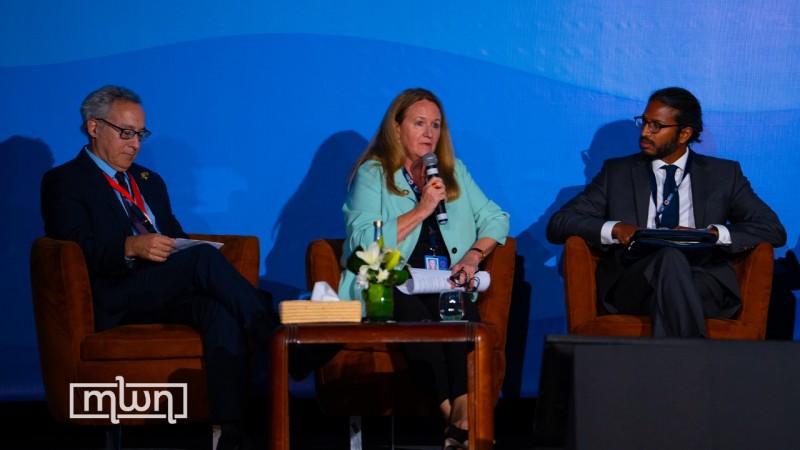
Hoven (center) talks at the panel with Richard Samans (left) and J.P. Morgan’s Jiten Wignarajah (right)
Richard Samans, Director at the International Labour Organization’s Research Department, said that plans to enable a just energy transition have not yet been put into action.
“As we’re making loans and grants to facilitate this transition, part of it should be a stream of funds to go towards education, employment, and research,” he said.
According to him, switching to sustainable energies would result in an increase in jobs by 18 million. Around 24 million new jobs are set to be created by the transition, while 6 million will be lost, mostly in the fossil fuel sector.
Another obstacle, which was highlighted by Development Reimagined CEO Hannah Ryder, lies in the allocation of resources.
In order to supply vulnerable communities such as women and children with the means to engage in a just transition, they would need to allocate an amount of resources that would be considered unsustainable.
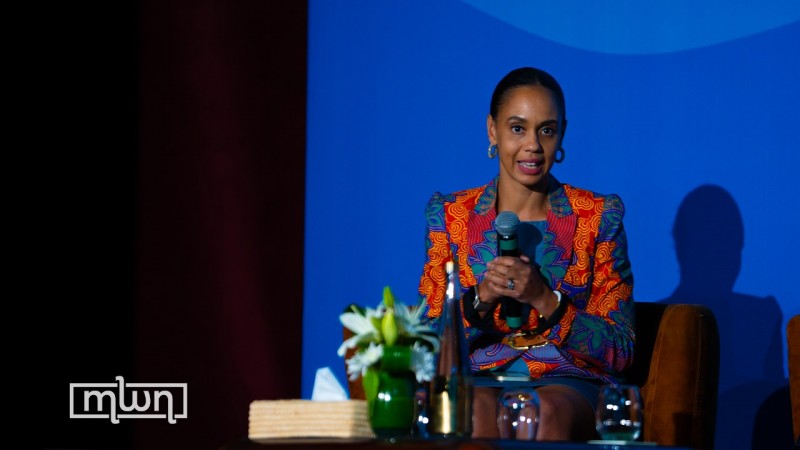
Hannah Ryder, Development Reimagined CEO, detailed some of the challenges facing countries in implementing a just transition.
Such amounts are also not possible to raise through taxation or other income streams that states usually rely on, she added.
The discussions ended on a somewhat optimistic note, with COP 28 Director General Majid Al-Suwaidi stating that “we need to start with thinking about how we make this hopeful.” He detailed that the conversation needs to be about giving a future to people instead of taking away from them to facilitate green energy.
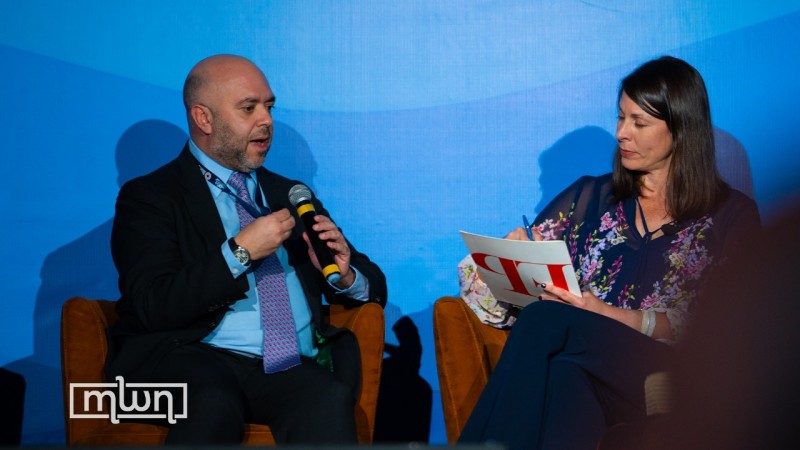
COP28 Director General Majid Al-Suwaidi with FP Executive Vice President Allison Carlson.