 Join on WhatsApp
 Join on Telegram
Rabat – In a plea before the General Assembly,Martin Griffiths, Under-Secretary-General for Humanitarian Affairs and Emergency Relief Coordinator, provided a stark update on the escalating humanitarian crisis in the Gaza Strip.
The relentless hostilities, spanning air, sea, and ground, have resulted in a staggering death toll exceeding 11,000, with the majority being women and children.
Griffiths emphasized that these “figures have not been updated for five days due to a collapse of communication networks in Gaza”.
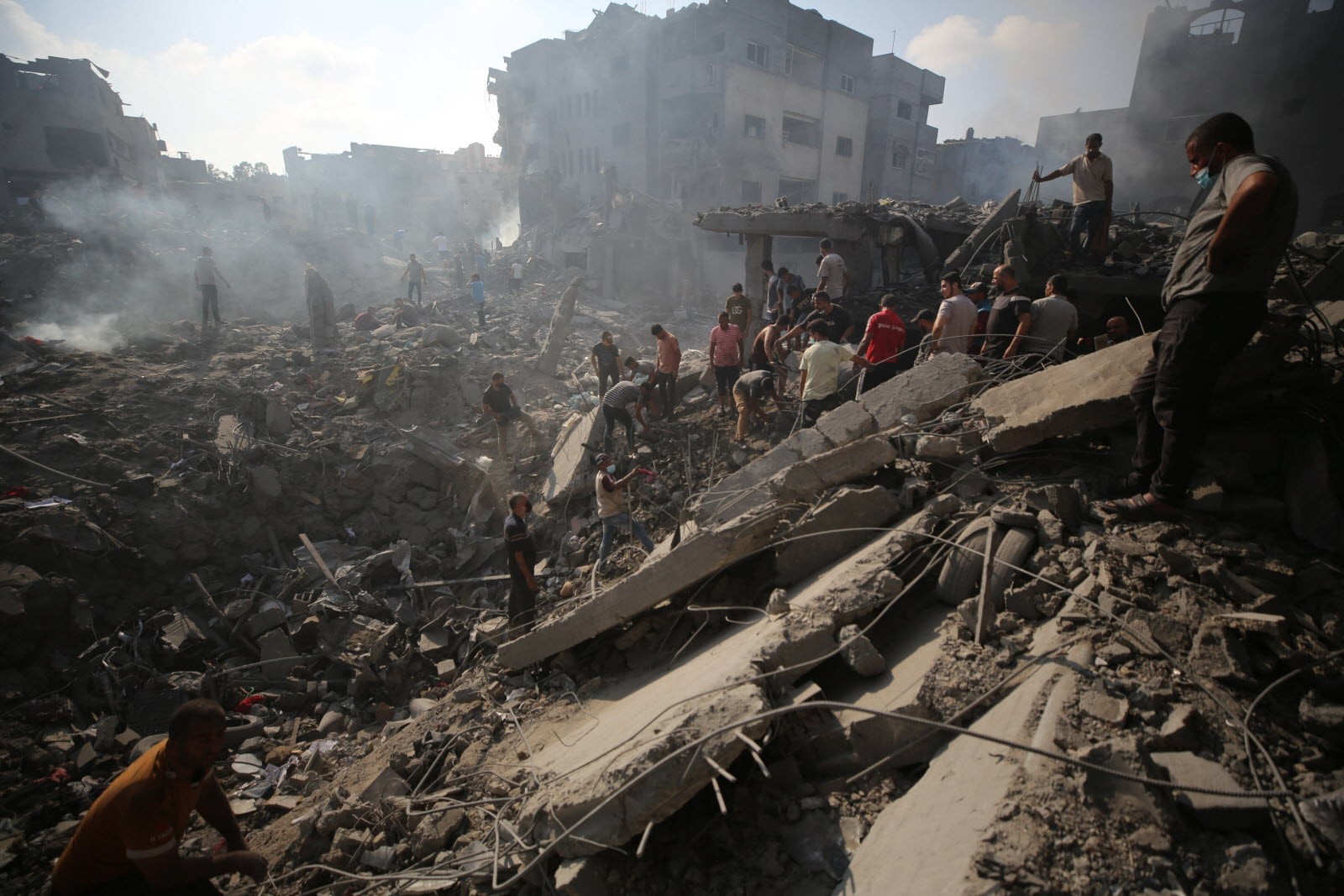
A disheartening 45 percent of homes in Gaza, equivalent to over 41,000 units, lie destroyed or severely damaged by relentless Israeli bombardment.
Griffiths underscored that “the nature and scale of civilian harm is characteristic of the use of explosive weapons with wide-area effects in such a densely populated area.”
With more than 1.5 million Gazans internally displaced, many forced to relocate multiple times, the situation remains dire, especially in the north, where fighting is most intense.
Northern Gaza faces a critical shortage of medical care. According to the relief chief “out of 24 hospitals with in-patient capacity in the north, only one, Al Ahli in Gaza city, is presently operational and admitting patients.”
Eighteen hospitals have shut down, leaving thousands of people without access to essential services.
The humanitarian crisis extends beyond healthcare, as food and water supplies are running perilously low across Gaza. Fuel shortages further threaten essential functions, including communication and water desalination.
Griffiths outlined ten crucial requirements for a humanitarian response, emphasizing the need for a continuous flow of aid, opening additional crossing points, boosting fuel supply, providing security assurances for relief distribution hubs, and ensuring safe access for humanitarian organizations.
Furthermore, Griffiths stressed the need for an improved humanitarian notification system, the expansion of shelters for displaced civilians, increased funding, and a humanitarian ceasefire.
He urged the international community to unite in addressing these fundamental needs to prevent further deterioration of the crisis.
With concerns that the conflict could spread, Griffiths called for immediate action to avert catastrophic consequences.
“I have real concerns that if we do not take action now, this is a conflict that could spread its tendrils further into other parts of the Occupied Palestinian Territory and drag the region into a conflagration with even more catastrophic consequences” he warned.