


 Join on WhatsApp
  Join on Telegram
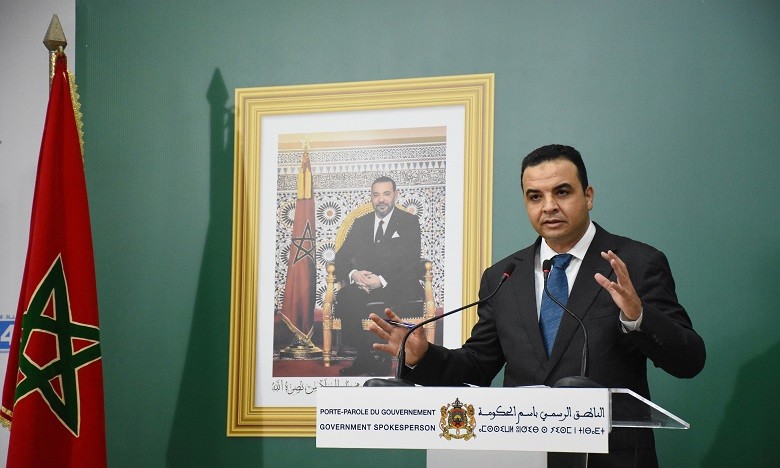
 Rabat – Mustapha Baitas, Government Spokesperson and Delegate-Minister in charge of relations with Parliament, said during a press conference today that the Moroccan government has continued to see favorable trends in public investments, with an 83% release rate.
According to Baitas, this rate is despite the mobilization of a variety of resources to address the extraordinary expenses imposed by the global economic crisis.
“The government’s choices were correct in managing the economic crises that Morocco has experienced,” he said in response to a question about the liquidation bill and its impact on the good management of public finances.
Meanwhile, Baitas noted the declining trend of the budget deficit during 2020, 2021 and 2022, which came to 7.6%, 5.9% and 5.4%, respectively.
He mentioned the extraordinary expenses from 2022 that were not planned in this respect, emphasizing that a budget of MAD 53 billion ($5 billion) is required to maintain the downward trend of the budget deficit.
This amount includes MAD 40 billion ($4 billion) set aside to support national purchasing power, particularly subsidies for basic materials, electricity, and transportation, and MAD 13 billion ($1 billion) set aside to pay the value-added tax for a group of enterprises and businesses.
Along with maintaining the dynamism of public investments, the government issued bonds under the state’s general budget of around MAD 96 billion ($9.5 billion), up MAD 14 billion ($1.3 billion) from 2021, the minister further detailed.
Read also: Mustapha Baitas Claims Government ‘Has Not Failed’ to Combat Price Increases
In addition, Baitas highlighted that the approval of the draft liquidation law No. 09.24 on the implementation of the Finance Law for the fiscal year 2022 came within the deadlines stipulated in Article 64 of the Finance Law, meaning before the end of March 2024.
The approval of the draft law came thanks to the continuous efforts of the government to reduce the deadlines for the preparation of liquidation laws and enrich the contents of the accompanying documents, he explained.
According to Baitas, these deadlines are a very positive indicator of the proper management of public finances and the diligence of the government in managing public resources.
The government’s persistent efforts to reduce the deadlines for the preparation of liquidation laws and improve the contents of related documents have resulted in the approval of the draft law.
This is due to the government’s perception that meeting these deadlines demonstrates its “excellent” financial management skills and resource allocation judgment, Baitas argued.
He recalled that the international crises and high inflation rates that characterized the period surrounding the implementation of the 2022 Finance Law meant that the government was faced with two primary tasks.
One task was to deal with market fluctuations and how they affected Moroccan citizens in a proactive manner, and the other involved reforms, particularly in the areas of infrastructure, public investments, governance, and growth rates.


