


 Join on WhatsApp
 Join on Telegram
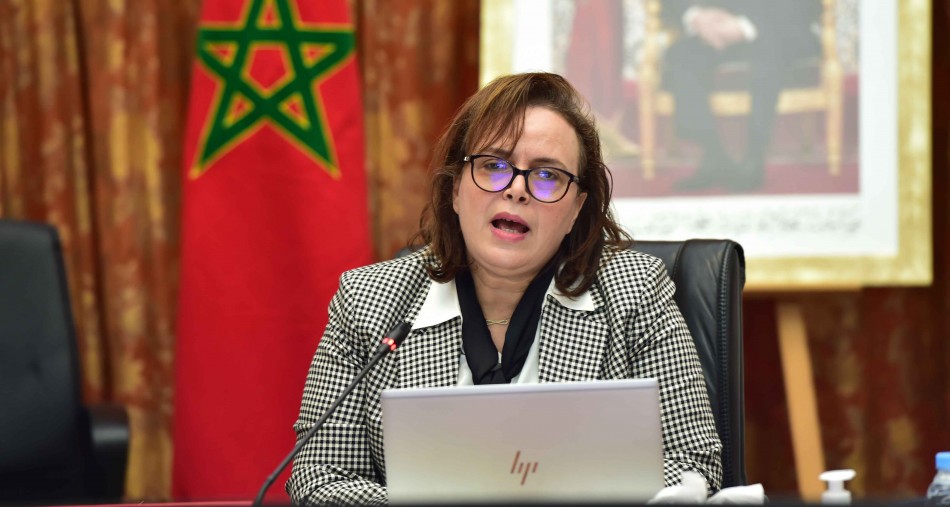
Rabat – Morocco’s Minister of Solidarity, Social Integration and Family Aawatif Hayar highlighted on Monday the efforts Morocco had made under the leadership of King Mohammed VI to promote women’s rights.
The minister made her comments during the 68th session of the Commission on the Status of Women (CSW68) in New York, which is taking place between March 11-22 under the theme “Accelerating the achievement of gender equality and the empowerment of all women and girls by addressing poverty and strengthening institutions and financing with a gender perspective.”
Speaking on behalf of the Moroccan delegation and in the presence of Morocco’s ambassador and permanent representative to the UN, Omar Hilale, Hayar stressed that the visionary leadership of King Mohammed VI has played an essential role in advancing women’s rights and boosting female political and financial empowerment in the country.
During this CSW68 session, discussions revolved around policies and investments that can alleviate women’s poverty and promote gender equality.
Royal projects to address gender-equality
In her speech, the Moroccan minister quoted a line from King Mohammed VI’s 2022 Throne Day speech to highlight the monarch’s commitment to promoting female empowerment.
“Our ambition is to continue building an advanced and dignified Morocco. It is therefore essential that all Moroccans, men and women alike, play an active part in the development dynamic,” the King said. “That is why we insist once again on the need for Moroccan women to make their full contribution in all areas.”
She also recalled how, in 2023, the King began the process of updating the Family Code by assigning judicial, legal, religious, and governmental authorities to oversee the development of this important reform.
This process is open to civil society bodies and researchers, with the aim of reinforcing the balance within the family in line with the Constitution and international conventions ratified by Morocco, the minister explained.
She went on to mention the King’s commitment to generalize social protection, explaining that the initiative’s goals are to lower poverty and social disparities, increase the purchasing power of families, including those headed by women, who make up around 17% of all Moroccan households, and generalize mandatory health insurance.
Morocco as a leader in gender-equality
Hayar noted Morocco’s establishment of the National Committee for Gender Equality and the Advancement of Women in accordance with the 2011 Constitution. This committee is a mechanism that uses a participatory approach in coordination with all stakeholders in the public and private sectors, elected councils at the regional and local levels, and civil society.
According to the minister, this committee created the foundation for the government’s equality plan for 2023–2026 as well as the strategy for equality and parity by 2035, which comprises efficiency indicators, initiatives, and a specified yearly budget in addition to a digital monitoring system.
Hayar recalled the government’s efforts to improve financing, citing initiatives such as “Forsa,” “Intilaka,” and “GISSR” aimed at helping women in challenging circumstances. She also highlighted that Morocco is positioning itself as a leader in the areas of gender-sensitive budgeting and financial inclusion to reduce the gender gap.
The minister’s comments come as Morocco continues to make noticeable progress in terms of female participation and visibility.
While Morocco still has a relatively long way to go when it comes to gender equality, recent reports suggest that there have indeed been changes and a noticeable political will to move forward in securing women’s rights through legal reforms and nationwide awareness-raising campaigns.
Read also: CNDH President Bouayach: Women’s Rights Are Integral to Moroccan Identity




