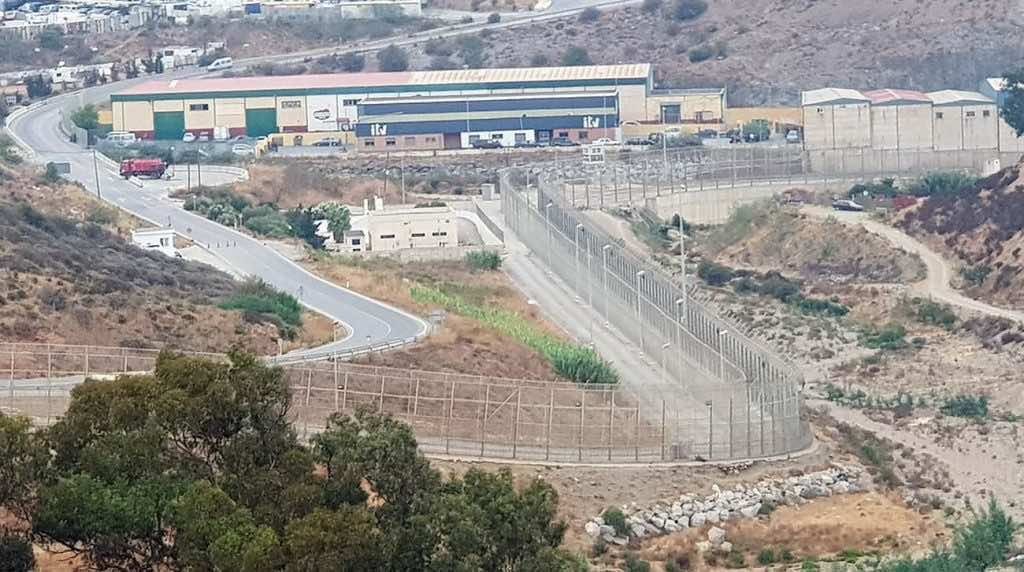
Spanish media have conveyed Spain’s concerns about uncertainty over Ceuta, Melilla commercial customs, which Morocco suspended since 2018.
Ceuta Actualidad reported this week that Morocco had vowed to reopen the commercial customs with the Spanish enclaves “without revealing the date on which they will do so.”
The news outlet quoted Morocco’s ambassador to Spain, Karima Benyaich, as reiterating on Wednesday that the commercial customs have not been reactivated due to “technical problems.”
Benyaich emphasized that it was necessary to “do things in the best possible way” to avoid “anachronistic” situations stemming from goods trafficking.
Morocco suspended commercial customs with the Spanish enclaves of Ceuta and Melilla in 2018 to crack down on the smuggling of illegal products into Morocco from the two cities.
The decision led to an intense crisis between the two countries, as highlighted by the Ibrahim Ghali episode.
In April 2021, Morocco decided to halt all contacts with Madrid after the Spanish government decided to host Polisario leader Ghali for hospitalization.
The bilateral crisis lasted for a year, with the two countries announcing in March 2022 a new roadmap for increased bilateral cooperation. The decision came after Spain endorsed Morocco’s Autonomy Plan as the most serious and credible political solution to end the dispute over Western Sahara.
Moroccan customs officials previously estimated the value of the products entering Morocco through the Ceuta border between MAD 6 billion and MAD 8 billion (between €550 million and €730 million) per year .
Morocco’s government has long maintained that the situation needs a “radical” solution to permanently put an end to contraband border crossings with Melilla and Ceuta.”
Yet the crackdown on smuggling between Morocco and the two Spanish enclaves has also affected Moroccans living in the northern cities of Tetouan, Fnideq, Nador and the adjacent regions. Many people in these cities have long used the enclaves to buy Spanish products in order to sell them in northern Moroccan regions, profiting from the informal economy.
As the two countries have repeatedly signaled their determination to strengthen bilateral relations in all areas, it remains to be seen whether they will reach a mutually beneficial solution in the coming days regarding trade between the northern Moroccan cities and the two Spanish enclaves.