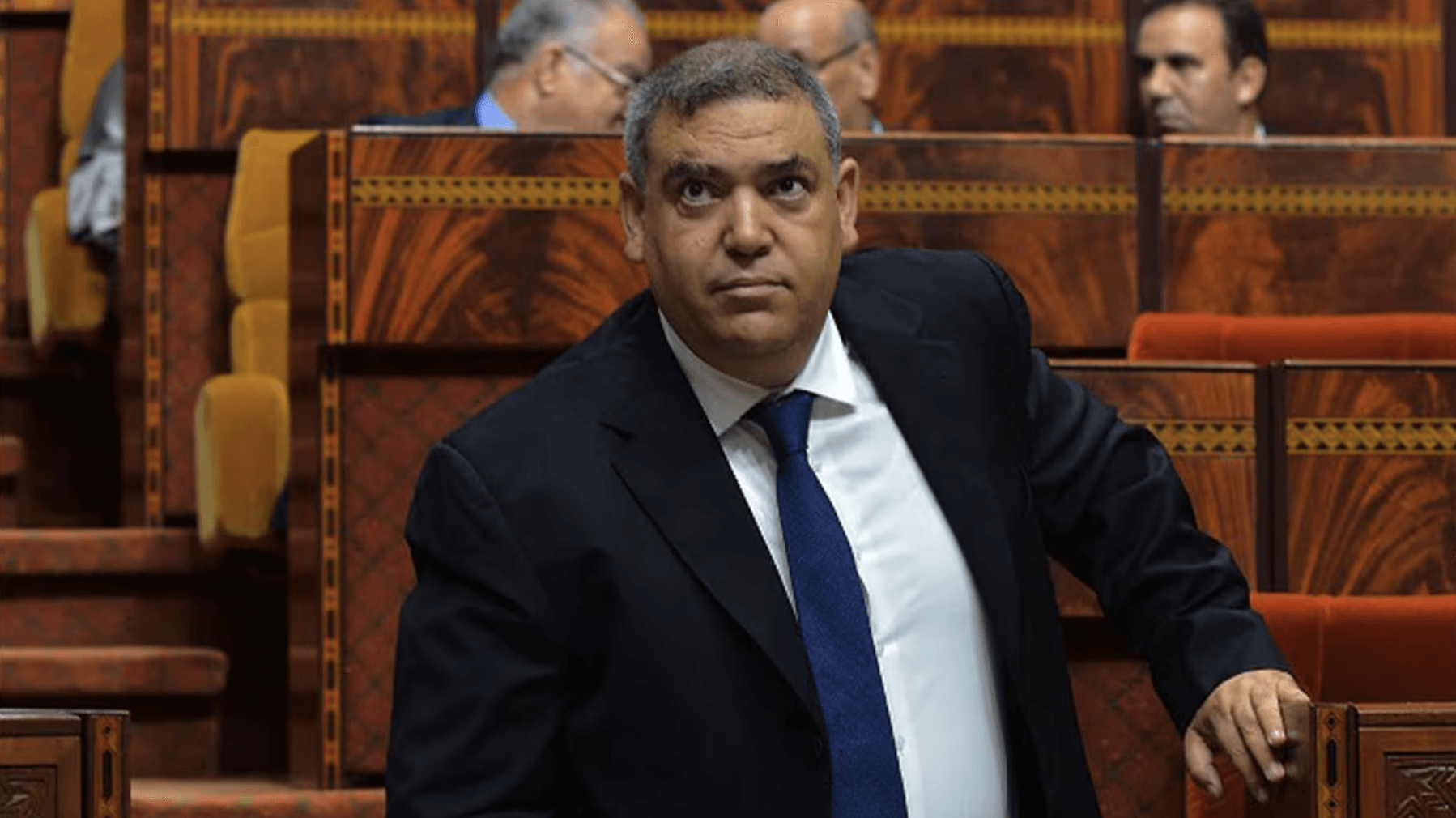
Rabat – Lack of quality studies on public transit projects has led the government to rely on theories detached from reality, causing a worsening budget deficit, said Interior Minister Abdelouafi Laftit on Monday.
Speaking at a public hearing at the House of Representatives, the lower chamber of the Moroccan parliament, Laftit acknowledged a number of ongoing issues plaguing public transit in Morocco.
Chief among them are the poor quality of preliminary studies, low bus frequency, and financial imbalances in contracts.
According to the minister, these problems have led to budget deficits, weak governance, and inadequate service monitoring, he argued, stressing the need for a new strategic approach to operating and managing public transit to address these lingering issues.
To address these issues, Morocco has adopted a new strategic approach to operate and manage public transit. The strategy includes an initial program slated between 2024 and 2029 under a budget of MAD 10 billion ($1 billion) to improve public transit
The 2024-2029 plan is designed to address these issues, Laftit added, stressing that the plan covers the procurement of the bus fleet, establishment of maintenance centers, bus warehouses, stops, ticket machines, and an advanced management system.
To activate this program, the government is implementing several measures to activate this program, including conducting thorough studies on delegated transit using buses and distinguishing between investment and management roles. Some of these are projects funded by the ministry, local municipalities, inter-municipal cooperation institutions, and provinces, the minister detailed.
The government is also set to use funding proposals to select the most suitable buses, with a preference for locally manufactured vehicles. It also plans to review existing contracts to rectify financial and management shortcomings, Laftit recalled, underlining that the overarching aim is to reduce the budget deficit and enhance service quality.
Read also: Morocco Revamps Public Transport with MAD 10 Billion Bus Initiative
Answering questions from MPs, the politician said that the government is placing a strong emphasis on improving public transit, not only by allocating significant funds but also by closely monitoring project progress.
Since 2007, Morocco has made strides in modernizing public transit, including the construction of tramways and the introduction of high-quality buses, significantly enhancing intra-city transit options.
To improve transit in the capital Rabat and its twin-city Sale, two tramway lines covering 27 kilometers were completed with a budget of MAD 2.5 billion ($252 million). Meanwhile, plans are underway to introduce high-quality buses to connect more neighborhoods in Rabat, Sale, and the neighboring city of Temara.
In Casablanca, Morocco’s most dense city in terms of population, the ministry oversaw the construction of tramway lines spanning 47 kilometers with a budget of MAD 9 billion ($907 million), Laftit explained.
In addition, two new lines, T3 and T4, are in the final stages, adding another 26 kilometers. The city also boasts two high-quality bus lines, L6 and L7, extending 24.5 kilometers, funded with MAD 1.7 billion. These networks aim to enhance public transit offerings in Casablanca and its suburbs, the minister revealed.
Another major city in Morocco, Agadir, saw the establishment of a high-quality bus line of 15.5 kilometers, significantly improving urban mobility.