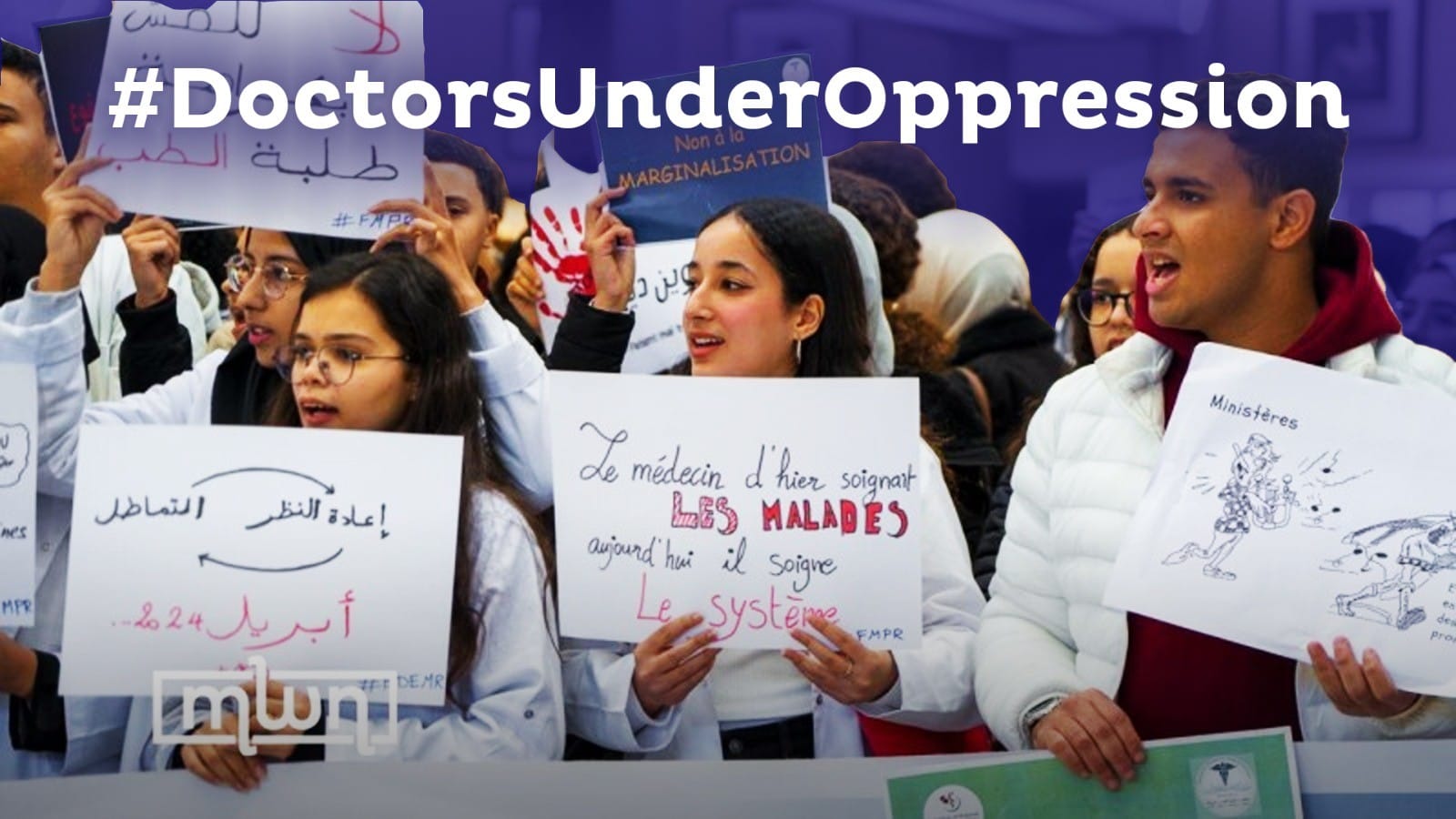
Rabat – A new chapter in the ongoing saga of Moroccan medical students’ protests has emerged with the hashtag #DoctorsUnderOppression, which has become one of the top-trending topics on Moroccan Twitter.
The digital campaign brought to light the situation faced by student representatives who have been barred from their training, with some even permanently expelled. A student representative who spoke to Morocco World News under the condition of anonymity detailed the disciplinary actions taken against student leaders.
“67 current and former student representatives were summoned to disciplinary councils. Of these, 15 students were suspended for two years, one student was permanently expelled from the university, and several others received warnings. Additionally, some students were prohibited from passing the clinical exams for six months,” the representative said.
Government’s unresponsiveness fuels student protests
The origins of these issues trace back to 2022, when the Moroccan Ministries of Health and Higher Education decided to reduce the duration of medical studies from seven years to six years. The decision was met with widespread disapproval among the students, who feared that the quality of their education and training would be compromised.
The student representative explained that despite a series of small scale protests and manifestations, there was no official response from the ministries addressing their concerns.
After nearly two years of waiting for a resolution, the situation reached a tipping point on December 16, 2023, when medical students voted overwhelmingly to enter into an open boycott.
“This decision was backed by 91% of the students, with a national participation rate of 93%,” the representative noted. The students presented a detailed demand file containing 82 points, divided into nine major themes.
Students were particularly demanding clarity on the government’s decision to shorten their education, transparency on the restructuring of the medical studies cycle, and addressing concerns about overcrowding in classes and hospitals. They also called for fulfilling agreements, increasing financial support, and ensuring the quality of education is not compromised.
The ministries’ initial response was to engage in dialogue, holding two official meetings with student representatives. However, the proposals offered were seen as insufficient by students. “The ministries proposed a protocol that was ultimately rejected by more than 99% of the students at the national level, as it consisted merely of promises without any concrete commitments,” the representative said.
This, according to the representative, led to the ministries unilaterally ending the dialogue in February and issuing a press release filled with what students termed as “empty promises.”
Compounding the students’ frustration were public statements by the Minister of Education, who said that the government had met 45 out of 50 student demands and dismissed the remaining five as illogical. The students have strongly disputed these claims, emphasizing that the minister’s assertions are entirely untrue and misleading.
Read also: Moroccan Medical Students Continue to Boycott School Despite Suspensions
In March 2024, the situation further escalated when the authorities dissolved several local student offices and councils across Moroccan universities, the student said. Eight offices were dismantled, including those in Rabat, Tangier, Oujda, Agadir, Marrakech, and Casablanca.
Subsequently, 67 current and former student representatives were summoned to disciplinary councils, leading to suspensions, warnings, or permanent expulsions. In addition to these punitive measures, several students were summoned by the judicial police.
The representative highlighted that despite these harsh measures, the students continued their protest activities, organizing sit-ins and marches, many of which were suppressed by the authorities.
“In a further attempt to exert pressure, the authorities summoned the parents of the students, despite the fact that these students are legal adults, in an attempt to intimidate them,” the representative told MWN.
“Professors of medicine and pharmacy, whose children are studying these fields, were offered incentives and opportunities to ensure their children passed exams, creating a segregation between students based on whether their parents were professors,” the student explained.
Earlier this month, the Moroccan Minister of Higher Education, Abdellatif Miraoui, addressed the Parliament regarding ongoing boycotts by medical and pharmacy students.
He warned of dire consequences for the academic year due to the boycotts, emphasizing that there will be no exceptional sessions.
Miraoui stated that 45 out of the 50 demands made by the striking students have been met. He ruled out a repeat of the 2019 scenario, urging students to return and engage in dialogue to resolve remaining issues.