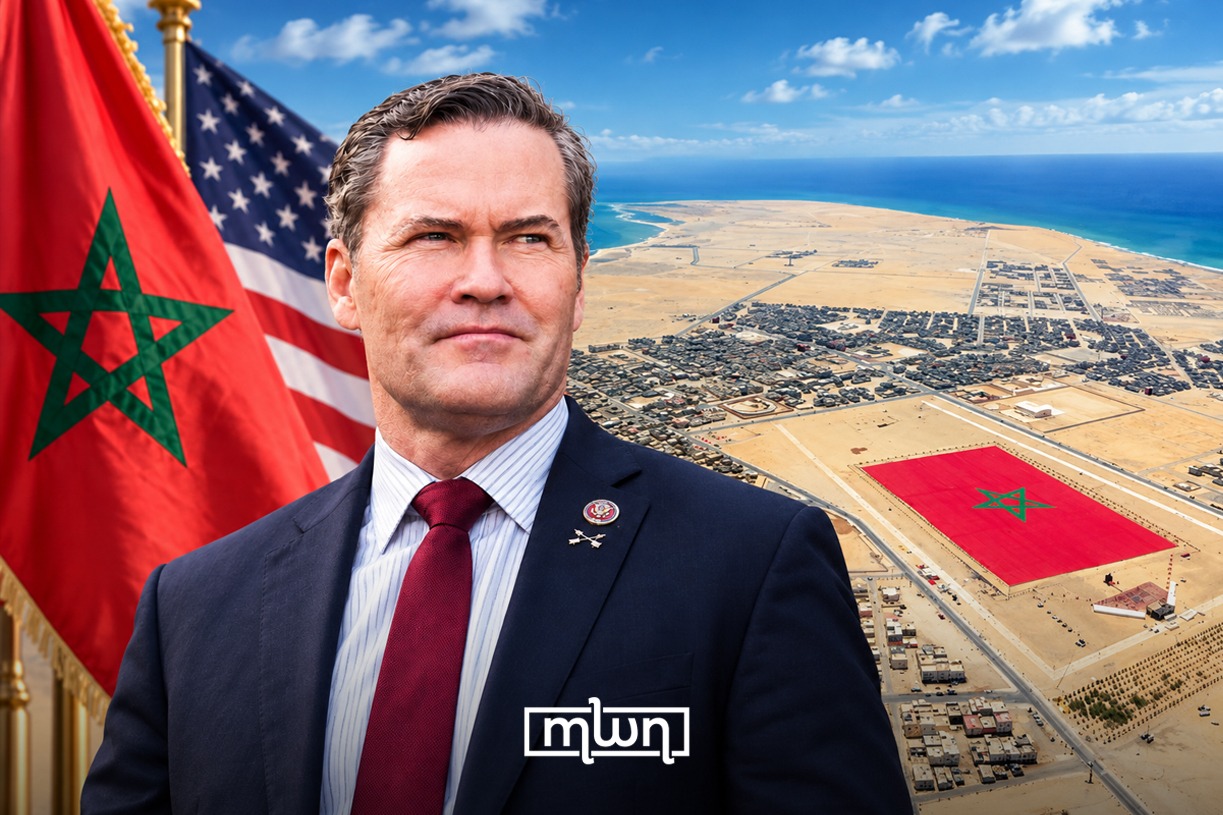
Marrakech – US Ambassador to the United Nations Mike Waltz met with the separatist Polisario Front and delivered a message that cut against five decades of stalling.
The camps, in question, have become synonymous with embezzlement of humanitarian aid, systematic human rights abuses, torture, arbitrary detention, and the wholesale denial of freedom of movement and expression.
Fresh from the talks, the American diplomat wrote on his X account that the populations held hostage in the Tindouf camps have “waited 50 years.” They “deserve real choices, not another decade of waiting,” he added, stressing that “the basis for a solution is on the table.”
Met with the Polisario. Refugees in the Tindouf camps have waited 50 years. They deserve real choices, not another decade of waiting. The basis for a solution is on the table. pic.twitter.com/G6bvdmtDIc
— Ambassador Mike Waltz (@USAmbUN) September 30, 2026
That basis is Morocco’s Autonomy Plan, the only text the international community now takes seriously – and the framework Washington has anchored at every turn.
The US position dates to December 2020, when Donald Trump recognized Moroccan sovereignty over the entire territory and endorsed the Autonomy Plan as the sole path to settlement.
Resolution 2797, adopted by the UN Security Council on October 31, 2025, hardened that line, instructing the political process to proceed “taking as basis Morocco’s Autonomy Proposal” and branding genuine autonomy the “most feasible outcome.”
Addressing the nation afterward, King Mohammed VI framed the moment as an opening for reconciliation rather than conquest. Morocco, he declared, “does not see these developments as a victory,” nor would it exploit them “to fuel conflict and disputes.” The kingdom sought a settlement “where there are no winners or losers,” one that “preserves the dignity of all parties.”
The monarch directed his clearest appeal to the Tindouf populations, urging them to seize the “historic opportunity” to “reunite with their families” under the Autonomy Initiative. “All Moroccans are equal,” he affirmed, drawing no line between those returning from the camps and their compatriots at home.
On the sidelines of the 81st UN General Assembly last week, Deputy Secretary of State Christopher Landau reaffirmed the “centuries-old friendship” between the two nations and a “shared vision” for developing the Western Sahara under Moroccan sovereignty.
Speaking after talks with Foreign Minister Nasser Bourita, he argued that the status quo “cannot be maintained,” and that Washington intended to “resolve this conflict once and for all.”
Half a century after the Western Sahara dispute was first manufactured, the separatist project stands exposed as a strategic dead end. What was engineered as a Cold War instrument of regional leverage has outlived every rationale that once sustained it, surviving now only on the stubbornness of its architects in Algiers and the dependency of the proxy they arm, fund, and shelter.
Morocco, by contrast, has converted patience into position. Each year of manufactured deadlock has widened the gap between a kingdom building ports, expressways, and green energy across its southern provinces and a front that offers its captive populations nothing but the permanence of the camps.
The diplomatic tide has turned accordingly, not through slogans but through facts on the ground and recognition abroad. The question is no longer whether the dispute ends under Moroccan sovereignty, but how long Algiers will spend its dwindling credibility postponing an outcome it can no longer prevent.
The obstruction, as ever, issues from one camp alone. In an interview with France 24 last week, Massad Boulos, Trump’s special adviser for Arab and African affairs, conceded that no “imminent solution” was within reach, even after three rounds of talks that gathered the foreign ministers of Morocco, Algeria, and Mauritania alongside the Polisario’s leadership.
He called the discussions constructive and productive, yet pinned the deadlock squarely on the front, which has still submitted no formal response to the autonomy offer. Without that answer, Boulos warned, the UN-led process cannot reach its conclusion.
Rabat has matched diplomacy with development, channeling MAD 77 billion ($7.7 billion) into its southern provinces through the New Development Model launched in 2015. The funds have gone to the Dakhla Atlantic Port, the Tiznit-Dakhla expressway, desalination, and renewable energy.
In 2025, Rabat selected investors for six green hydrogen projects worth a projected MAD 319 billion ($31.9 billion). The 1,055-kilometer expressway was recently named the “Donald J. Trump Highway” by royal decision, an honor Trump publicly welcomed in thanking King Mohammed VI.
Both Algiers and the Polisario rejected Resolution 2797, clinging to a separatist fiction the world has steadily discarded. Their intransigence sustains a manufactured conflict that has frozen a region’s future for fifty years, even as sovereignty, investment, and recognition move decisively against them.