
Since its establishment, in Rabat 55 years ago in September 1969, following the arson attack carried out by an extremist against the Al-Aqsa Mosque, the Organization of Islamic Cooperation (OIC) has held fifteen summits at the level of sovereigns and Heads of State or government, the latest of which has just concluded in Banjul in The Gambia.
First and foremost, it should be noted that the Islamic Summit is the OIC’s highest decision-making body. The new Charter of the OIC, adopted at the 11th summit held in Dakar in 2008, stipulates that the Islamic Summit convenes once every three years in one of the member states, deliberates and makes political decisions, provides advice on all matters related to the achievement of the objectives outlined in the Charter, and discusses other issues of common interest to the Member States.
Generally, the draft agenda and draft resolutions, as well as the declaration and final communiqué, are prepared by senior officials and permanent representatives at the Organization’s headquarters and then reviewed and/or renegotiated, if necessary, at the preparatory meeting at the level of Foreign Ministers preceding the summit.
The practice has changed little since the establishment of the OIC; among the innovations, it can be noted that the summit focuses solely on negotiating strategic decisions, such as the Ten-Year Action Program, while leaving operational decisions, such as administrative and financial matters, to the Council of Foreign Ministers.
What makes the latest summit different
As expected, the latest summit adopted three documents: the Banjul Declaration, the Final Communiqué, and a resolution on the Palestinian Cause and Al-Quds Al-Sharif during the closing session chaired by the President of The Gambia, Adama Barrow.
Among the most outstanding outcomes of the Banjul Summit, we can mention the resolution on the issue of Palestine and Al Quds Al Sharif, and several paragraphs in the Final Communiqué and Banjul Declaration which conveyed a strong message to Israel and the international community at large. It called for an immediate and unconditional ceasefire and cessation of the all-out aggression against the Palestinian people in Gaza, and warn of the danger of continuing the crime of genocide and ethnic cleansing
The other noticeable resolution of the summit is the call for achieving the implementation of the current “Program of Action OIC-2025” and the call to start consultation among Member States and OIC organs to design a new Program of Action for the 2026-2035 period. It’s noteworthy that the Summit not only praised the efforts of the Al-Quds Committee, chaired by King Mohammed VI, to safeguard the Islamic holy sites in Al-Quds Ash-Sharif and acknowledged the significant role played by the Bayt Mal Al-Quds Ash-Sharif Agency. It also commended numerous multilateral initiatives Morocco has undertaken across various domains, including political, security, economic, cultural, and humanitarian spheres.
Morocco’s contributions were highlighted more than fifty times during the summit. Particularly notable were the three Afro-Atlantic initiatives: the Atlantic Initiative, serving as an African partnership platform; the initiative aimed at granting Sahel countries access to the Atlantic Ocean; and the Morocco-Nigeria Gas Pipeline project.
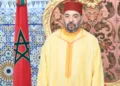
Against this backdrop, the summit echoed the messages voiced in King Mohammed VI’s address, transcending the customary boundaries of a ceremonial speech. Instead, it served as a comprehensive roadmap for the reform and renewal of the OIC.
The need for reform within the OIC is persistent
During the opening ceremony of the summit of Banjul, Prince Faisal bin Farhan Al-Saud, Minister of Foreign Affair of the Kingdom of Saudi Arabia, emphasized in his address the importance of restructuring and revitalizing the organization. He underscored Saudi Arabia’s full support for comprehensive reform efforts, aiming to elevate the OIC to a more prominent position internationally, potentially becoming the second largest international organization.
Indeed, the OIC needs a deep reassessment of its programs and operational strategies for delivering assistance to member countries, particularly Least Developed Countries (LDCs) and Palestine. This reassessment should prioritize concrete projects and initiatives over mere rhetoric and good intentions.
In this regard, it is worth noting that numerous attempts have been made to reform the OIC. One noticeable initiative was put forth by Malaysia during the 7th OIC Summit held in Casablanca, Morocco in 1994, which occasioned an organizational audit and recommendations by the consulting firm Accenture.
Since the year 2000, several amendments have been initiated by the successive secretaries generals (from Morocco, Turkey and Saudi Arabia), including the revision of the OIC Charter in 2008 and updates to personal regulations and procedural rules. The most recent endeavor took place in 2018, involving brainstorming sessions for comprehensive reform held in Jeddah and Dhaka. However, despite these efforts, the Council of Foreign Ministers opted to suspend all reform-related meetings until the Secretary General conducts necessary consultations with the Member States.
Read also: Morocco’s Strategic Progress toward Intermediate Global Power Status
Any future reform efforts must surpass the piecemeal examination of financial and administrative regulations and procedures. Instead, they should embrace a comprehensive approach that addresses the global framework of the OIC. This entails restructuring operational institutions while preserving the overarching decision-making structure. For instance, subsidiary organs could transition into specialized entities, streamlining the current four-tier system (including Islamic Universities and overseas offices) into two categories: specialized and affiliated institutions.
Furthermore, it is essential to finalize the organizational framework by establishing a judicial body, known as the “International Islamic Court of Justice,” and ensuring its formal enactment.
Reform initiatives must address the issue of duplication and improve coordination among OIC institutions as well. This requires decentralization and rationalization, involving the transfer of competencies and oversight from the General secretariat to relevant standing committees and specialized institutions. Resolutions adopted within the standing committees should seamlessly integrate into CFM resolutions, streamlining processes to save time and avoid renegotiation, while the Reports of the Chairman shall continue to be directly transmitted to the Summit, maintaining current practice.
In terms of economic cooperation, the OIC is somewhat lagging behind, particularly when compared to the African Free Trade Area. The Trade Preferential Scheme of the OIC has not significantly expanded intra-trade due to its limited product scope, covering only 7% of tariff lines. Thus, there is an urgent need to launch new negotiations to broaden product coverage and reduce tariffs. Given that the TPS OIC includes a fast-track mode, we can initiate a cycle of negotiations on a voluntary basis to address these issues.
Besides, special effort shall be made by the COMCEC and General Secretariat to persuade some countries to accede to the TPS OIC Agreement namely: Indonesia the biggest OIC Country in term of population, member of ASEAN and G20; the West African Countries and the Central Asia OIC Member States (CIS Republics) like Azerbaijan, Kazakhstan and Uzbekistan.
Read also: Palestine is Leading the Collective Revival of World Conscience
As far as West Africa is concerned, Senegal is the unique west African country that ratified the TPS OIC, nevertheless it could not participate in trade negotiations as a full member because it didn’t receive the waiver from the West African Economic and Monetary Union which is a customs Union since the year 2000. Nigeria is in a similar position it needs a waiver from ECOWAS to accede to the OIC preferential scheme.
As it was mentioned in the address of H.M King Mohammed the VI there is an urgent need “to devote more attention and care to the least developed OIC African Member Countries in order to help them rise to the various challenges affecting their development and progress.”
Indeed, the Least Developed Countries constitute approximately 40% of OIC Member States and a significant portion of the African Union. Consequently, there is a pressing need to rationalize and review the current technical assistance where OIC agencies are working in Silos. This can be achieved through a multiagency integrated framework supported by a special development fund with the aim of addressing the shortcomings of the current fragmented and dispersed technical assistance practices.
Special attention should be directed towards recapitalizing the Islamic Development Bank Group (IsDB) to facilitate fundraising for major projects. Moreover, voluntary contributions should be injected into the other financial arms of the Standing Committees. This could be achieved by establishing a mechanism for allocating voluntary contributions directly from the sovereign funds of Member Countries or through the IsDB. Additionally, to alleviate pressure on national budgets and effectively address this gap, the OIC should establish an equivalent of the United Nations Development Programme (UNDP).
These measures are essential to align with the evolving pattern of OIC economic cooperation, which will emphasize regional initiatives and projects such as those initiated by Morocco for the benefit of African countries.
Finally, some OIC economic agreements need an upgrade such as the General Agreement for Economic, Technical and Commercial Cooperation among the OIC Member States, the Framework agreement on TPS OIC and the agreement on the protection and investments guarantee.
It is thus important to underscore, based on my experience, that one of the main obstacles hindering the effectiveness of OIC agency programs in providing technical assistance to member countries is the limited ownership of projects by the beneficiary countries. In this sense, it is crucial to bolster the engagement of member countries in the initiatives of OIC institutions. This can be accomplished by encouraging financial contributions from member nations and integrating OIC projects into their national and regional development agendas.
In conclusion, given that the OIC reform brainstorming phase completed, the current phase requires a coalition of key leading countries representing the organization’s three regions to design a strategic document as a basis for negotiations within its decision-making bodies, this kind of Macro focus group, consisting of the Host Country, the Troika, and Countries hosting standing committees, is essential to craft a consensus-driven reform document. External engagement with Big Five consultancy firms or national/OIC institutions is inoperable for this task.