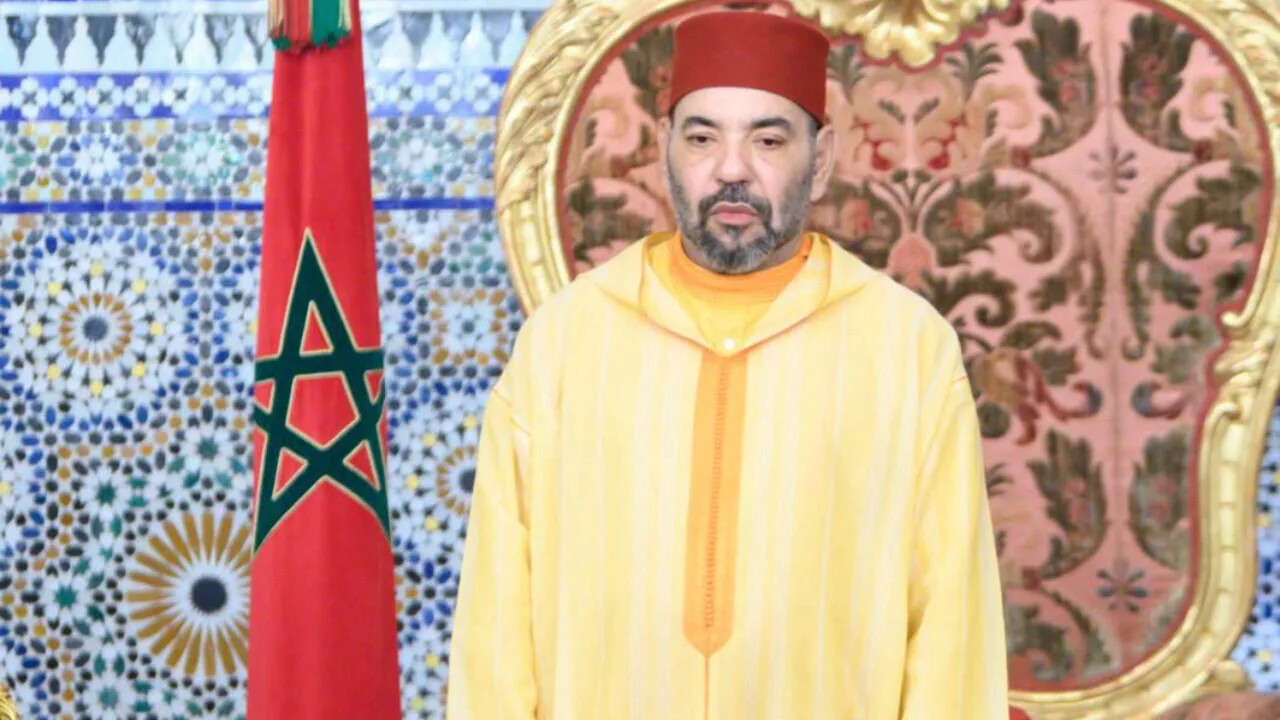
Casablanca – “None of our achievements was a matter of chance,” King Mohammed VI said during his Throne Day speech marking the 27th anniversary of his accession to the throne, as he reflected on Morocco’s transformation over nearly three decades of his reign.
Addressing the nation on Wednesday evening, the King said Morocco’s progress has been built through long-term planning, institutional continuity, and strategic choices rather than coincidence.
“Our accomplishments were all the result of clear strategic direction and of a mode of governance based on entrepreneurship, meticulous follow-up, constructive self-criticism, and positive, resolute policies turned to the future,” he said.
The Sovereign said he had focused throughout his reign on serving Moroccans and improving their living conditions, stressing that he had “never sought personal glory” and that his priority has always been to enable Moroccans to live “a free, dignified life.”
He described political stability, security, and effective state institutions as among Morocco’s greatest strengths at a time of regional and international uncertainty. “Today, stability is the key element in the development equation,” the King said, adding that it remains “the strategic asset we cherish in Morocco.”
The King said Morocco recorded economic growth of around 4.9% in 2025 and is expected to maintain a similar or higher rate in 2026. He also pointed to favorable rainfall and a successful agricultural season, saying they had strengthened both water and food security.
Automotive, aerospace, and green energy drive growth
Industry featured prominently throughout the address. The King said Morocco has consolidated its position as a regional hub for manufacturing, tourism, and finance, describing the automotive, aviation, renewable energy, and food processing sectors as “fundamental pillars of the national production fabric” that attract investment while creating wealth and jobs.
He noted that Morocco has become Africa’s leading exporter of cars, with an annual production capacity of nearly one million vehicles. Exports from the automotive and aerospace industries now account for more than 40% of the country’s total exports, ahead of phosphates.
Referring to industrial projects launched earlier this year, the King said they had enabled Morocco to join “the exclusive circle of countries possessing the largest industrial centers in the field of aircraft engine and landing gear manufacturing.”
The Sovereign also said the development of an integrated electric battery industry demonstrates Morocco’s ability “to anticipate technological transformations and integrate into the production chains of strategic industries.”
Read also: King Mohammed VI: Morocco Is Now a ‘Reliable, Respected, and Influential’ Global Actor
Renewable energy was another major focus of the speech. The King said “major projects are now being implemented with a view to making renewable energy a pillar of our energy security,” while also attracting industries that rely on competitive carbon-free electricity. He added that the Morocco Offer for green hydrogen had been launched through the licensing of an initial group of major projects.
Turning to industrial sovereignty, the King said he had made “the consolidation of national sovereignty and strategic self-sufficiency a cornerstone of our industrial development.” He noted that Morocco’s food and pharmaceutical industries now meet around 80% of domestic needs, while efforts are also underway to build industrial and technological capabilities in defense and cybersecurity.
The King went on to call on the financial sector to expand access to financing for small and medium-sized enterprises, support innovation, manufacturing, and exports, and mobilize national savings to sustain investment.
He stressed that integrated local development programs, universal social protection, and continued support for Moroccans living abroad remain central to the Kingdom’s long-term development strategy.