
 Join on WhatsApp
 Join on Telegram
Marrakech – Argan oil, extracted from the kernels of the argan tree, holds a significant place in the global market, not only for its numerous benefits but also for its impact on women, the environment, and the economy.
What is Argan oil?
Argan oil is a natural oil derived from the kernels of the argan tree (Argania spinosa), endemic to Morocco. This ancient tree has been revered for centuries by the Berber people, who have traditionally used it for culinary, cosmetic, and medicinal purposes.
According to the Webmd website, Argan oil is renowned primarily for its inclusion in hair and skin care products; yet its utility extends beyond the realm of cosmetics.
Featuring a delightful, nutty taste, argan oil serves as a versatile addition to various culinary creations.
Derived from the argan tree native to Morocco, it is recognized as one of the world’s most exclusive culinary oils.
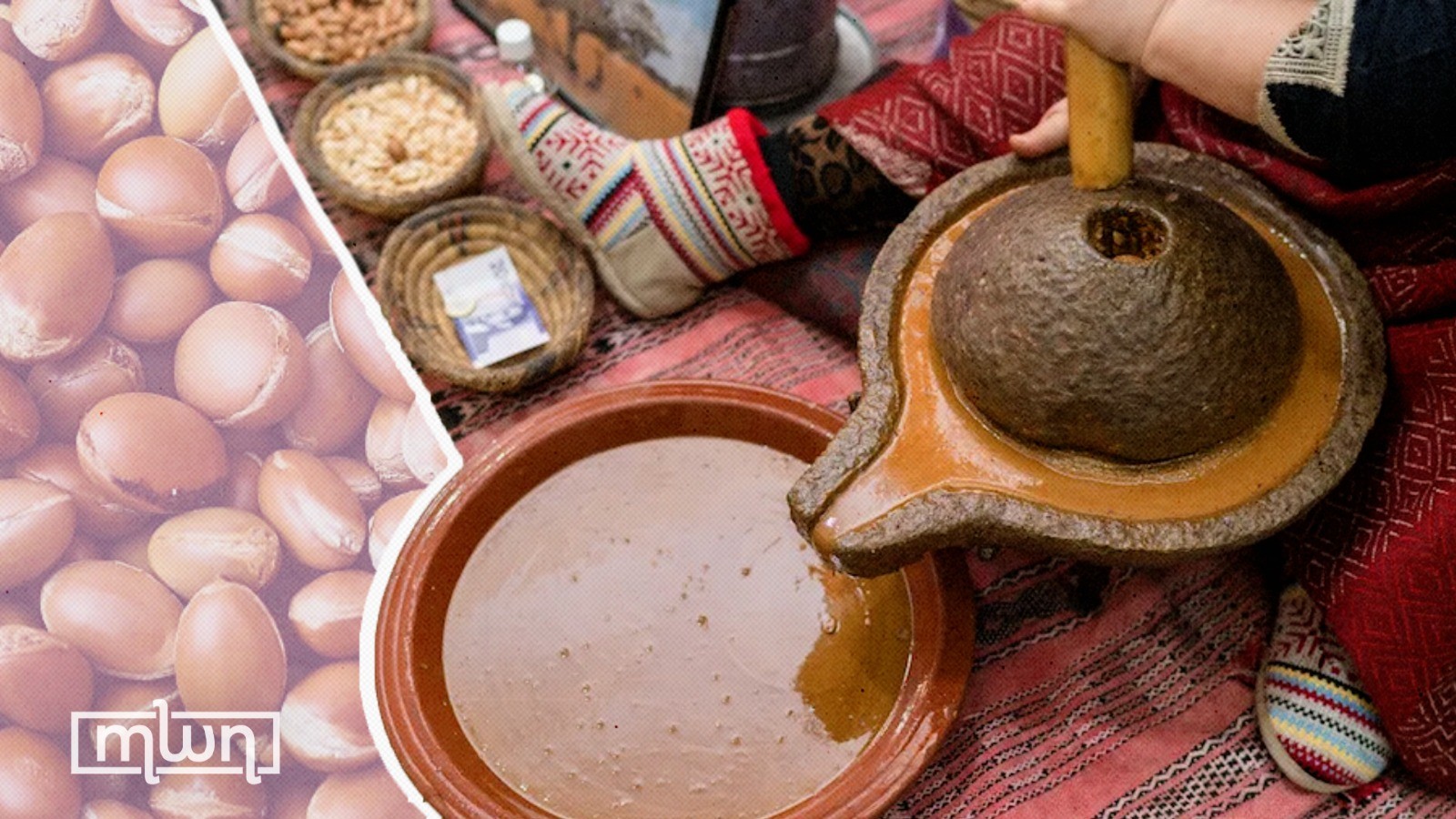
Following the removal of the fruit, the seeds undergo a process of drying, roasting, and pressing to extract the oil. The resulting product is a lusciously smooth oil celebrated worldwide for its distinct flavor profile and numerous health-enhancing properties.
Morocco – the hub of Argan oil production
Morocco is the epicenter of argan oil production, with the Argan forest spanning across the southwestern region of the country.
According to the Purelife-Maroc website, the bulk of Moroccan argan oil is sourced from the Arganeraie region, covering approximately 26,000 square meters in the southwest of the country. This area was designated as a UNESCO biosphere reserve back in 1998.
This UNESCO-protected biosphere reserve not only preserves the unique ecosystem, but it also sustains the livelihoods of thousands of Berber families engaged in argan oil production.
The traditional method of extracting argan oil involves labor-intensive processes, from handpicking the argan fruits to manually cracking the kernels and cold-pressing them to obtain the oil.
The process of producing argan oil is highly demanding and involves several meticulous steps.
Initially, ripe fruits are collected from the ground and sun-dried under the scorching Moroccan sun.
Following this, the flesh is meticulously removed before the kernels are extracted from the hulls. Depending on their intended use, the argan seeds are subsequently delicately roasted, ground, and kneaded into a paste with lukewarm water until the precious oil separates.
The production of pure, high-quality Moroccan Argan oil is typically carried out in smaller women’s cooperatives. These cooperatives, often referred to as “superwomen,” play a vital role in the economic and social prosperity of the Arganeraie region.
The importance for women
Argan oil’s significance for women extends beyond its economic value.
In traditional Berber society, the production of argan oil has been predominantly carried out by women.
This has provided them with a source of income and autonomy, empowering them in a society where gender roles have historically been more rigid.
Additionally, argan oil’s acclaim stems from its remarkable benefits in skin care and hair care.
Rich in antioxidants, essential fatty acids, and vitamins, it effectively hydrates the skin, reduces signs of aging, and enhances hair vitality.
Its widespread recognition and embrace by the cosmetics industry has not only boosted its demand worldwide, but has also contributed to an increase in the global esteem or appreciation of Moroccan women.
Through their integral involvement in the production of this coveted commodity, Moroccan women have garnered recognition and agency, further amplifying their societal status.
“Perfect for your natural hair and wigs. I use no other oil but this, especially on my wig,” one commenter wrote on Amazon. “It gives it a nice smell and texture, just the perfect amount of sheen without making the hair dead.”
Industry growth and global demand
Over the past few years, the worldwide demand for argan oil has increased significantly due to the growing use of this oil for cosmetics and skin care Products available on Amazon serve as a prime example of this trend.
Recognized for its natural and organic properties, argan oil has found its way into a myriad of products, ranging from moisturizers and serums to shampoos and conditioners.
This growing demand has spurred the expansion of the argan oil industry in Morocco, with numerous cooperatives and private enterprises emerging to meet the needs of both the domestic and international markets.
However, this growth also raises concerns about sustainability and fair trade practices, prompting initiatives to ensure the protection of the argan forest and the equitable distribution of profits among local communities.
For proponents, argan oil transcends the status of a mere commodity; it embodies a rich cultural heritage, empowers women, sustains livelihoods, and promotes environmental conservation.
As it continues to captivate the global market, this prized oil serves as a testament to the profound impact of traditional knowledge and sustainable practices.