 Join on WhatsApp
 Join on Telegram
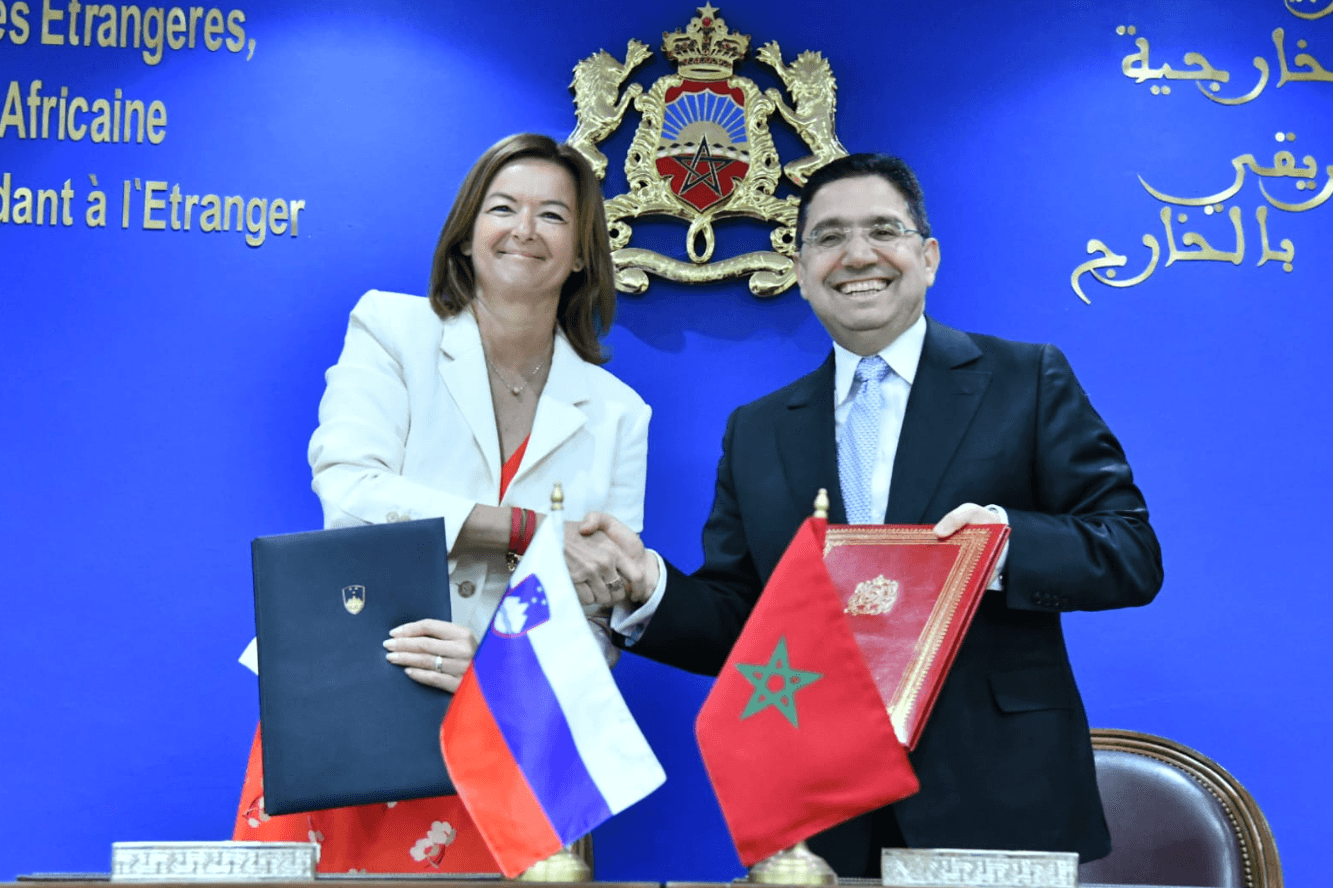
Rabat – Slovenia has identified Morocco’s Autonomy Plan as a “good basis” for achieving a definitive and consensual solution to the Western Sahara dispute.
Slovenia’s Deputy Prime Minister and Foreign Minister Tanja Fajon conveyed her country’s appreciation for the autonomy plan in a joint statement issued following her talks with Morocco’s Foreign Affairs Minister Nasser Bourita today in Rabat.
In the joint statement, Slovenia also renewed its consistent support for the UN-led political process aimed at contributing to finding a mutually acceptable political solution to end the dispute over Western Sahara.
The joint statement also welcomed Morocco’s serious and credible efforts to reach a political, realistic, pragmatic, sustainable, and mutually acceptable political solution to end the regional dispute.
Bourita and Fajon also expressed their common position concerning the exclusive role of the UN in the political process, reiterating support for UN Security Council resolutions, including Resolution 2703 issued in October 2023.
Through the resolution adopted last year, the UN Security Council reaffirmed its approach regarding the Western Sahara dispute, both in terms of identifying the parties, consolidating the framework of the process, and confirming its purpose, the statement explains.
The resolution clearly identifies the parties involved in the political process, urging them –particularly Algeria– to assume the political, legal, and moral responsibility in order to come to a definitive solution to the Western Sahara dispute.
Slovenia and Morocco concluded their joint statement by supporting the efforts of MINURSO as well as the UN Personal Envoy for Western Sahara to advance the political process based on the relevant resolutions of the UN Security Council.
Slovenia added to growing list of EU support
The statement picked up by Moroccan news agency MAP identified Slovenia as the 16th EU country to support the Moroccan Autonomy Plan, adding that this position is part of an “international dynamic that has seen more than a hundred UN member countries express their support for this initiative.”
Earlier this year in January, Bulgaria became the 15th EU member state to support Morocco’s autonomy initiative. The country expressed its position during a delegation visit to Morocco.
The other EU countries that support Morocco’s Autonomy Plan as a serious and credible political solution include the Netherlands, Spain, France, and Germany.
During the Slovenian official’s talks with her Moroccan counterpart in Rabat, she also praised Morocco’s reforms at all levels.
Regarding Morocco’s foreign policy, Fajon commended King Mohammed VI’s initiative seeking to facilitate the access of Sahel countries to the Atlantic Ocean, with the aim of making the African space a geostrategic framework for cooperation.