Rabat – Morocco, the leading vehicle producer in the Middle East and Africa (MEA) region, seeks to adapt its growing automotive industry to gain a foothold in the fast-evolving electric vehicles (EVs) market.
The Kingdom is already home to Renault and Stellantis production facilities, with an annual combined production capacity of 700,000 vehicles, as well as a dense network of tier 1 and tier 2 suppliers.
The industry’s exports at the end of 2023 added up to $13.9 billion, marking an impressive 27% year-on-year increase.
The country leverages its proximity to the EU, complemented by policy interventions to maximise the benefit from trade openness, infrastructure development, public private partnerships, and workforce skills enhancement tailored to the needs of, and in close consultation with, the private actors.
Aside from solidifying its position as the largest auto-manufacturing hub in MEA, Morocco started its own transition to electric vehicles and adopted new regulations to catch up with EU’s ambitious electrification targets and changing regulatory conditions. Among these they particularly focused on banning the sale of internal combustion engine vehicles by 2035.
In this regard, the Moroccan government extended its partnerships and alignment with Stellantis and Renault to meet its ambitious 2025 and 2030 goals to produce 100,000 and 600,000 “Made in Morocco EVs” respectively.
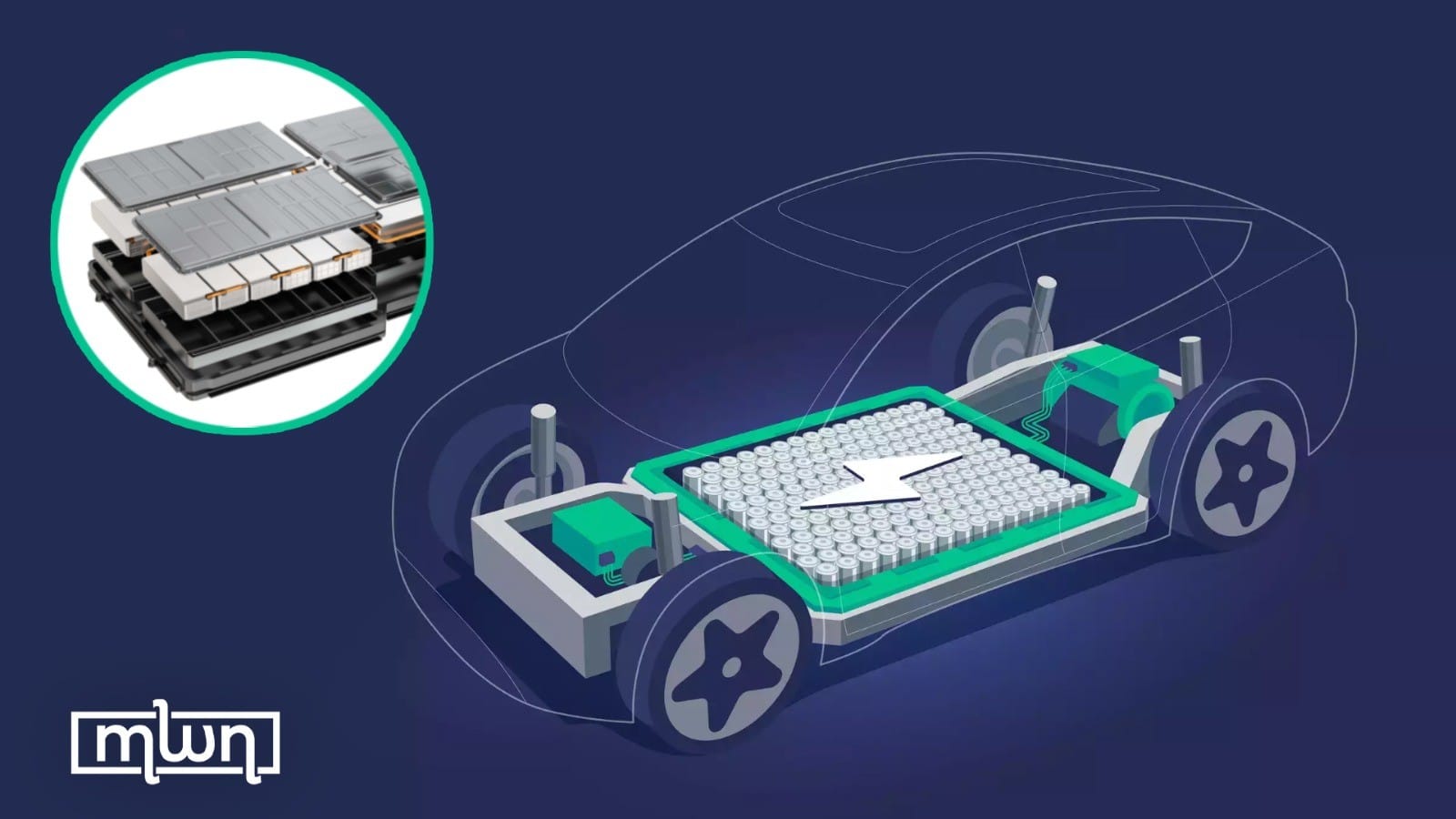
As the battery pack is the most valuable part of an EV, representing 30–40% of its cost, depending on the vehicle segment, it is therefore the beating heart of the EV supply chain. Therefore, the race is on for Morocco to not only grab EVs market share, but also build a cost-competitive battery value chain.
The Kingdom has a combination of key competitiveness factors and capabilities that create a unique advantage in the global battery value chain puzzle that many governments, EV players and battery manufacturers are looking to solve.
LFP batteries in boosting Morocco’s role in the global battery value chain
As some electric car manufacturers, such as Tesla, Volkswagen, and Toyota, have chosen to opt for LFP batteries in some of their models, according to Idriss Alami, Managing Partner at ALEXEC Consulting, the global LFP battery market size is foreseen to surpass around $54.36 billion by 2032 versus $14.63 billion in 2023.
However, according to Jan Wasserbaech, Partner at ALEXEC Consulting, a focus on new technology trends is important to stay competitive after 2030.
According to the firm, for European and US players, turning a focus towards Sodium-Ion or Solid-State batteries is key, as catching up with the current dominance of Asian players in conventional lithium-ion technology will be challenging.
Morocco’s abundant phosphate reserves, used to make phosphoric acid for LFP cathodes, further support its ambitions.

The country currently holds roughly 70% of the global phosphate reserves, making it well-positioned to become a strong player in the emerging value chain of phosphate-based lithium batteries.
Here again, Morocco has notable manganese and cobalt resources, which are crucial elements of the Lithium Nickel Manganese Cobalt (NMC) batteries. Moreover, in June 2023, lithium deposits were discovered near the Moroccan Sahara, which can bolster the country even further to leverage their upstream resources.
Different entry points in the battery value chain
There are different ways in which Morocco can move into the battery value chain given its promising context of natural resource reserves combined with its cumulative capabilities.
The country can leverage its upstream growing technical capacity supplied by domestic minerals, but also leverage mid-stream and downstream by attracting lead firm investments and capitalising on its existing manufacturing capabilities and automotive industry linkages.
Starting from the upstream level, OCP group manufacturers already produce phosphoric acid which is the input for making iron phosphate used in the cathode for LFP batteries. As part of its strategic program for 2023-2027, the group launched an ambitious investment program to achieve a capacity of 30,000 tons of intermediate products for LFP batteries by 2027.
The group has also jointly created with Mohammed VI Polytechnic University (UM6P) a dedicated research center specialized in the elements of LFP batteries.
On the other hand, Managem Group started the construction of a factory to transform cobalt ore into cobalt sulphate used in the cathode of NMC batteries.
In June 2022, the group signed a memorandum of understanding (MoU) aimed at securing the supply of low-carbon and responsible cobalt sulphate for Renault group. Under the terms of the agreement, Managem will be supplying 5,000 tons of cobalt sulphate per year for a period of seven years, with first delivery set to be in 2025.
As the mid-stream is the part of the value chain that holds most of the value-creation and macroeconomic opportunities, Morocco has been attracting several mid-stream investments from Chinese companies such as Gotion High-Tech, Tinci, Shinzoom, Hailingin order to build a strong battery ecosystem.
Morocco: home to first EV battery gigafactory in MEA
Gotion High-Tech, which, since 2020 has included Volkswagen Group in its shareholding, is going to inject $6.4 billion to establish a new 100 gigawatt-hour (GWh) EV battery manufacturing facility in Kenitra, starting with 20 GWh in the initial phase. With such production scale potential, the plant will be one of only 13 factories globally.
Furthermore, the South Korean company LG Chem formed a joint venture with Youshan, a subsidiary of Chinese Huayou Group, to establish a LFP cathode materials plant in Morocco.
The plant is set to start production in 2026, with a capacity of 50,000 tons annually, enough to build 500,000 entry-level EVs. This project specifically targets the US market, as Morocco’s free trade agreement (FTA) status would make the outputs eligible for all US tax credits for EV consumers.
Morocco: a key launchpad for Chinese companies to access the Western markets
The US and the EU seek to “de-risk” their critical raw materials (CRM) supply chains by “reshoring” or “friendshoring” to decouple from China. For instance, the US is using a combination of subsidies with local content requirements as part of the Inflation Reduction Act (IRA), claiming that at least 40 percent of the value of critical minerals used in an EV’s battery must be sourced from the US or one of its free trade partners in order to be eligible for $3,750 tax credit.
Strengthened by its status as an EU and US FTA partner, Morocco will serve as a convenient launchpad from which Chinese companies will tap into these markets. Nevertheless, it remains uncertain whether the US and EU’s geostrategic interests will be aligned with Morocco’s ambitions or not.
At the end of the day, how the country will navigate the geopolitical complexities will be critical for its battery ecosystem success.
Importance of leading regional battery value chain development
The presence of battery minerals across the Democratic Republic of Congo (DRC) and Zambia, as well as their growing upstream capabilities may offer a wide range of strategic and geopolitical opportunities for Morocco by engaging in a regional battery value chain supported by the African Continental Free Trade (AfCFTA), based on win-win approach, to anchor more value within the three countries and capture a larger share of the growing global EV battery market.
The DRC and Zambia have already signed a bilateral agreement to develop an NMC cathode active materials plant. Additionally, Zambia has already secured a Chinese firm’s investment commitment to build a gigafactory plant for both intra-Africa and international exports.
There are also upstream investment agreements between the DRC and Japan, Zambia and Japan, and Zambia and the United Kingdom, but further details remain behind closed doors.
It´s worth noting that the Moroccan group Managem jointly operates with the Pumpi mine in the DRC with Chinese group Wanbao. There, they have already been extracting copper and cobalt and have recently launched a sulphuric acid production line.
Given these considerations, it’s high time for the policy makers of these three countries to leverage regional synergies to enhance their bargaining power and thereby proactively position themselves in the context of geopolitical competition.