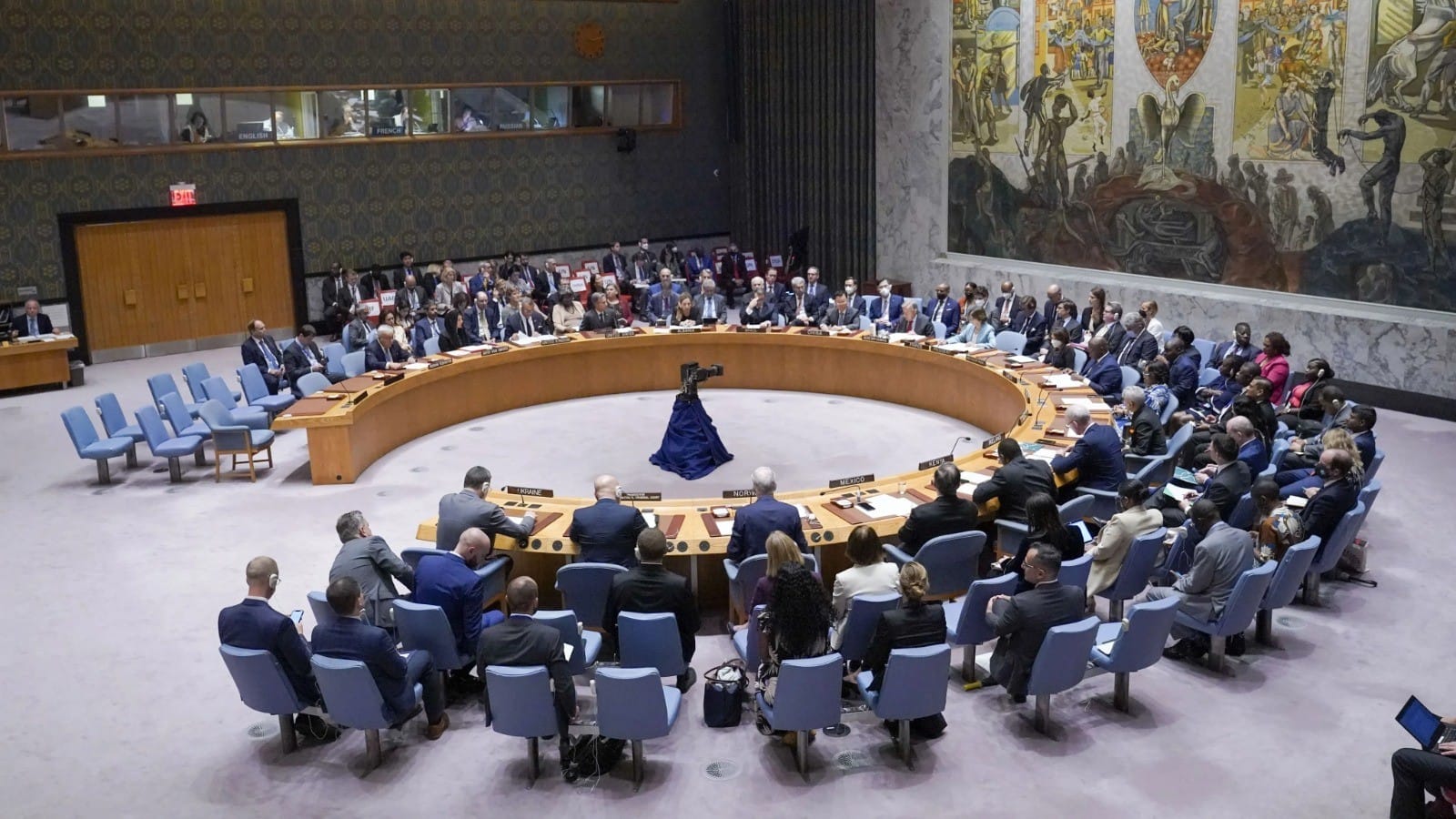
Rabat – The United States has formally proposed expanding the United Nations Security Council by adding permanent seats for African nations, marking a key step toward reshaping the body’s structure.
Initially outlined by President Joe Biden two years ago, this initiative appears to be taking form as the Biden-Harris administration seeks to modernize global governance.
U.S. Ambassador to the United Nations Linda Thomas-Greenfield on Thursday announced the plan while speaking in New York, advocating for two permanent seats for African countries.
The move, she emphasized, is part of a broader effort to address imbalances in global decision-making. “It’s time for change,” Thomas-Greenfield said, noting that the United States believes in enhancing African representation on the international stage.
Africa’s long-standing call for representation
For nearly three decades, African nations have called for more equitable participation in the UN’s key decision-making body. Currently, the continent holds three non-permanent seats on the Security Council, despite accounting for nearly 30% of the UN’s member states.
African leaders have long argued that their continent deserves a more prominent role in the Council, particularly given that much of the council’s agenda focuses on issues concerning Africa.
The African Union (AU) formalized its demand for permanent representation in 2005 with the Ezulwini Consensus, calling for two permanent seats with veto power.
The continent’s call has been met with increasing support in recent years, with Russia also advocating for a greater African presence on the Security Council during the summer of 2023.
United Nations Secretary-General Antonio Guterres echoed these sentiments on September 11, acknowledging that the Security Council’s legitimacy is being questioned, adding to the urgency of reforms.
Diverging views on veto power
While the US proposal has been welcomed by many African leaders, it falls short of addressing all the continent’s demands. Specifically, Washington remains opposed to extending veto rights to any new permanent members.
Currently, only the five original permanent members—the United States, the United Kingdom, France, China, and Russia—hold veto power, which allows any one of them to block Security Council resolutions.
This aspect of the proposal has drawn criticism from some African nations. The veto is seen as a powerful tool within the Security Council, and without it, new permanent members would not have equal influence.
African countries have expressed frustration with this stance, viewing it as perpetuating the existing power structure.
Romuald Sciora, a researcher at the French Institute for International and Strategic Affairs (IRIS), remarked that while the U.S. proposal signals progress, the lack of veto power remains a sticking point.
He added that the enlargement of the Security Council may not happen immediately, as the process requires the approval of several stakeholders.
A changing global landscape
Despite the challenges, the U.S. proposal could still bring about significant changes in the Security Council’s dynamics.
The United States’ endorsement of African representation adds momentum to the reform effort, and other major powers may follow suit. Should the proposal move forward, it would raise the question of which African countries would secure permanent seats.
Speculation points to nations such as South Africa, Egypt, Nigeria, and Kenya, which are considered economic and military leaders on the continent. Any decision on this matter would likely involve consultations within the African Union, headquartered in Addis Ababa.
Beyond Africa, the United States is also advocating for permanent seats for Japan, India, and Germany, as part of its broader push for Security Council reform.
Additionally, Washington has called for the inclusion of new rotating seats for small island developing states and Latin American countries, reflecting the need for broader geographic representation as global issues like climate change and security evolve.
The path to reform is complex. Any changes to the Security Council must first be ratified by the U.S. Senate, gain approval from the other permanent members of the Security Council, and secure a two-thirds majority vote in the UN General Assembly.