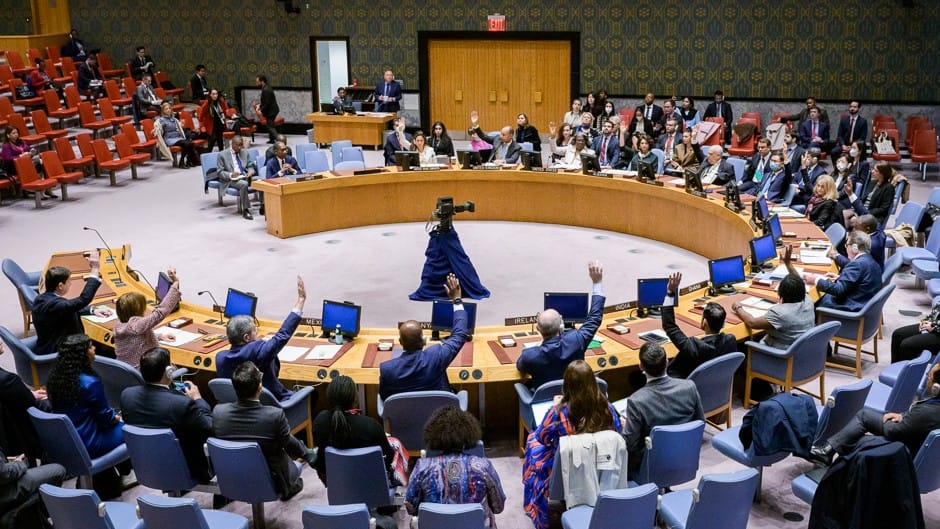
Rabat – The United Nations Security Council voted unanimously to extend the sanctions regime on Sudan until September 12, 2025, in a bid to curb the violence and humanitarian crisis stemming from the ongoing conflict in Darfur.
Acting under Chapter VII of the UN Charter, the Council adopted Resolution 2750 (2024) on Thursday, which also calls for a review of the sanctions by the same date next year.
“The adoption of this resolution sends an important message to the people of Darfur that the international community has not forgotten them,” said the United States, the resolution’s sponsor.
The U.S. emphasized that the sanctions, particularly the arms embargo, are crucial to restricting the inflow of weapons and helping Sudan move toward peace and stability.
The United Kingdom echoed these sentiments, urging all states to avoid actions that could enhance the military capabilities of either side in the conflict.
France also joined in this call for restraint, emphasizing the need for global cooperation to prevent the situation from escalating further.
Despite the unified support for extending sanctions, divisions emerged within the Council. The Republic of Korea pointed to continued violations of the arms embargo and called for stronger enforcement mechanisms.
“It is urgent to act,” the Korean representative stressed, suggesting that the sanctions list be updated as necessary to reflect the evolving situation on the ground. They advocated for more targeted measures to ensure compliance.
While supporting the arms embargo, China cautioned against using sanctions as a long-term solution. Beijing warned that sanctions should not replace diplomacy or become politicized.
Read also: Sudan on the Brink: Millions Face Famine as Conflict Rages
“The Security Council should prioritize dialogue,” the Chinese delegation stated, adding that any measures must respect Sudan’s sovereignty and avoid advancing the interests of external powers.
Russia, too, voiced its concerns. Moscow criticized what it described as “unilateral coercive measures” imposed on Sudan by some parties. The country argued that the Sudanese government’s own efforts would ultimately lead to stability, and that any international assistance should be coordinated with Sudan’s central authorities. It also warned against external interference that could destabilize the government’s control.
Sudan’s representative to the UN condemned what he described as “ethnic terrorism” committed by the Rapid Support Forces (RSF) in Darfur, accusing the United Arab Emirates (UAE) of supporting the militias financially and militarily.
He called for the international community to pressure the UAE to halt its “secret war” in Sudan and denounced what he claimed was the UAE’s exploitation of Sudanese gold.
The Sudanese government is urging stronger action against companies allegedly involved in these activities, asserting that some of them are based in the UAE.
Meanwhile, humanitarian concerns continue to mount. The Food and Agriculture Organization (FAO) has begun distributing seeds to farmers for the upcoming winter season, aiming to support the production of vegetables and wheat.
However, the FAO’s Deputy Director acknowledged that reaching farmers in conflict zones remains a significant challenge. The organization has developed an emergency response plan worth $104 million for 2024, with a focus on agricultural recovery.
The UN Office for the Coordination of Humanitarian Affairs (OCHA) recently warned of potential famine in parts of Sudan, although these claims have been disputed by the Sudanese government, which denies the severity of the food crisis.
Since the outbreak of violence on April 15, 2023, the conflict between the Sudanese Armed Forces and the RSF has claimed the lives of over 16,000 people and displaced millions.