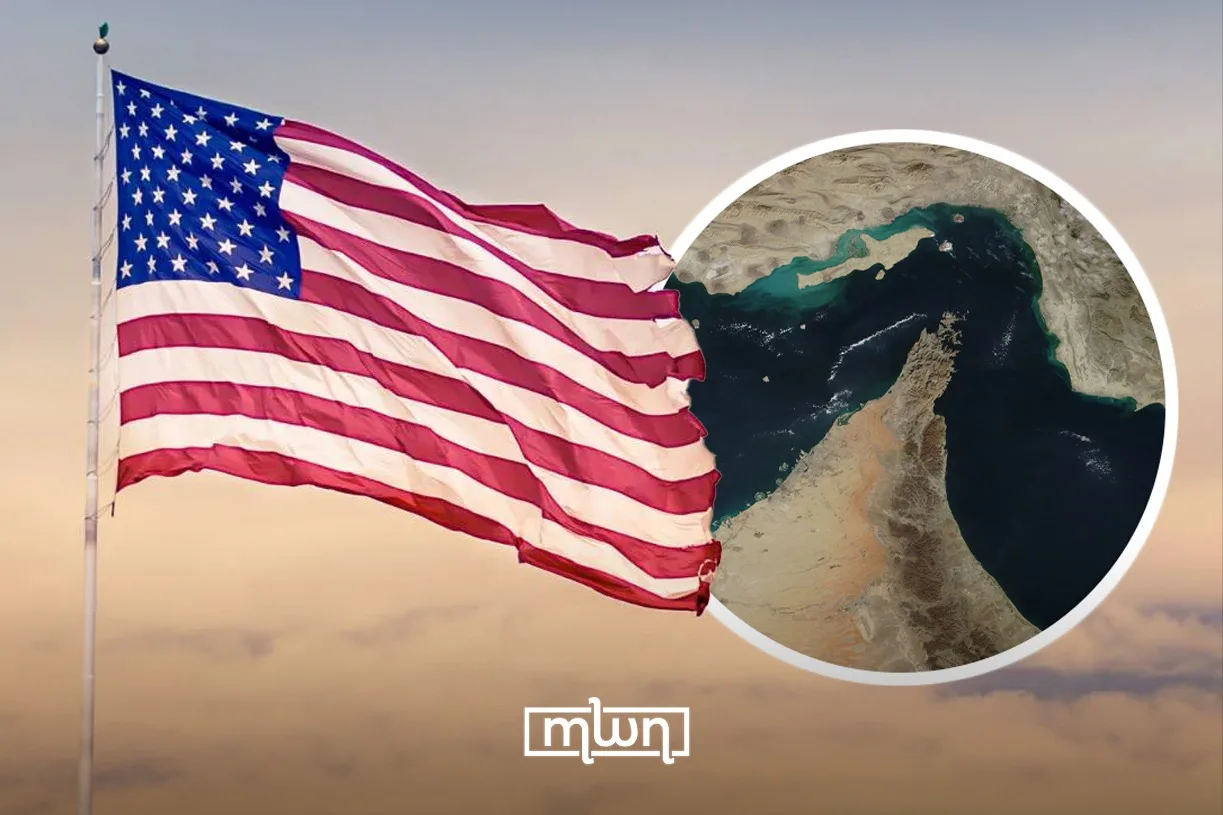
On July 23 this year, the United States imposed additional tariffs of 10 to 12.5 % on imports from sixty economies, covering nearly the entire volume of goods entering the American market. The decision took effect the following day. This was neither a coincidence of timing nor the sudden expression of a humanitarian vocation. In both form and sequencing, it ranks among the most revealing moves in the ongoing reconfiguration of the international trading order.
By invoking “deficiencies in the fight against forced labor,” Washington secured a legal foundation solid enough to reconstruct a near-universal protective device after the Supreme Court invalidated tariffs based on emergency economic powers. The measure arrived precisely as the temporary 10% surcharge under Section 122 of the Trade Act of 1974 reached its statutory limit of 150 days. The social argument functions here as a lever for an architecture of power. At the same time, the war between the United States and Iran, restarted after the collapse of the ceasefire in early July, continued over the past two weeks with repeated American strikes and a permanent threat over the Strait of Hormuz. These two developments are no longer parallel shocks. They now form a single regime.
The tariffs grounded in the International Emergency Economic Powers Act had been struck down. Thus a more resilient legal basis was required. Section 301, already tested against China, provided it. Sixty investigations were opened in March 2026. By June the United States Trade Representative had found each of them actionable. This month’s decision to impose additional tariffs established two rates: 10% for partners that have adopted, or formally committed to adopting, a ban on imports produced with forced labor; 12.5% for the others. Morocco falls into the second category.
Cap mechanisms were introduced for a limited group of allies. Product-specific exemptions exist, particularly for certain critical raw materials and pharmaceuticals. The core of the device remains a broad, intentionally permanent surcharge explicitly conditioned on normative alignment. And this makes forced labor the pretext for a broader doctrine that turns access to the American market into a scarce and rationed good, granted only in exchange for the adoption of norms defined in Washington.
A new imperial logic: market access as currency
It is a contemporary version of nineteenth-century British imperial preferences. Except that the empire is no longer territorial but normative, and the currency of exchange is no longer formal political loyalty but legislative alignment and supply chain traceability. By linking market access to the existence and effectiveness of domestic legislation banning imports produced with forced labor, the United States converts a compliance requirement into an instrument of coercive diplomacy.
Every capital faces a simple and asymmetric calculation: the cost of alignment is national and political; the benefit of a reduced rate is granted at Washington’s discretion. This unilateral conditionality contradicts the spirit of the multilateral system based on non-discrimination and legal arbitration. The WTO Appellate Body remains paralyzed by the American blockage of appointments. Any legal challenge by targeted countries will therefore remain largely symbolic. The jurisdictional vacuum consolidates the primacy of bilateral power relations.
The objectives of the policy can be read in successive layers. The first is technical and urgent: to rebuild a tariff wall after the judicial invalidation of emergency measures. The second is fiscal and industrial: the duties generate revenue while creating a protective margin for certain domestic productions. The third concerns bargaining power. By multiplying levers of conditionality forced labor today, industrial overcapacity tomorrow, environmental or technological standards the day after Washington acquires a permanent capacity to pressure its partners, including its allies. The fourth touches the architecture of the trading system itself: making access to the American market the pivot of a global normative order defined unilaterally and applied differentially. The first-order effects are relatively measurable. For American importers, the cost of goods originating in countries subject to the 12.5% rate rises. Part of the surcharge will be absorbed; another part will be passed on to consumers.
The overall inflationary impact should remain contained in the short term because the measure extends an already existing tariff regime. It nevertheless anchors a structural pressure. When additional tariffs settle in a quasi-generalized and lasting manner, they alter the perception that markets and central banks hold of the future inflation regime. The Federal Reserve incorporates risks of persistence into its reaction function. A more fragmented commercial environment reduces the probability of a rapid return of inflation to the 2% target. This provides the Fed with an additional, and politically more comfortable, argument for keeping policy rates higher for longer.
Transmission to bond markets and global value chains
The same dynamic is transmitted to bond markets through the channel of risk premia. U.S. Treasuries remain the global benchmark. By contrast, the sovereign debt of emerging economies exposed to the new duties incorporates an additional risk commercial, but also systemic. It reflects the possibility of contracting export revenues, pressure on foreign-exchange reserves, widening current-account deficits and deteriorating debt sustainability. Investors demand compensation: the commercial fragmentation premium, visible in the widening of spreads between Treasuries and the bonds of the countries concerned.
Global value chains are further encouraged to shorten and to politicize. Friend-shoring and nearshoring gain relative attractiveness. Multinational firms invest in traceability no longer only for reasons of social responsibility, but also to preserve access to the American market. The clearest losers are economies whose model rests on long, poorly traceable, low-cost labor chains. The relative winners are those able to combine credible normative compliance, industrial competitiveness and a geographic position favorable to regionalization.
The Strait of Hormuz remains the passage for roughly 20% of global oil. Every escalation, every threat to navigation, every strike or counter-strike is immediately reflected in Brent prices, maritime insurance costs, and operators’ risk perceptions. It is a classic supply shock visible and rapid. The tariffs operate on a different register. By reconstructing a near-universal wall under Section 301, Washington transforms access to its domestic market into an instrument of normative pressure.
Forced labor is the pretext, yet the objective is broader: to condition, to differentiate, and to make compliance an entry criterion. Where the Iranian conflict strikes energy prices, the tariffs strike the costs of intermediate and finished goods across a far wider spectrum. The two shocks reinforce each other in the Federal Reserve’s reaction function and in the formation of risk premia. The Iranian conflict, restarted after the breakdown of the ceasefire in early July, pushed Brent higher by approximately ten dollars in a single week, taking it above 94 dollars a barrel, an increase of roughly 30 percent since the beginning of hostilities in February.
Twin shocks
This reconstitutes inflationary pressure through energy and freight. At the same moment, the 10 to 12.5 percent tariffs anchor a broader and more durable rise in the price of imported goods. An isolated oil shock can be judged temporary; isolated tariffs can be partially absorbed. Together, they reduce the probability of a rapid return of inflation to target and strengthen the case for a cautious monetary path. And the same cumulative logic applies on bond markets. The geopolitical premium linked to Hormuz and the commercial fragmentation premium linked to the tariffs do not simply add; they contaminate each other. Investors facing both an energy supply risk and a conditional-access risk to the American market demand higher compensation for the debt and credit of exposed emerging economies.
Spreads widen because the two signals converge on the same conclusion: the regime of prices, liquidity and risk has become structurally more unstable and more politicized. The dual shock also exerts upward pressure on the dollar. The reactivation of risk on the Strait of Hormuz triggers safe-haven flows toward Treasuries and dollar cash. Simultaneously, the tariffs, by supporting the hypothesis of a more cautious Federal Reserve, widen the interest-rate differential in favor of the dollar. The net result is an environment supportive of the dollar, at least as long as commercial retaliation remains limited and the energy shock does not tip into a global recession.
For Morocco the situation requires a nuanced assessment. The 2006 free-trade agreement with the United States does not provide an automatic shield against a measure taken under Section 301. American law allows, in practice, the suspension or circumvention of tariff concessions when the administration considers that a foreign practice justifies retaliation. The 12.5% rate therefore applies, subject to product-specific exemptions. The most exposed sectors are textiles and apparel, certain segments of the automotive and aeronautics industries, and agro-food products whose input traceability may be contested. The cost of compliance is not negligible, particularly for mid-sized firms.
The American framework nevertheless distinguishes economies that have adopted, or committed to adopting, a ban on imports produced with forced labor. Credible legislative alignment, accompanied by a formal commitment, could allow Morocco to negotiate a reclassification to the 10% rate. The option carries domestic political costs, yet it preserves access to a still-significant market and sends a signal of predictability to investors.
Morocco’s strategic options
At the same time, the acceleration of export diversification toward West and Central Africa through the African Continental Free Trade Area, as well as toward the Middle East and Asia, is structurally more urgent. Tanger Med’s role as a logistics hub and Morocco’s geographic position between Europe, Africa and the Atlantic remain real assets in a world that is regionalizing, as underscored by the African Maritime Forces Summit held in Rabat from 20 to 24 July. The optimal strategic choice is neither unconditional alignment nor principled refusal. It rather consists in transforming the American constraint into a comparative advantage of compliance while reducing overall vulnerability through a broader opening toward the South.
The immediate impact on financial markets should remain limited. Wall Street has already priced in an elevated tariff regime. Distribution and consumer-goods sectors will face margin pressure. Protected industries benefit from a relative substitution effect. Volatility could rise if major partners opt for targeted retaliation. For emerging markets the principal risk is the widening of credit spreads and possible capital outflows. The dirham, under its managed-float regime, should absorb a commercial shock of this nature without major turbulence, provided reserves and foreign direct investment flows remain supportive.
In a longer perspective, the decision belongs to a constellation of mutually reinforcing transformations: structural rivalry between Washington and Beijing, fragmentation of value chains, energy transition, the rise of artificial intelligence as a sovereignty issue, and the accumulation of public debt. Forced labor is only one vector among others of a deeper trend: the return of politics into the organization of exchange.
Globalization is not disappearing; it is being reconfigured along harder, more conditional and more regional lines. States that navigate between these blocs without locking themselves into any of them by combining selective compliance, industrial competitiveness and geographic diversification will extract the greatest advantage. Those that remain dependent on unconditional access to a single large market expose themselves to repeated and costly adjustments. Three trajectories appear over the next five to ten years.
In the central and most probable scenario, the duties remain in place, limited reclassifications occur through bilateral negotiation, the WTO stays weakened, and value chains continue to regionalize. Global growth experiences a moderate slowdown. Morocco, if it combines targeted alignment with Washington and an acceleration of its African anchoring, consolidates its position as a platform. In a more favorable scenario, the measure evolves into an instrument of normative upgrading rather than a permanent wall. In a darker scenario,
retaliation accumulates and fragmentation accelerates. The probability of each path will depend less on statements of principle than on the capacity of actors to transform constraints into levers.
Rather than an American obsession with forced labor, what this decision ultimately reveals is an assumed doctrine of economic sovereignty. Access to the internal market of the United States has become a scarce, rationed and conditioned good. In this new regime, being an ally no longer exempts one from presenting papers of compliance. The empire has simply changed its nature: it no longer demands territorial vassalage, only traceability.