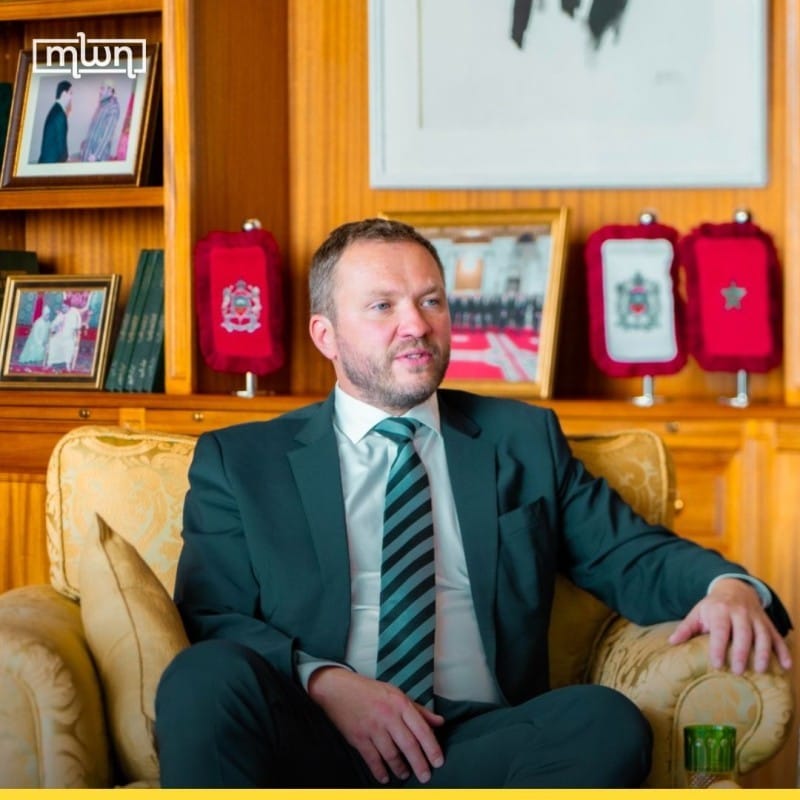
Rabat – Estonia’s Foreign Minister Margus Tsahkna has embarked on a working visit to Morocco, highlighting over 30 years of diplomatic ties between the two nations.
The visit, laden with promise, aligns with Morocco’s ambitious 2030 strategy, aimed at bolstering its economic and digital transformation.
“Our diplomatic relations are practical and close, and we consider Morocco a strategic partner within the European Union,” Tsahkna remarked in an exclusive interview with Morocco World News.
He emphasized the importance of Morocco’s role as a gateway to Africa for Estonia, a country that, while relatively small, has positioned itself as a leader in digital innovation and governance.
Tsahkna noted that Estonia’s journey to independence began in 1918, a struggle marked by over 50 years of Soviet occupation.
The foreign minister expressed pride in Estonia’s evolution, stating: “We are a digital nation, with 99% of our public services available online.”
This commitment to digitalization presents a unique opportunity for Morocco, which has recently launched a comprehensive plan to modernize its public services over the next six years.
The discussions during Tsahkna’s visit focused on potential areas of cooperation, particularly in digital governance and public service reform. “Morocco has developed significantly,” he stated. “It is an outstanding country in the African region.”
This acknowledgment sets the stage for a collaborative effort, where Estonia can share its expertise in digital public services, a domain it has mastered over the last two decades as a member of the European Union and NATO.
A shared vision for digitalization
According to Tsahkna, the Estonian government’s approach to digitalization is rooted in principles of transparency and user control. He explained that “data belongs to the person,” underscoring the importance of trust in the relationship between citizens and their government.
The foreign minister highlighted Estonia’s advanced technical solutions, such as its X-Road system, which allows for seamless data exchange between various public databases.
“Our goal is to make life easier for citizens, to be more efficient and transparent,” he explained, suggesting that collaboration with Morocco could lead to tailored digital solutions that meet the specific needs of its public sector.
“It depends on what Morocco needs,” he added, indicating a flexible and responsive partnership model.
Estonia’s proactive stance is complemented by its robust cybersecurity framework, a critical concern in today’s increasingly digital world.
Tsahkna emphasized that alongside public service digitization, there is a pressing need to strengthen cyber defense mechanisms. “We are ready to work on both levels,” he affirmed.
Building economic bridges
As discussions progressed, the conversation also veered towards economic collaboration. Tsahkna pointed out that both countries stand to benefit from joint ventures that could lead to job creation and technological innovation.
“Morocco has a wealth of talent, particularly in engineering and IT,” he noted, expressing interest in fostering partnerships that leverage local expertise while also attracting Estonian companies to invest in Morocco.
The foreign minister shared his vision of creating a collaborative environment, stating: “We are not just here to ask for procurements; we want to bring our companies to Morocco to develop something together.”
This collaborative spirit is essential in navigating the complexities of global markets while addressing local needs.
Estonia’s defense industry, which has gained international recognition, was also a focal point during Tsahkna’s visit. As tensions rise in global geopolitics, Estonia has emerged as a leader in innovative defense solutions, particularly in the wake of the ongoing conflict in Ukraine.
“We are looking to explore areas of cooperation in defense innovation,” he said, reinforcing Estonia’s commitment to finding peaceful solutions while enhancing regional stability.
A partnership rooted in values
Estonia’s support for Morocco’s autonomy plan underlined a shared commitment to upholding international norms and peaceful resolution of conflicts,Tsahkna remarked, stressing: “We both face aggressive neighbors and understand the need for stability.”
He reiterated Estonia’s backing of Morocco’s autonomy initiative as part of a broader strategy to foster dialogue and cooperation on international platforms, including the United Nations.
Reflecting on the cultural and educational ties between the two nations, Tsahkna expressed hopes for increased exchanges of students and professionals.
“We want to see more Moroccan students in Estonia and vice versa,” he noted, emphasizing the importance of personal relationships in building strong diplomatic ties. “These connections will endure and foster deeper understanding between our peoples,” he concluded.