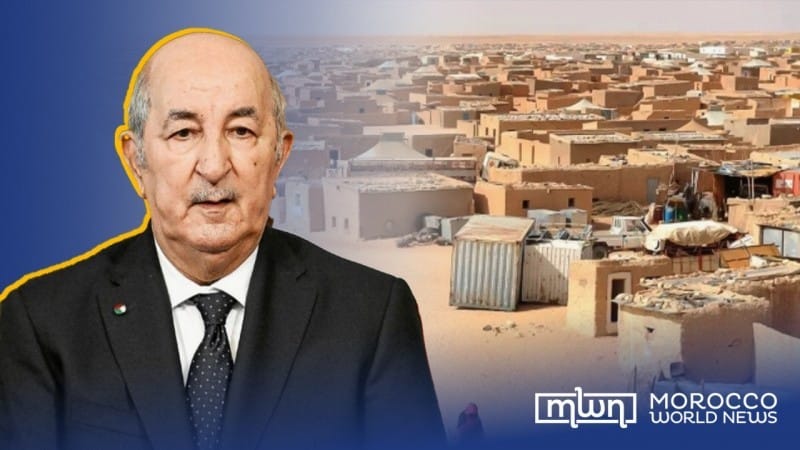
Rabat — Algeria continues to deny its significant and direct role in the ongoing Western Sahara dispute, the UN latest report on Western Sahara has shown.
The UN Secretary-General, Antonio Guterres, reiterated this well-documented and unsurprising Algerian approach to the Sahara question in his latest report on the situation in Western Sahara issued earlier this month.
In his report, the UN chief noted that his envoy’s discussions with Algerian foreign affairs officials were met with a firm rejection of the country’s participation in the UN-led political process, further exacerbating the challenges towards achieving a diplomatic resolution.
“On 27 February 2024, my Personal Envoy met with the Minister for Foreign Affairs of Algeria, Ahmed Attaf, in Algiers, Algeria. On 16 April, he met again with Mr. Attaf on the margins of the Minister’s working visit to New York on Security Council matters,” the UNSG said.
Attaf notably conveyed the continued focus of Algeria on “ensuring Western Sahara’s people the right to self-determination,” Guterres recalled, further quoting the top Algerian diplomat as insisting that his country is not a party to the conflict.
Algeria continues to deny its involvement in the Sahara dispute even as its diplomatic and lobbying engagements clearly show it is the animating force behind Polisario’s separatist maneuvering.
As many reports have documented over the years, claims persist despite the regime’s direct involvement, and culpability in the dispute as it continues to host, finances, arms, and support the Polisario Front and back their claims in Western Sahara.
This is further exacerbated by an international campaign and lobbying efforts, with Algerian officials and activists seizing every opportunity to voice their anti-Morocco rhetoric and challenge Morocco’s territorial integrity. , the latest of which unfolded in the UN 4th Committee meeting last week
Last week, police at the Fourth Committee Meeting of the UN General Assembly expelled Nouria Hafsi, President of the National Union of Algerian Women, after she made hostile remarks against Morocco, notably calling the North African country a “colonial monarchy.”
Read also: Morocco-EU Deals: Ideology, Politics Dictate EU Court’s Latest Ruling
Majda Moutchou, a member of Morocco’s permanent mission at the UN, responded to the Algerian official’s hostile claims and urged for her removal from the premises of the meeting.
In his statement to Staffan de Mistura, UNSG’s envoy for Western Sahara, Attaf also defied UN resolutions, including the latest one adopted in October last year. Resolution 2703 outlined Algeria’s central role in the Sahara dispute, detailing that the Algerian regime is one of the main parties in the dispute.
It challenged Algeria’s longtime attempt to deny its full-fledged involvement by claiming to be merely an observer and “a concerned neighbor.”
The resolution further called “upon Morocco, the Frente POLISARIO, Algeria, and Mauritania to cooperate more fully with each other, including through building additional trust, and with the United Nations, as well as to strengthen their involvement in the political process and to achieve progress towards a political solution.”
In his report, the UN chief also cited the meetings between his envoy and officials from Morocco, Algeria, Mauritania, and representatives of the separatist group.
“Between February and April 2024, he conducted meetings with regional interlocutors. My Personal Envoy expressed his readiness to meet with all concerned again in September and October 2024, ahead of his upcoming briefing to the Security Council,” the report said.
Despite the challenges facing a lasting political resolution of the Sahara dispute, including Algeria’s reluctance to shoulder its responsibility, the UN chief continues to believe that it is possible to find a “just, lasting, and mutually acceptable political solution” to the territorial dispute in accordance with the latest Security Council resolutions.
“This requires, however, that all concerned engage in good faith and with an open mind, that they desist from preconditions and that they expand on their positions with a view to achieving a just, lasting and mutually acceptable political solution,” he said, recalling the UN commitment towards the political process.
Still, the UN chief lamented the ongoing escalation, including the breach of the ceasefire in the region.
Read also: King Mohammed VI’s Legacy of Diplomatic Remontada and Strategic Assertiveness
Several reports show Polisario’s involvement in breaching ceasefire and their involvement in violent actions near the berm, with reports also citing Morocco’s alleged responses.
“The lack of a full ceasefire in effect between Morocco and Frente POLISARIO remains a major setback in the pursuit of a political solution” to the dispute, Guterres said.
The separatist group also launched a terrorist attack in the southern Morocco city of Es-Semara.
In October last year, explosions killed one victim and injured three others.
In response, Morocco’s Permanent Representative to the UN Omar Hilale vowed that the country would take the necessary measures against anyone involved in the four explosions.
“We cannot ignore the substantial body of compelling evidence pointing in the same direction, as even acknowledged by the group responsible,” he said, pointing to Polisario’s statement claiming responsibility for the attack.
“It mentions the explosions and projectiles they launched on the night from Saturday to Sunday. This is the first piece of evidence and it’s an official statement by the Polisario,” the diplomat said of the statement.
“The second piece of evidence is that when radios and TV stations around the world, as well as news agencies began reporting on these explosions, the Polisario, in quoting it, never denied their involvement,” he added, noting that “their silence indeed confirms that they are behind these explosions.”
In his report, the UN chief encouraged all the parties “to focus on the interests they have in common, to refrain from escalating the situation further through rhetoric and actions and to overcome the lack of trust between them. “
He also called for a strong political will and continued support from the international community to contribute to finding a political solution to the dispute.