


 Join on WhatsApp
  Join on Telegram
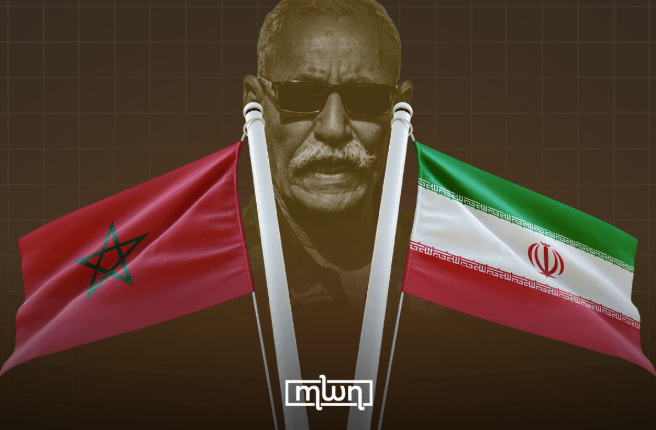
 Several reports emerged recently suggesting that Iran and Morocco are progressing in talks to resolve their diplomatic crisis that dates back to 2018, when Rabat severed relations with Tehran.
Morocco announced its decision to freeze diplomatic relations after it received evidence about a collusion between Polisario and Iran’s proxy Hezbollah.
Rabat went on to accuse Tehran of providing Polisario, a separatist group challenging Morocco’s territorial integrity and sovereignty over its southern provinces in Western Sahara, with military and logistical support.
Moroccan ambassador to the UN Omar Hilale reiterated Morocco’s concerns over a Polisario-Iran collusion in 2022, saying that Morocco had received indications of training and equipment provision links between Tehran and the separatist group. Iran had “gone from training to equipping the Polisario with drones,” he argued, warning that “this is a serious act not only for Morocco but for the whole region.”
Reports now suggest that the two countries are advancing in talks to re-establish and resume bilateral ties.
The Libyan Express reported recently that diplomatic development indicates Iran’s interest in a rapprochement with Rabat after years of streamlined ties.
Other reports emphasize that an Iranian security envoy recently engaged in discussions with Moroccan officials in Rabat.
The discussions took place earlier this month on the sidelines of visits to Rabat by envoys from the UAE and Saudi Arabia representatives in Rabat earlier in November, converging reports have suggested, noting that the visits focused on exploring the possibility of re-establishing diplomatic ties between Rabat and Tehran.
Yet the past few weeks have also seen various news reports and social media posts highlighting that the Polisario Front used Iranian-made military equipment during its latest provocative maneuvers in southern Morocco.
For some observers, such provocations by Polisario reflect the separatist group’s keenness to disrupt the reportedly ongoing talks between Rabat and Tehran to put behind their 2018 diplomatic crisis.
Iran, which has in fact denied accusations of colluding with Polisario, has long given reassurances of its readiness to resume diplomatic relations with Morocco.
But Morocco has so far distanced itself from Tehran’s reassuring rhetoric, insisting that it has hard evidence of Iran backing the Polisario Front via Algeria.
In June 2023, Iran’s former Foreign Minister Hossein Amir Abdollahian stressed his country’s determination to normalize ties with a number of countries in the global community, including Morocco.
Abdollahian said Iran was ready to foster positive relationships with Muslim countries, prioritize Islamic unity, and address regional and global issues impacting the Islamic world, including the Palestinian cause and the war in Sudan.
Similarly addressing Morocco’s commitment to normalize ties with regional actors, Moroccan FM Nasser Bourita said in 2022 that while Morocco harbors “no enmity” towards Iran, Tehran should consider ending its interference in Moroccan and North African matters.
“Morocco has no enmity with Iran, we want relations of mutual respect and that Tehran no longer supports armed separatist groups,” he said, adding that the North African country “is not the only case, with regard to Iranian interference in Arab countries and we reject these acts.”
Many observers see Tehran’s proxies as a significant source of instability in both the Middle East and North Africa.
“The #Tehran_Algiers_axis has emerged as a significant source of instability in both the #Middle_East and #North_Africa. #Iran’s provision of military support, including rockets and drones, to the Polisario Front—a separatist group operating off Moroccan #Western_Sahara—has exacerbated tensions in the #Sahara and #Sahel regions,” Moroccan politician Lahcen Haddad wrote today.
Should reports of Iran’s willingness to end its diplomatic tension with Rabat prove true, it remains to be seen whether Tehran would be open to Morocco’s concerns over its ambitions to expand Iranian influence in North Africa.


