 Join on WhatsApp
 Join on Telegram
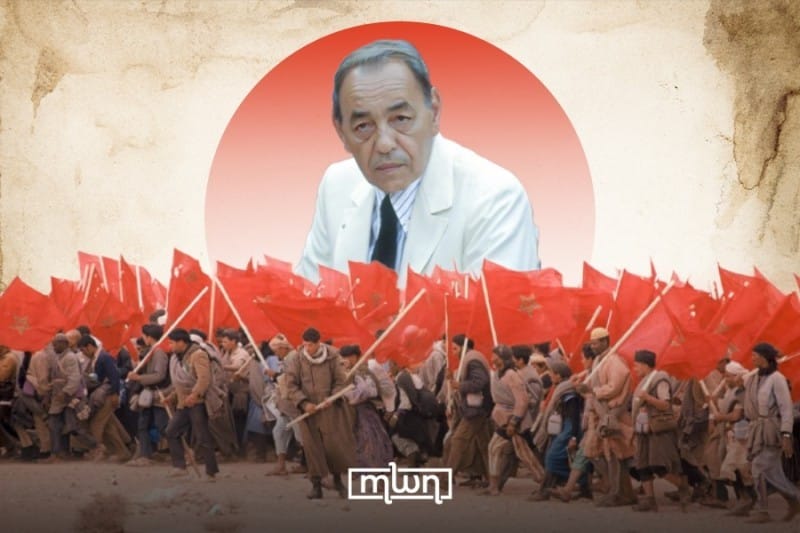
In September of last year, shortly after Morocco’s deadly Al-Haouz disaster, I published an article titled “Earthquake Relief Efforts Evoke Memories of the Green March.” At the time, I said that efforts exhibited by Moroccans during the earthquake relief last fall surpassed those exhibited during the Green March.
It was a way to say that Moroccan bravery is alive even decades later. It was also a way to say that Moroccans are always there when their country needs them based on the mutual love shared between the country, its people, and its monarch over centuries.
A year later, after some reflection just before the most recent Green March anniversary, I have a different perspective.
Moroccans, I believe, have done a poor job in teaching the younger generation about the magnitude of the Green March. It is always talked about as a historic moment, a moment of bravery, and a display of monarchial wisdom. But is that all? I do not believe so.
What could be the impact if all Moroccan teachers prepare lessons to show students the real magnitude of the Green March? I am not referring only to teachers of history and geography, but also to those who teach other disciplines such as math and physics.
These educators can seek ways to impress their students with the magnitude of the event – an event that even today would be most difficult to replicate. Their lesson plans can be tailored to their subject to show the different dynamics at play with this historical event.
Math teachers could have students calculate the number of liters of drinking water the Green March participants needed.
Physics teachers could work with students to formulate the time needed to transport people to the Moroccan Sahara.
Political science students could have discussions pondering how King Hassan II kept the secret while preparing the necessary logistics or consider the strategy behind the timing.
Law students could connect the timing of the March to the International Court of Justice’s verdict on the Sahara, and have various discussions on this correlation.
Students from various disciplines could write essays considering the outcomes had Moroccan citizens had not liberated the Sahara from Spanish colonization.
Additional questions could be brought up in classrooms addressing how a similar initiative today could be planned. Could 350,000 people with the necessary resources (tents, water, food, transportation, etc.) be mobilized as easily – or at all – today? What could the costs of doing so be in terms of real expenditures and opportunity costs?
These are just a few ideas on ways that Moroccan educators can share the size, importance, and impact of this historic moment with our youth.
I believe it is time to teach the Green March across subject areas – explaining it in numbers, not just words, and looking at it through a scientific lens, not just a historical one.
Understanding the vast scope and impact of this unprecedented initiative should make us even prouder of our history and our visionary monarch, King Hassan II.