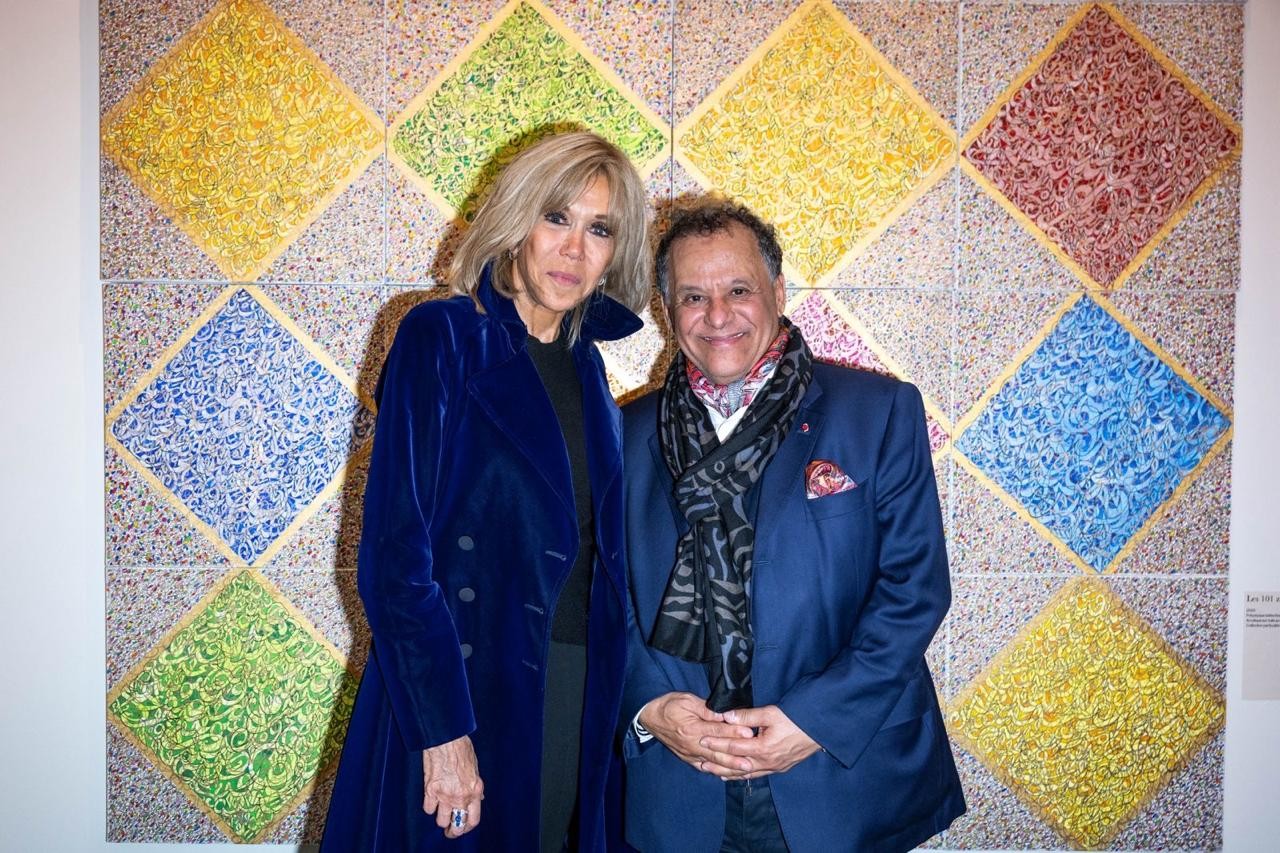
Rabat – The Arab World Institute (IMA) in Paris is currently hosting a retrospective in honor of the Franco-Moroccan painter Mehdi Qotbi.
Titled “Mehdi Qotbi, Une Vie, Une Œuvre,” the celebratory event is scheduled to showcase over 100 artworks of the respected painter. The exhibition runs until January 5, transcending the confines of Qotbi’s artistic legacy to shed light on other aspects of his eventful life.
A celebration of over four decades of Qotbi’s exploration into calligraphy and abstract forms, the exhibition has already drawn international attention, but it is Qotbi’s strategic positioning as an ambassador of culture and soft power that reflects his significance far beyond the art world.
At 73, Qotbi embodies a rich tapestry of influences, relationships, and aspirations. Known for his close connections to Moroccan royalty, French political elites, and cultural icons, he has navigated the corridors of power and creativity with equal dexterity.
A diplomatic undertone in art
Born in 1951 in Rabat to modest circumstances, Qotbi’s journey to prominence was fueled by an innate drive to excel and connect.
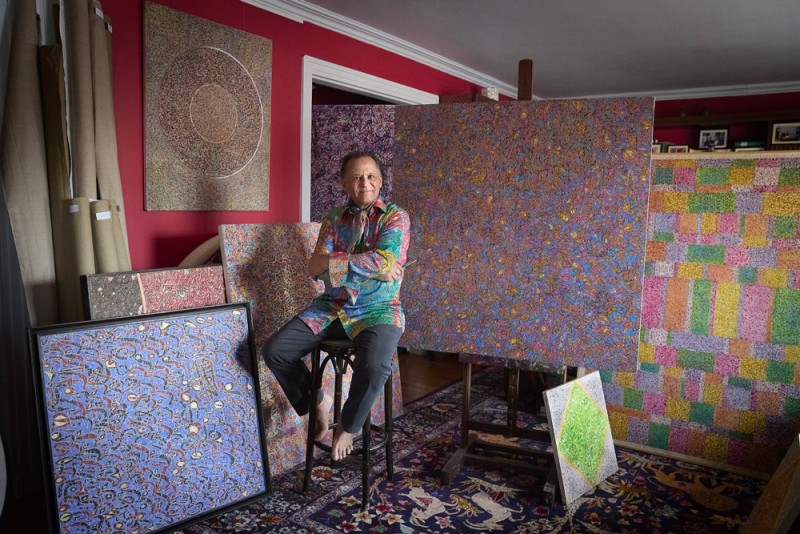
His art, characterized by intricate calligraphy motifs, reflects his Moroccan heritage while embracing universal themes of humanity and unity.
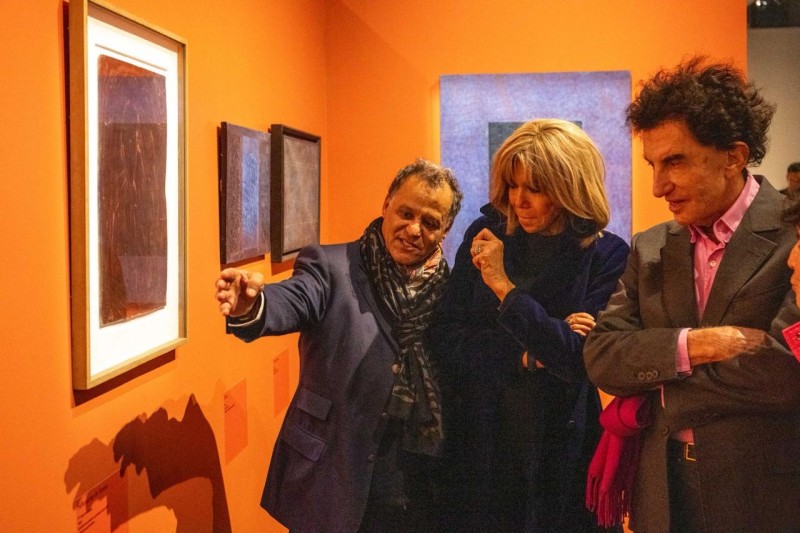
Qotbi’s influence extends beyond canvases to moments of quiet diplomacy. In October, he convened a meeting at the Plaza Athénée in Paris with former high-ranking French officials, including Dominique de Villepin and Hubert Védrine, to discuss the strained relations between France and Morocco.
The diplomatic chill, which has persisted since 2021, stems from France’s delayed stance on Morocco’s sovereignty over Western Sahara—a topic pivotal to Rabat’s foreign policy.
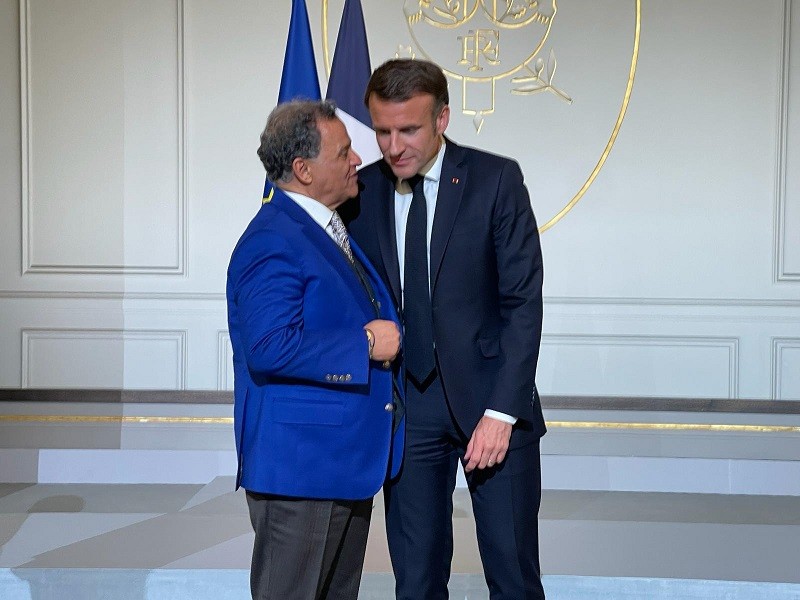
But France’s position has critically shifted in recent months. In a July letter to King Mohammed VI, President Emmanuel Macron expressed support for Moroccan sovereignty over Western Sahara, marking a historic step toward reconciliation.
For Qotbi, this was a moment of relief. “France and Morocco share a historic friendship that must not be jeopardized,” he said, stressing his belief in the enduring ties between the two nations.
A lifetime of connections
Qotbi’s career is defined by relationships that span decades. He first forged ties with French political circles in the 1980s, founding the Franco-Moroccan Friendship Circle in 1992.
This platform brought together leaders from diverse sectors, laying the groundwork for what Qotbi refers to as “parallel diplomacy.”
Over the years, his network expanded to include figures like former French President François Mitterrand and Jack Lang, president of the Arab World Institute and a close friend.
The artist’s influence is not without controversy, however. Critics argue that his proximity to French and Moroccan power elites complicates his identity as an artist.
Leïla Slimani, a Moroccan-born Prix Goncourt-winning novelist, once described Qotbi as both an artist and a “certified lobbyist.” Despite such characterizations, Qotbi insists that his only goal is to foster mutual respect and understanding between his two homelands.
Qotbi’s contributions have earned him numerous accolades. He holds distinguished honors such as the French Légion d’Honneur, the Moroccan Order of the Throne, and the Spanish Order of Civil Merit.
His artistic legacy is equally illustrious, with works showcased in prominent galleries across Europe, Asia, and Africa.
Qotbi’s publications further reflect his intellectual depth. Collaborations with literary giants like Léopold Sédar Senghor and Octavio Paz reveal a commitment to blending art with philosophical inquiry, enriching the cultural dialogue between continents.
Art as a cultural bridge
Qotbi’s art has long served as a vehicle for cross-cultural dialogue. His retrospective at the Arab World Institute marks the first major exhibition of a Moroccan artist at the institution in two decades.
While the event has been celebrated for its scale and ambition, it has also attracted criticism. Some have questioned whether his close friendship with Lang influenced the decision to host the exhibition.
In response, Qotbi maintains that his work deserves recognition on its own merits. “I remain an artist first and foremost,” he asserts, emphasizing that his leadership role at Morocco’s National Foundation of Museums (FNM) does not preclude him from pursuing personal projects.
Qotbi’s tenure as president of the FNM, a position he has held since 2011, has further solidified his role as a cultural ambassador. Under his leadership, the foundation oversees 17 museums, transforming Morocco’s cultural landscape and enhancing its global visibility.
The retrospective coincides with the recent state visit by President Macron to Morocco, highlighting the exhibition’s geopolitical undertones. Jack Lang, speaking at the event’s opening, noted the “perfect timing,” framing the exhibition as a symbol of renewed Franco-Moroccan cooperation.
This duality — artist and unofficial envoy — defines Qotbi’s unique position. His relationships with figures like Brigitte Macron, who has publicly praised his work, further amplify his influence. The French first lady described his art as “hypnotic,” noting its ability to bridge cultures and evoke profound emotional responses.
The man behind the canvas
Despite his accolades and connections, Qotbi’s journey has been anything but conventional. His early years were marked by hardship, but his determination led him to the Rabat School of Fine Arts and, later, the École des Beaux-Arts in Toulouse and Paris.
His artistic career blossomed alongside his teaching tenure in Paris, where he inspired generations of students while pursuing his passion for painting.
Today, his works are celebrated globally, exhibited in prestigious galleries from Europe to Asia. Yet, Qotbi remains deeply connected to his Moroccan roots, often describing his art as a reflection of his dual identity.
In the intricate calligraphy of his paintings and the quiet diplomacy of his actions, Qotbi weaves a narrative of connection, a story that reflects the complexities of identity, power, and friendship in a globalized world.
While some may question the blending of art and influence, few can deny the impact of his work in bringing people and nations closer together.
This exhibition, like the man himself, invites reflection on the power of art to transcend borders and the nuanced role individuals can play in shaping history. For Mehdi Qotbi, the canvas is both a stage and a bridge, uniting the worlds he straddles with remarkable finesse.